AI Security Incident Response Playbooks for Enterprise Teams
Traditional playbooks miss AI incidents because they leave no infrastructure fingerprints.
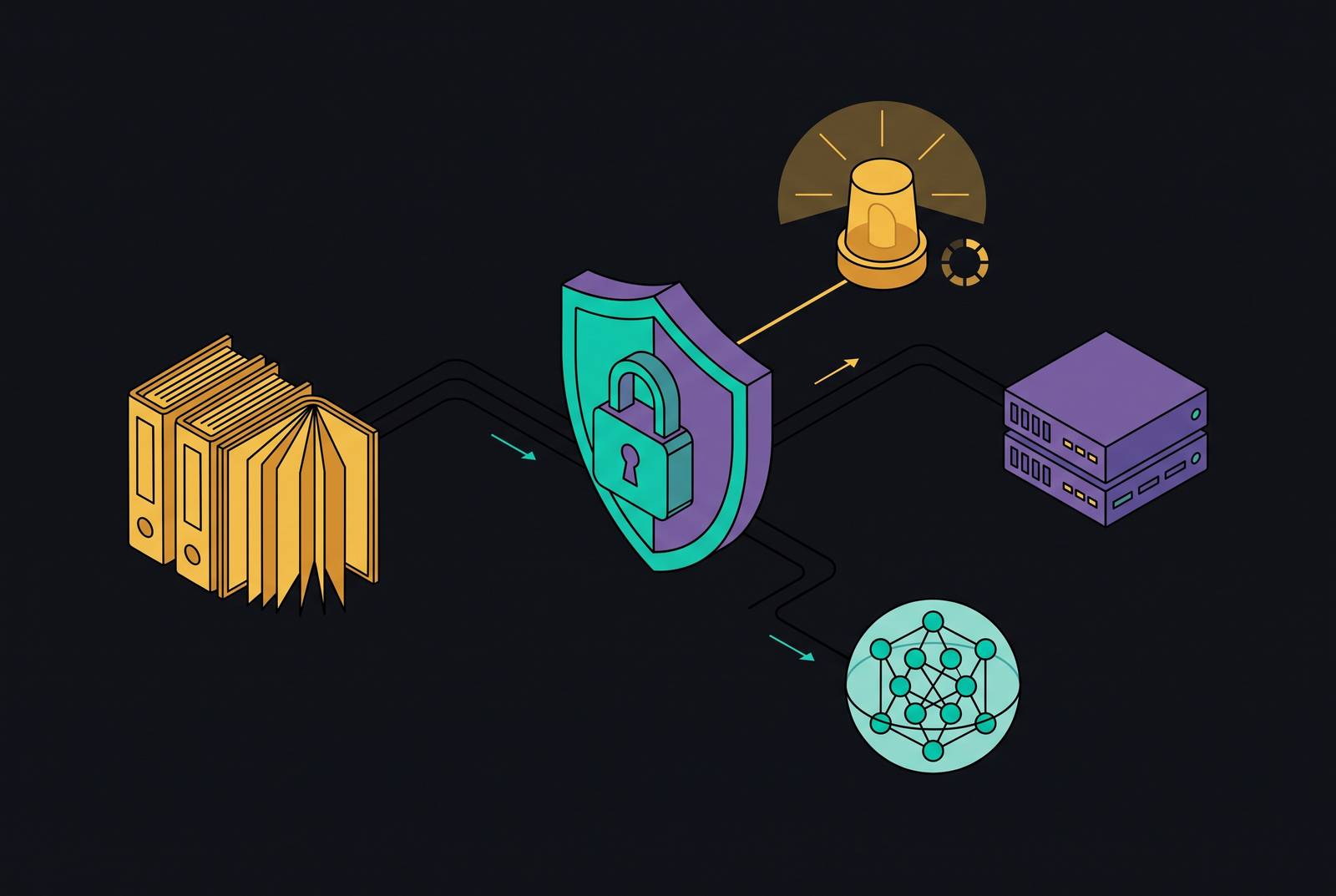
AI Security Incident Response Playbooks for Enterprise Teams. Enterprise security teams need AI-specific playbooks built around behavioral signals, request-boundary evidence, and a defined sequence of preserve-contain-eradicate-recover actions tailored to each AI incident class.
Why traditional incident response playbooks fail for AI systems
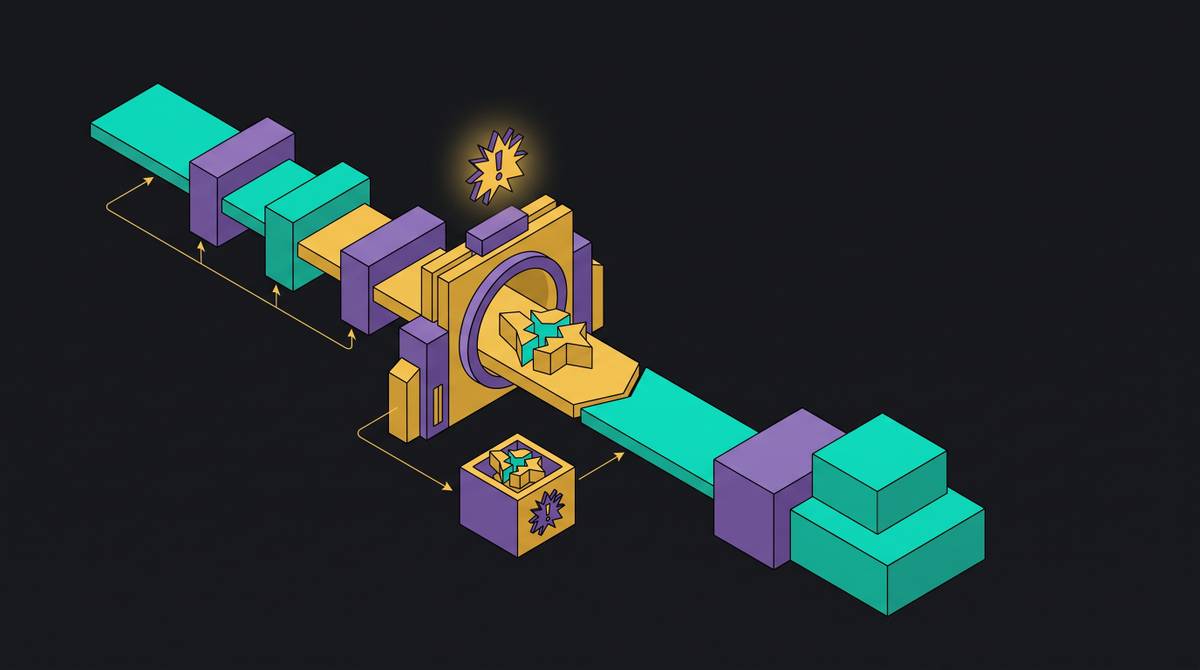
Most enterprise IR playbooks were built for a world where compromise leaves fingerprints, such as a rogue process, a suspicious login, or a spike in outbound traffic. AI-layer incidents don't play by those rules. Prompt injection, agent escalation, and model-layer exfiltration produce no malware, no stolen credential, no network anomaly. From the infrastructure's point of view, the whole thing looks like a normal API call that returned a clean 200 response code. The SOC dashboard stays green because nothing in the plumbing broke. The model just did something it shouldn't have.
Two incidents from earlier this year make the gap concrete rather than theoretical. Microsoft's "Prompts Become Shells" disclosure (May 7, 2026) and the Marimo CVE-2026-39987 incident (initial CVE exploitation began April 8, 2026, with the LLM-agent post-exploitation incident on May 10, 2026) both were cases where the classical SOC playbook did not detect or contain the incident in time. Neither triggered the kind of alert a traditional playbook is built to catch. Both required someone to notice that the model's behavior, not the network's behavior, had gone sideways.
Part of the problem is that AI systems behave probabilistically. Feeding the same input twice offers no guarantee of the same output. This breaks the core assumption most vulnerability management programs run on: find the bug, patch the bug, confirm the fix holds. There's no patch for "the model interpreted untrusted content as an instruction." The attack surface here is the model's reasoning process itself, chewing on text it was never supposed to trust in the first place.
The lack of usable evidence compounds this. The record that actually matters, prompts submitted, outputs generated, tool and function calls, retrieval queries, identity context behind each interaction, is not what IR teams reach for out of habit. And detection often comes late by design: a model can drift, hallucinate, or misjudge intent while every infrastructure dashboard glows a reassuring green. Quiet failure is the default mode, not the exception.
The scale of exposure makes this more than an edge-case concern. Deloitte's State of AI in the Enterprise report found that 74% of organizations expect to use AI agents at least moderately by 2027, but only 21% claim a mature governance model for agentic AI. Most companies are racing into production deployment without the governance scaffolding a working playbook assumes is already there. Layer on a separate finding: 88% of organizations reported confirmed or suspected AI agent security incidents in the past year, while a Beam AI survey found 82% of executives believed their existing policies already protected them from unauthorized agent actions. Somewhere between those two numbers sits the actual state of enterprise readiness, and it isn't flattering.
AI security incident definitions and their importance for IR
Start with a working definition, because without one, nothing downstream works. An AI security incident is any event where the confidentiality, integrity, or availability of an AI system, or of the data and tools it can reach, gets compromised through attack vectors that traditional security tooling can't identify. That last clause is the whole point. If a traditional SOC rule could catch it, it wouldn't need a new taxonomy.
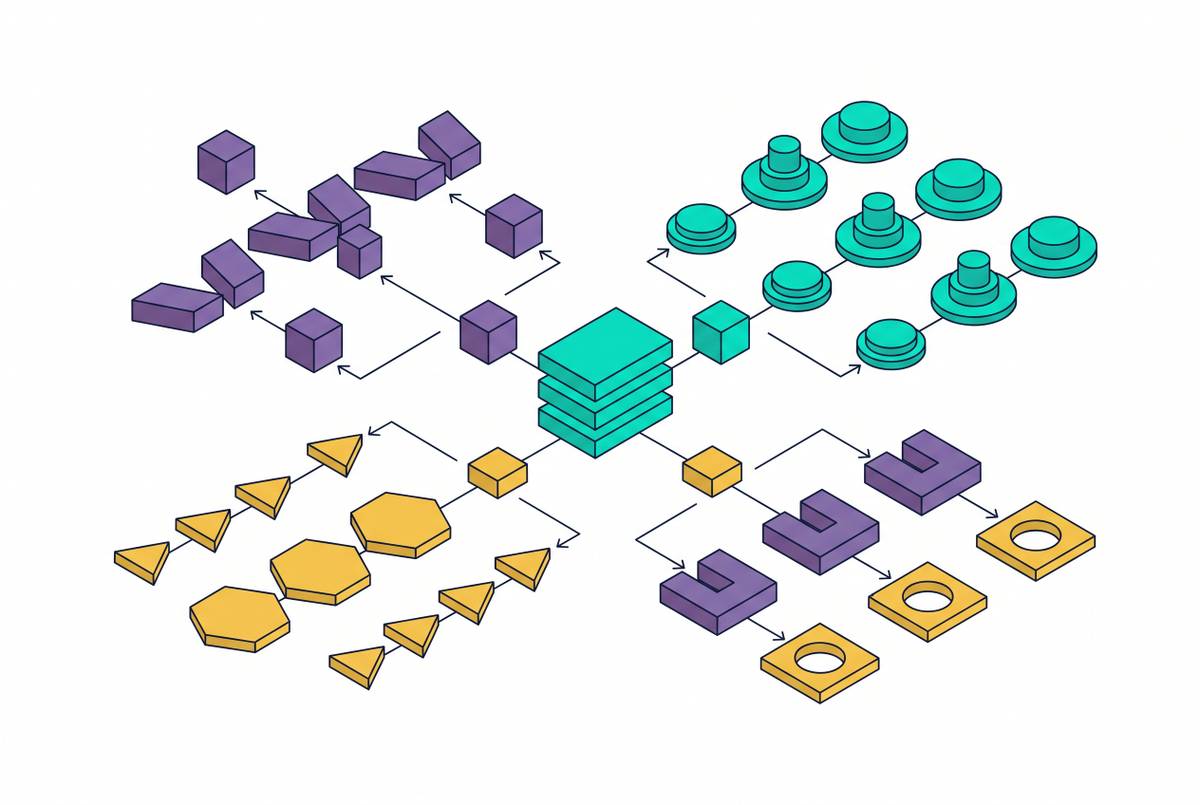
Five incident classes tend to recur across enterprise deployments. Prompt injection, both direct and indirect, is ranked at the top of OWASP's LLM Top 10 for 2025 as LLM01, and the indirect version is the sneakier cousin: instructions buried inside documents, web pages, emails, or code comments that the model parses as legitimate context rather than as an attack. Data poisoning corrupts training or retrieval data so the model behaves differently at inference time. Model and supply chain poisoning compromises weights or third-party model artifacts before anything even reaches deployment. Tool poisoning and misuse manipulates the tools or MCP servers an agent is allowed to call. And rogue agent deployment, shadow agents spun up with excessive access, no clear owner, and no plan to ever turn them off, rounds out the list.
None of these necessarily involves malware, a stolen credential, or a network intrusion. Most of them would sail past a traditional SOC detection rule without tripping a single alarm. Severity models must account for two dimensions traditional playbooks ignore, including impact on AI-specific dimensions like output integrity, downstream agent actions, and regulatory notification thresholds.
Ownership has to be settled before any of this happens, not during it. SOC, application team, AI platform team, or some formal cross-functional structure, it barely matters which, so long as it's decided in advance. Improvised ownership decisions made mid-incident are a documented way to widen the blast radius. Skip the definitional work and behavioral failures just pile up in an "other" bucket, unclassified and unescalated, forever. Agent sprawl makes the stakes worse: the average organization now runs 37 deployed AI agents, many spun up without any central review, so an incident touching one can cascade through a whole chain of agents that inherited each other's permissions CSA.
The evidence layer AI incidents produce (and how to log it before the incident)
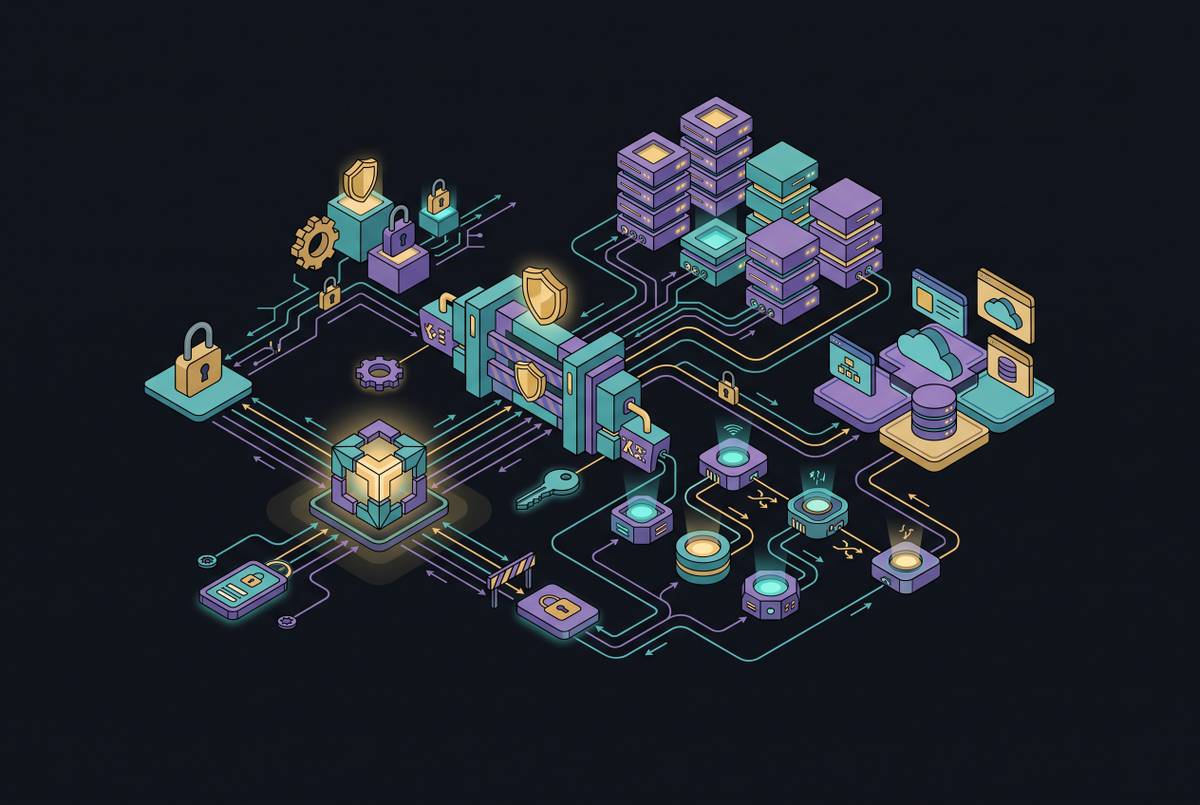
The rule is this: no logging, no response. The evidence an AI incident produces is nothing like what IR teams train on. At minimum, a team needs prompts submitted to the model, outputs generated, tool and function calls made by agents, and queries issued to the retrieval layer. Without that record sitting somewhere retrievable, there's no reliable way to reconstruct what happened, when it started, or how far it spread after the fact.
Privacy makes this messier than it sounds. Prompts routinely carry personal and confidential data, so the instinct to just log everything and sort it out later runs straight into a legal wall. The fix isn't to log less, it's to treat interaction logs as sensitive-data archives: strict access controls, retention windows with actual expiration dates, redaction where it's warranted. A log nobody's allowed to keep is functionally identical to a log that was never captured.
Multi-agent workflows add a correlation challenge on top of the capture challenge. A single compromised session can hop across multiple agents, retrieval calls, and tool invocations before its actual intent becomes visible, so isolated event logs can hide the causal chain. Observability has to stretch across agent hops, logging the full chain of activity rather than individual events in isolation.
Microsoft's five-step playbook, published in March, ties evidence collection to named tooling: Defender for Cloud Apps and Purview DSPM for visibility, DLP logging and AI safety guardrails for watching prompt activity, Sentinel correlation and Purview audit logs for the investigation itself. The underlying idea holds regardless of vendor: AI evidence has to flow into whatever investigative infrastructure the SOC already runs, not sit in a separate silo nobody checks.
Cato Networks' HashJack technique, documented in November 2025 and referenced in Microsoft's March playbook, is a good illustration of how non-obvious this evidence can get. The malicious instruction sits in a URL fragment after the # character, handled client-side, invisible to the person looking at the screen. Without prompt-level logging that captures the full context the model actually received, that incident leaves nothing behind. Authorization belongs in deterministic controls outside the model, not inside a block of text the model itself can be talked into repeating.
The regulatory clock that runs the moment an AI incident is confirmed
Article 73 of the EU AI Act sets the pace here, and the pace is fast. Providers of high-risk AI systems must report a serious incident involving disruption to critical infrastructure within 2 days of becoming aware of it; other serious incidents get a 15-day window. Missing it brings penalties of up to €15 million or 3% of global annual turnover.
Timing matters more than the headline deadline suggests. The Digital Omnibus pushed the AI Act's high-risk obligations back, Annex III requirements to December 2027, Annex I to August 2028, while transparency obligations already kicked in on August 2, 2026. Teams need to map their own systems against the right obligation tier before assuming the clock hasn't started. And the AI Act isn't the only clock running: organizations covered by NIS2 or DORA may already owe notification when an AI-related incident touches essential services or ICT systems, regardless of what the AI Act itself requires.
Banking has its own overlay. On April 17, 2026, the Federal Reserve, OCC, and FDIC issued SR-26-2, replacing SR-11-7 and SR 21-8 for the first time in fifteen years, a change that matters most for banking organizations north of $30 billion in assets CSA. Singapore, meanwhile, published the Model AI Governance Framework for Agentic AI in January 2026, the first governance framework built specifically for agentic AI. It's voluntary and principles-based, and organizations operating across jurisdictions increasingly treat it as a practical companion to the EU's harder-edged requirements.
None of this is abstract policy trivia. A 2-day notification window means triage, evidence preservation, and severity classification have to run in hours, not days. Ambiguous ownership or missing logs will burn through that entire window before anyone's even drafted the notification. And the regulatory surface is still expanding: NIST's CAISI launched an AI Agent Standards Initiative in February 2026 covering identity, authorization, monitoring, and interoperability for agents, which is a fairly reliable sign that things get more complicated from here, not less.
The three frameworks that anchor AI incident response in 2026
Three frameworks currently do the heavy lifting, and each does a different job. NIST SP 800-61r3, released in April 2025, is the foundational incident response framework, updated to serve as the structural basis for AI IR, organized around the standard IR lifecycle. MITRE ATLAS extends the familiar ATT&CK matrix to cover AI-specific threat vectors, giving teams a shared vocabulary for what they're actually up against. And the Coalition for Secure AI's AI Incident Response Framework v1.0, released in March 2026, fills in the procedural detail the other two leave out, including the regulatory notification checkpoints that Article 73 demands. It's the newest of the three and the one worth cross-referencing first for anything AI-native.
Microsoft's prompt abuse playbook, published in March 2026 as the second installment in its AI Application Security series, is practitioner-facing rather than principle-facing. It maps specific controls to specific investigative steps instead of just gesturing at best practice.
There's a gap none of these fully close. NIST's AI RMF and ISO/IEC 42001 organize governance at the program level, board reporting, policy language, risk appetite, but stop short of specifying the runtime architecture that actually enforces any of it. That gap, between what the standard says should happen and what the infrastructure has to physically do, is where the real implementation work lives, and where most teams get stuck.
The pattern across every documented failure so far is depressingly consistent: organizations without pre-built AI IR procedures improvise under pressure, and improvisation tends to extend blast radius, destroy forensic evidence, or blow past a regulatory notification window entirely. No single framework covers the whole surface on its own. NIST 800-61r3 gives structure, MITRE ATLAS gives threat vocabulary, CoSAI gives the AI-specific procedure. An actual working playbook stitches all three together rather than picking a favorite.
Building the playbook phase by phase: what changes for each AI incident class
The playbook has to be scenario-specific rather than generic. CM Alliance finds that a prompt injection playbook and a rogue agent deployment playbook share a phase structure but diverge on evidence sources, containment options, and recovery validation.
Preparation happens long before anything goes wrong. That is why it's the phase most teams skip. Build a real inventory of every AI system, agent, MCP server, and connected data source in the environment, since nothing gets governed if it can't be seen in the first place. Pre-assign ownership across SOC, AI platform team, and application team before there's any pressure to decide it on the fly. Publish an acceptable use policy paired with a lightweight risk classification that flags new or high-impact AI projects for review before they ship.
Detection and triage lean on behavioral signals more than infrastructure alerts, because the infrastructure often has nothing useful to say. For prompt injection, watch for output anomalies, unexpected tool calls, or requests reaching outside a user's normal data scope. For shadow AI and rogue agents, the useful signals are scattered: browser telemetry, egress and DNS logs, OAuth grants sitting in the identity provider, endpoint visibility, even expense reports. Each catches a different slice of the problem and none of them catches all of it. Microsoft's March playbook makes the same point about prompt abuse specifically: it exploits natural language, so it can leave no obvious trace at all, and sensitive-data summarization attempts slip by unnoticed without proper logging and telemetry. The fix is definitional as much as technical: extend the incident classification taxonomy to include AI-native event types explicitly, so these things stop defaulting into the "other" bucket.
Preservation is where AI incident response deviates most sharply from the classical version, and it's also the easiest phase to botch. Snapshot the prompt logs, output logs, tool call records, and retrieval history before taking any containment action that might alter them. A model rollback or an agent suspension executed in the wrong order can wipe out the evidence chain before anyone's had a chance to look at it. For multi-agent incidents, map the full causal chain across agent hops first, then preserve, so the correlated evidence comes out intact rather than scattered across five different agent logs that don't obviously connect.
Containment decisions split by incident class, and getting the class wrong here wastes the response. Prompt injection in a live production assistant calls for disabling the specific retrieval sources or ingestion pipelines being exploited and tightening input sanitization, since the problem usually lives in the context being fed in, not in the weights. Agent tool-call escalation calls for revoking the agent's access to the over-privileged tool calls or MCP servers in question, and suspending the agent identity rather than the underlying model. Rogue agent deployment calls for isolating the agent's API keys and service account credentials, then tracing every data source it touched through OAuth grants and any long-lived keys it was carrying. Three frameworks now anchor the space, each playing a distinct role. That's the whole discipline in miniature: same skeleton, different muscle depending on what actually broke. Phase 1: Preparation (before the incident). Phase 2: Detection and triage. Phase 3: Preserve. Phase 4: Contain.