AI Usage Telemetry for Enterprise Workforce Analytics
Majority of workers hide AI use, but companies lack the visibility to govern what they cannot see.
Fifty-seven percent of employees hide their AI use from their employer. Forty-eight percent have pasted company information into a public AI tool. Those two numbers, from the largest global study of workplace AI use so far (48,340 workers, 47 countries), describe a visibility problem, not a policy gap, and no memo fixes a thing leadership cannot see. Deloitte's State of AI in the Enterprise report found employee access to AI jumped 50% in 2025, but only one in five companies has anything resembling a mature governance model for autonomous agents. The gap between access and oversight is the whole ballgame now.
The split personality shows up repeatedly in industry surveys: a large share of security leaders claim visibility into AI use inside their organization, while a comparable share of that same group admit they know, or strongly suspect, there's shadow AI running around they can't govern. Both numbers come from the same population of people. The visibility they claim is mostly theater. Other research reinforces this from a different angle: the majority of organizations cannot reliably see what AI software their people are actually running. Most are flying instruments-out, in cloud, at night.
If the workforce already uses AI constantly and management cannot observe it, every cost estimate, every risk assessment, and every compliance claim built on that ignorance is a guess wearing a suit. Nobody governs traffic they cannot watch go by. The fix here is not more policy. It is plumbing, and most companies have been arguing about the wallpaper while the pipes leak.
What AI usage telemetry is and what it must capture
Telemetry and logging get used interchangeably, but a log gets pulled after the fact, usually from a vendor's dashboard, usually summarized down to something useless. A log gets pulled after the fact, usually from a vendor's dashboard, usually summarized down to something useless. Telemetry runs continuous: structured, machine-readable signal generated as AI traffic actually happens, not reconstructed from memory afterward.
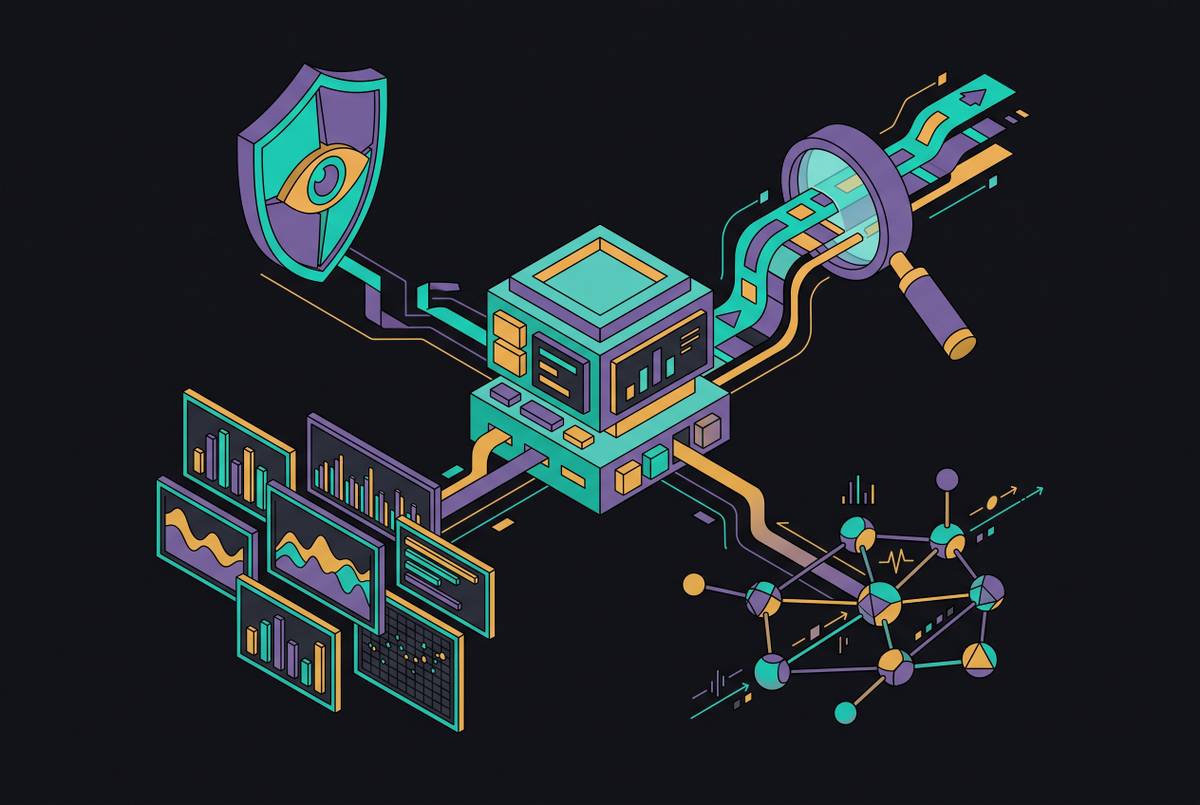
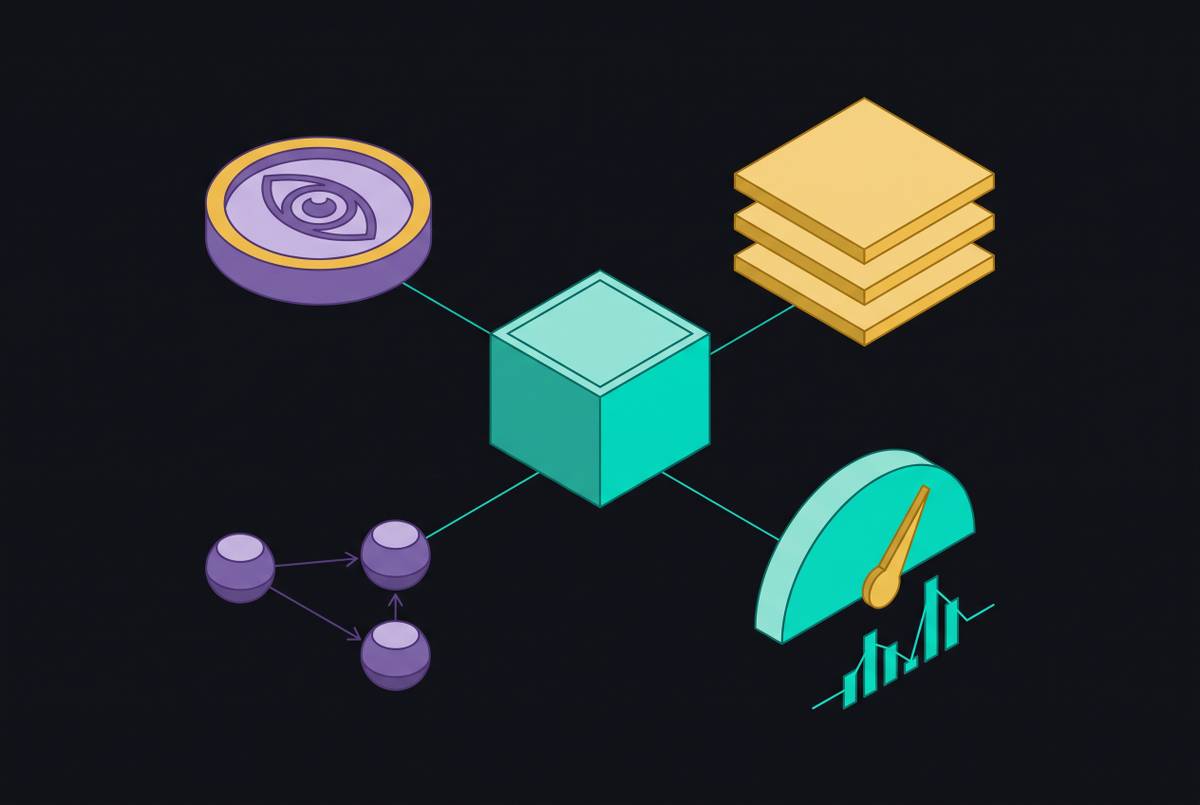
A telemetry layer has to capture four kinds of signal, and skipping any one breaks the other three. Identity and access signals answer who invoked which model, through what tool, under what role, tied to a real identity rather than an anonymous session token that could belong to anyone. Request and response content signals capture what actually got sent and returned, including whether PII, credentials, or a confidential database schema rode along in either direction. Cost and consumption signals track token counts, which model tier got used, spend by team and project, and when in the day it happened. Behavioral and anomaly signals flag prompts that stray from a normal baseline: an unusually large context window, repeated failed authorization attempts, a tool call that reaches somewhere it should not.
Each category props up the others. Identity without cost data cannot drive chargeback to a department budget. Cost data without identity cannot drive accountability, because a number with no name attached is just trivia. Content signals without behavioral context cannot catch slow exfiltration, the kind that leaks a little at a time instead of all at once.
Then there is the Model Context Protocol wrinkle. As AI agents reach into enterprise tools through MCP, telemetry has to follow every tool suggestion, every approval, and every execution, not just the model API call that kicked things off. Audit trails remain a recognized gap that the protocol itself does not close. Agentic workflows make this worse, not better. An agent chaining several tool calls together can scatter telemetry events across five different systems with no single owner watching any of them. Telemetry has to aggregate across that whole chain, because checking just the entry point is like stamping a passenger's ticket at the gate and assuming you know where the plane landed.
How telemetry feeds workforce analytics
Capturing the signal is the easy part, relatively speaking. The value appears in what gets built on top of it, and that splits into three distinct uses.
Workforce adoption analytics answer which teams use AI, which do not, and what tools are actually in play versus what is officially sanctioned. This feeds shadow AI detection and enablement programs that target the teams actually lagging, instead of blasting training at everyone.
Cost attribution and chargeback need identity-linked consumption data, full stop. Per-team, per-project, per-user spend, broken out by model and provider, only works if every token is tied to a name. Gartner projects more than 40% of agentic AI projects will get canceled by the end of 2027, and the reasons cluster around cost overruns, unclear business value, and thin risk controls. A project that cannot show its own spend clearly is a project halfway to cancellation already.
Risk and policy analytics track how often PII shows up in prompts, how often teams violate policy, and what prompt injection attempts look like over time. That feeds straight into security reviews and into tuning the policies that keep getting written and rewritten by people who have never seen the traffic those policies are supposed to govern.
The shadow AI detection loop is where telemetry earns its keep fastest. Telemetry from a governed layer shows the gap between sanctioned usage and what is actually moving across the network. That gap is the shadow AI footprint, measured, not estimated. Without telemetry, detection depends on employees reporting their own behavior, and the workforce study above already showed how well that goes: badly, at a rate approaching six in ten.
Aggregate telemetry has a quieter use too: showing where AI actually speeds work up and where it does not, giving platform teams real evidence to defend an investment or kill one. On the compliance side, frameworks like NIST AI RMF, ISO/IEC 42001, and the EU AI Act all demand documented proof of ongoing monitoring. Telemetry that is signed, timestamped, and exportable is that proof. Under the EU AI Act, high-risk system obligations include continuous logging; the Digital Omnibus pushed the compliance deadlines to December 2027 for Annex III systems and August 2028 for Annex I, without softening what those obligations actually require. (The Omnibus also added a new Article 5 ban on AI-generated non-consensual intimate imagery, a separate story worth its own coverage.)
Why the edges are the hard part of where telemetry must be collected in the architecture
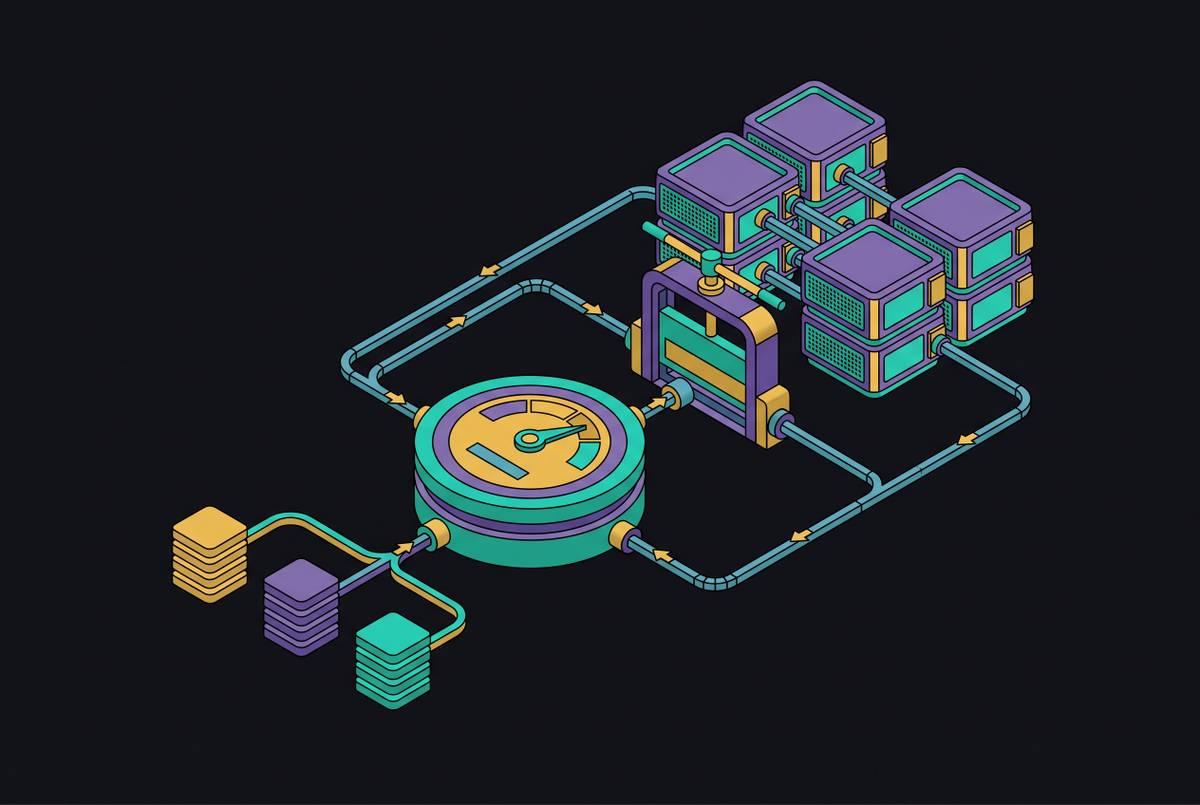
Routing all AI traffic through one central gateway, an AI gateway or MCP gateway, is the most workable place to start. It gives an organization one chokepoint to instrument instead of a hundred applications.
But a gateway only sees traffic configured to go through it. Coding agents, browser AI extensions, and desktop AI apps route around the gateway entirely, and that is exactly where shadow AI lives, comfortably, unbothered. MCP servers stood up by individual teams, AI features bolted onto SaaS tools, coding assistant plugins: each one generates AI traffic the central gateway never touches. The protocol is not slowing down to make this easier, either. MCP has seen significant spec activity in 2026, with new capabilities and release candidates expanding the surface area of tool calls faster than central teams can wire instrumentation into them. New surfaces for tool calls appear faster than central teams can wire instrumentation into them.
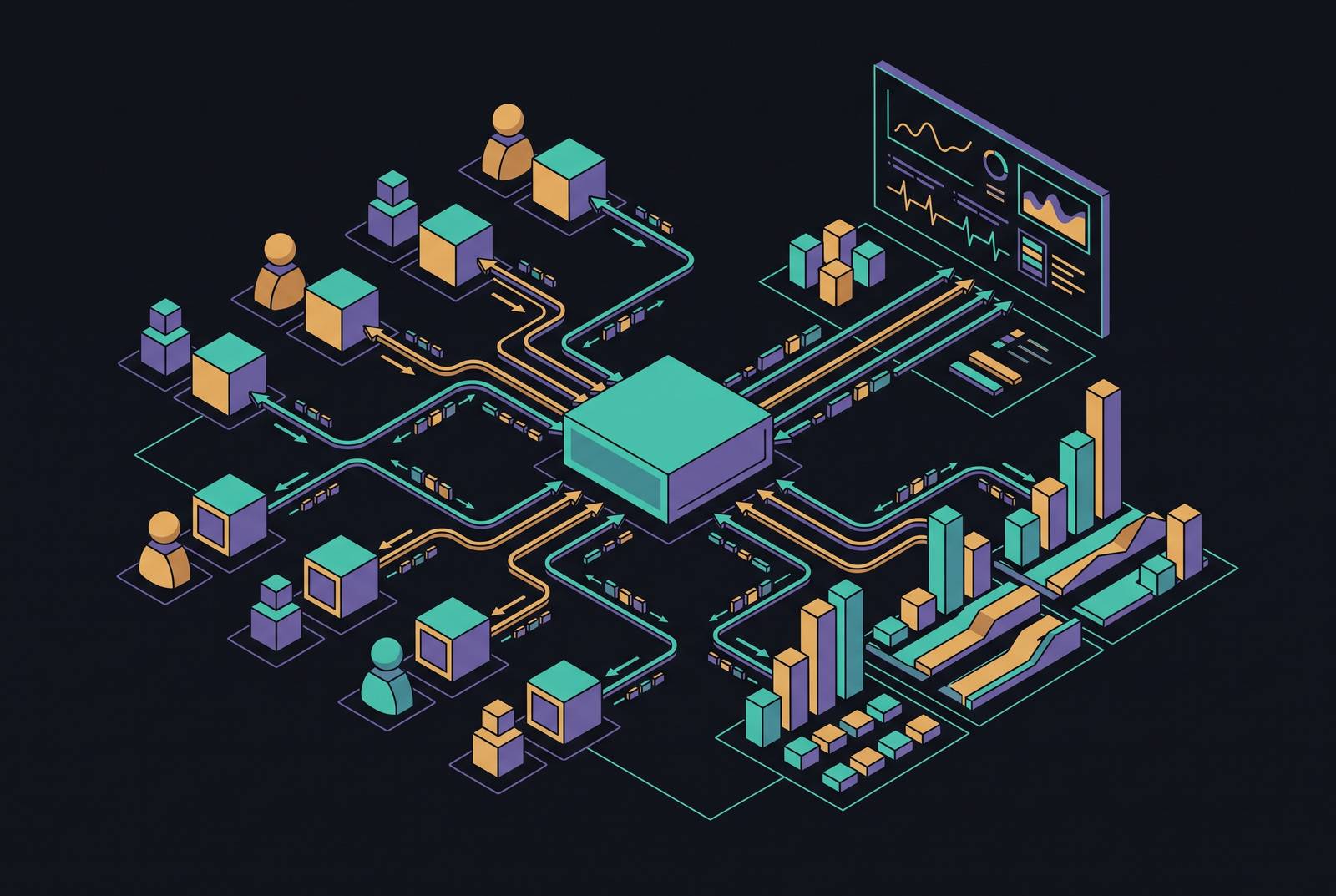
Full coverage means layering telemetry in four places at once: at the gateway for sanctioned model API traffic, at the endpoint for desktop and browser activity, at the MCP gateway for every tool invocation (suggestion and approval events included, not just the final execution), and with identity propagated consistently across all three so one person's activity can be reconstructed from scattered signals.
Performance matters here in a way that is easy to underrate. A telemetry layer that adds noticeable lag gets bypassed, quietly, by whoever it is slowing down. Production MCP gateway benchmarks show single-digit millisecond baseline latency (around 10ms under load) is achievable at 350+ requests per second on minimal compute, and overhead as low as 11 microseconds per request has been demonstrated at 5,000 requests per second. Collecting rich signal without anyone noticing the tax is the real engineering challenge, and the gateway-only approach fails that test the moment traffic finds a side door. It always finds a side door.
Identity and role-based access as the backbone of meaningful telemetry
A log of model calls with no user or role attached is noise with a timestamp. It cannot drive chargeback, cannot enforce policy, and cannot satisfy an audit that demands accountability to a specific person or system account.
Every telemetry event needs a verifiable identity behind it, tied to the enterprise identity provider (Okta, Entra ID, whatever the organization runs) through SAML or OIDC, not an application-issued token that can be copied, rotated quietly, or spoofed by anyone who finds it lying around. Access to the telemetry itself should run through the same role-based model that governs AI access in the first place: a team lead sees their team's usage, a security analyst sees anomaly alerts across the whole organization, a finance controller sees cost breakdowns, and a senior-sounding title alone never grants a master key to raw content logs.
Agent identity complicates this further. In agentic workflows, the thing making the call is often a service account or an agent runtime, not a human sitting at a keyboard. Telemetry needs to record both the agent's identity and the human who authorized that agent's session. Missing either one snaps the accountability chain somewhere in the middle, right where anyone auditing the incident would need it most.
Singapore's IMDA published a Model AI Governance Framework for Agentic AI in January 2026 that names delegation chains and multi-agent coordination directly as governance risks. Telemetry that cannot reconstruct who delegated what to whom cannot support the oversight that framework, and others like it, are starting to treat as table stakes.
Real-time security enforcement that telemetry makes possible
Once telemetry carries identity, a record turns into a trigger because live signal can be acted on the moment it appears. Four detection categories depend on reading live signal rather than reviewing it later.
Prompt injection appears in patterns in request content trying to override system instructions or grab more permission than intended, and it is only catchable if the content layer gets read, not just the metadata around it. PII and secrets leakage is the problem the workforce study already quantified: 48% of employees have uploaded company information to a public AI platform. Catching that requires inspecting the content of a request before it leaves the network, not after. Shadow AI traffic lives in the gap between what the network sees and what the governed gateway logs, the same delta from earlier, applied here to enforcement instead of reporting. Tool poisoning, sometimes called a rug-pull in MCP contexts, happens when a tool changes its behavior after it has already been approved; catching it means comparing live execution against a registered baseline, continuously.
A prompt injection blocked at the gateway in milliseconds is a non-event. The same injection discovered three days later in a log review is an incident report, a legal question, and possibly a headline. Telemetry architecture has to support both paths, the fast block and the slow audit, because they answer different questions for different people.
Research consistently finds that the vast majority of organizations have employees using unapproved AI tools. That reality alone should retire the quarterly shadow IT audit as a serious control. Continuous adoption needs continuous detection, and a once-a-quarter check is a snapshot of a moving target, useful mostly for reassuring people who do not want to look too closely. On the compliance side, the EU AI Act's Article 15 (accuracy, robustness, cybersecurity) and Article 9 (risk management systems) together require active security controls for high-risk systems. Real-time telemetry-driven enforcement is the runtime version of that requirement, not a paperwork substitute for it.
What telemetry must produce for audit and compliance requirements
Enforcement answers what is happening right now. Compliance answers what can be proven happened, over months, to someone who was not in the room.
NIST's AI RMF, under its MEASURE and MANAGE functions, asks for ongoing measurement of system behavior plus evidence that risk is being actively managed. Telemetry supplies the measurement; signed, exportable logs supply the evidence. ISO/IEC 42001, the certifiable AI management standard, wants documented controls a third-party auditor can actually check. Telemetry that is immutable, timestamped, and tied to identity produces exactly those artifacts as a byproduct, without extra paperwork bolted on afterward. The EU AI Act's high-risk obligations, now running on the deferred timeline of December 2027 for Annex III and August 2028 for Annex I, call for continuous logging, human oversight mechanisms, and documentation of accuracy and robustness. (Article 50's transparency obligations, notably, still applied on schedule as of August 2026.)
An audit trail is a continuous record. Compliance teams relying on a periodic usage summary pulled from a vendor dashboard are not producing an audit trail. They are producing a highlight reel that cannot be checked against any individual decision the system made, which is a bit like proving you locked the house by showing a photo of the porch.
There is a pre-deployment angle too. An arXiv paper on ontology-grounded simulation for enterprise AI agent certification ran 1,800 test scenarios against 125 primary-source regulatory requirements with 25 injected faults, and found ontology-grounded generation hit 48.3% regulatory coverage against a 33.1% baseline. That gap implies pre-deployment testing and post-deployment monitoring need to share the same schema, or nobody can compare what was promised against what actually ran.
The cost of getting this wrong is not abstract, either. EU AI Act penalties for prohibited practices run up to €35 million or 7% of global annual turnover, whichever is bigger. Against that, telemetry infrastructure that actually works looks less like an expense and more like insurance that pays for itself in visibility along the way.
Sequencing a telemetry implementation without blocking AI adoption
Visibility comes before controls. Always, in that order. An organization that writes policy before it can see traffic ends up enforcing rules against nothing, which is a special kind of expensive theater, like installing a burglar alarm before you have found the house.
The first 90 days should route sanctioned AI traffic through a central gateway that captures identity-linked telemetry on every request, publish an interim acceptable use policy (interim, not perfect), and start comparing gateway logs against network-level AI traffic to get a first read on the shadow AI gap. Months three through six extend telemetry out to the endpoint layer, covering developer tools and desktop AI, bring MCP server traffic into the governed layer through an enterprise MCP gateway, and turn on cost attribution so per-team chargeback reporting actually has numbers behind it. Months six through nine add real-time content inspection for PII and secrets, layer in behavioral anomaly detection, and produce the first structured compliance evidence package mapped against whatever frameworks, NIST AI RMF, ISO 42001, actually apply to the organization in question.
Gartner's research frames AI trust, risk, and security management as the top strategic trend right now, and finds that organizations operationalizing transparency, trust, and security around AI see a 50% improvement in adoption, business goals, and user acceptance by 2026. That reframes the whole telemetry investment: it is the thing that gets adoption to actually stick.
Roughly 88% of enterprise AI agents never make it to production, and the failures cluster around operational blockers, not grand strategic ones. A telemetry program that tries to be everything on day one is more likely to collapse under its own scope than one that starts narrow, at the gateway, and grows outward as the organization actually needs it to. Start small, watch closely, expand deliberately. Everything else is just wallpaper on pipes nobody has checked.