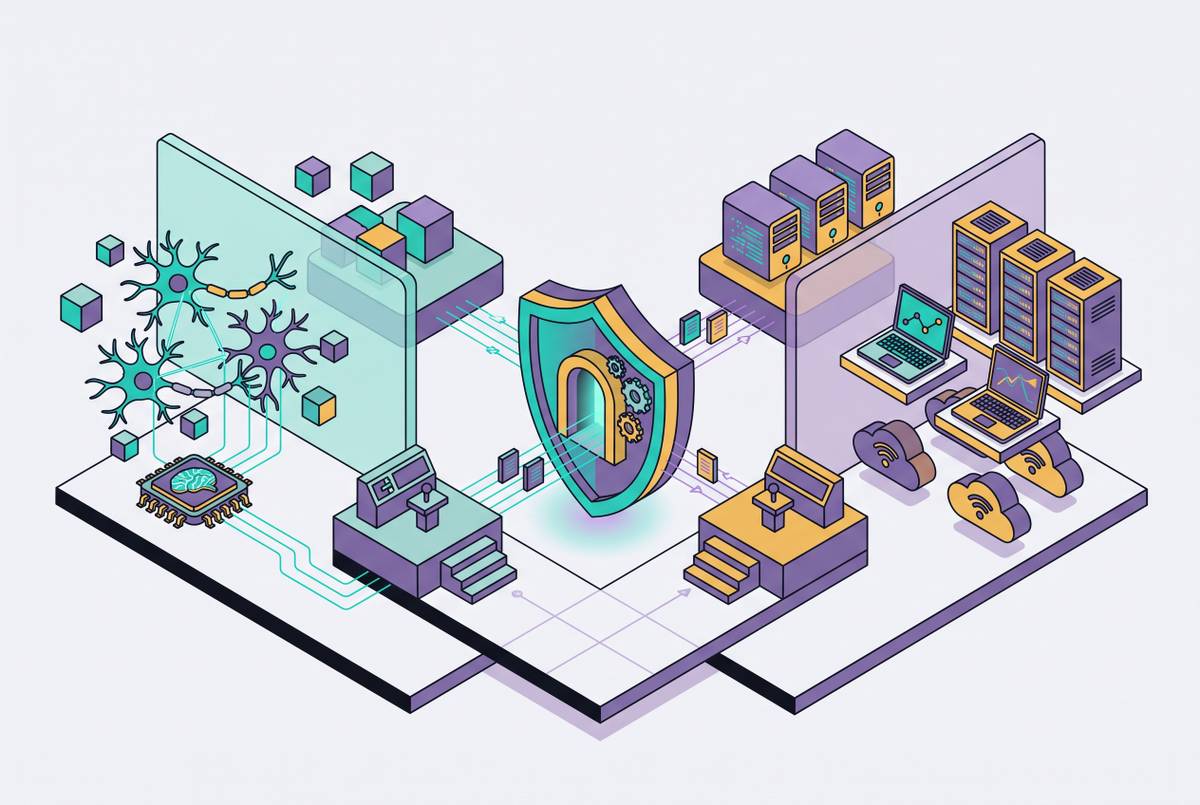
Enterprise AI Governance Framework Design and Ownership
Governance requires architecture, accountability, and enforcement operating together at every stage.
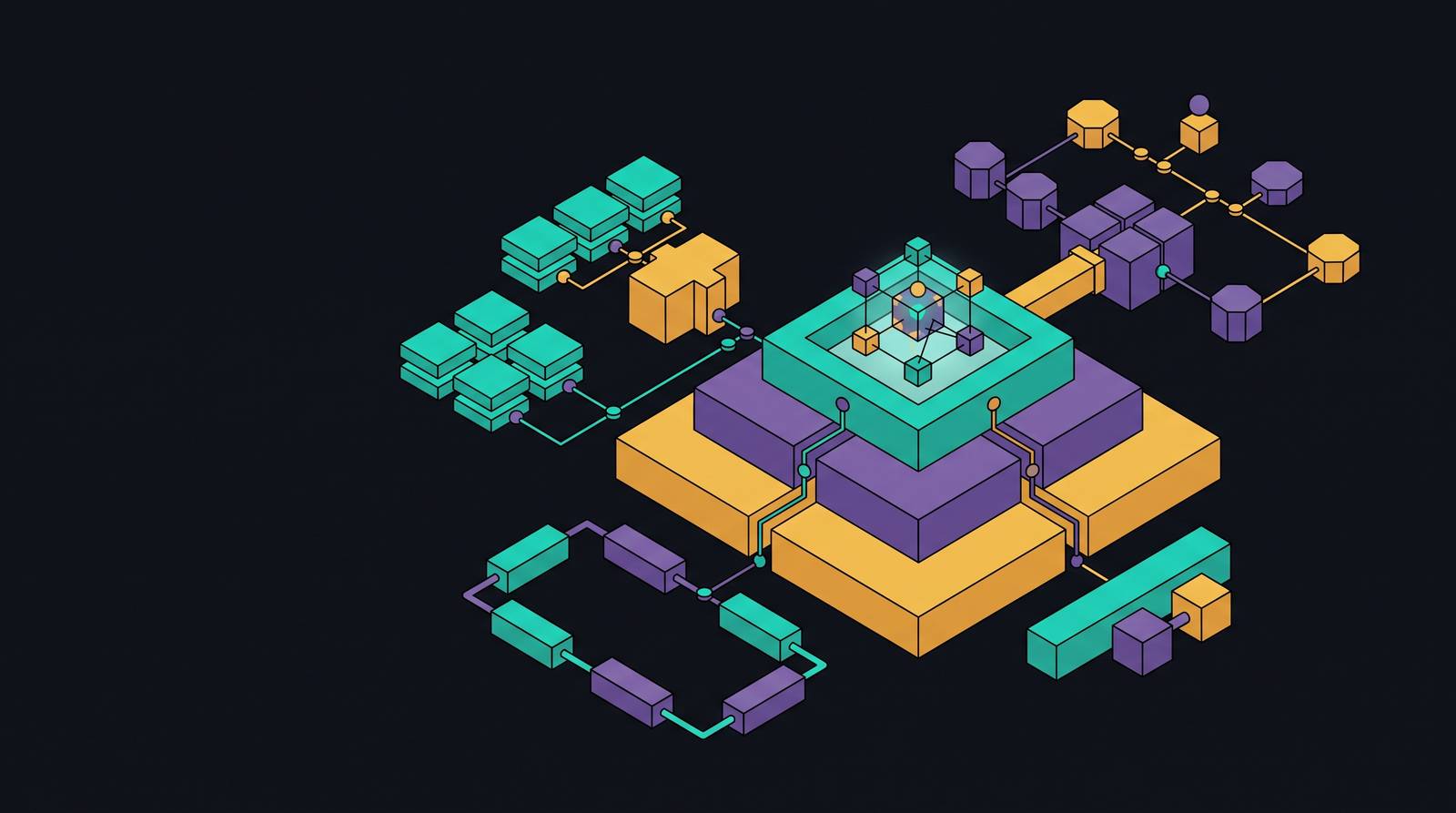
The most persistent mistake organizations make is treating governance as a document. A policy statement isn't a framework any more than a blueprint is a building. A real governance framework is a system, and unless architecture, accountability, and enforcement are all present simultaneously, none of them fully works.
A defensible enterprise AI governance framework has six components: policy development, risk assessment, compliance alignment, technical controls, ethical guidelines, and continuous monitoring. These aren't a checklist. Each addresses a distinct failure mode, and the absence of any single element creates a gap the remaining five cannot cover. An organization with sophisticated technical controls and no risk assessment will govern the wrong things well. One with rigorous risk assessment and no technical enforcement will produce findings that go nowhere.
The NIST AI Risk Management Framework offers a practical taxonomy for classifying and treating AI risks. Adopting it as a foundation saves organizations from the trap of building proprietary classification schemes, an exercise that rarely improves on what NIST has already done and almost always takes longer than planned.
Governance must operate across the entire AI lifecycle. From procurement through active monitoring to eventual decommission, the framework needs to be present and operative at every stage. Every organization I've seen that treats governance as a launch-gate review cleared once before a model goes live captures perhaps the smallest slice of where risk actually accumulates. The long tail of deployment is where exposure compounds.
Five structural pillars support the framework's operation: accountability mechanisms, formalized governance bodies, institutional culture that takes the framework seriously, principle-based policies that don't require constant revision as technology evolves, and the technical infrastructure to enforce those principles in practice. Governance runs continuously. It can't be scheduled.
How to Assign Ownership Across Security, IT, and Platform Teams Without Creating Gaps or Gridlock
No single team owns end-to-end AI risk. Security owns threat posture. IT owns access and tooling. Platform teams own the infrastructure models run on. Legal and compliance own regulatory exposure. Every team owns a piece; no team owns the whole. Coordination failure is the default outcome unless ownership is designed deliberately, before an incident creates the urgency to figure it out.
A minimum viable AI governance body requires at least five roles. An executive sponsor sets organizational commitment and arbitrates escalations when teams conflict. A governance lead owns policy and drives cross-functional alignment; this role is distinct from a CISO or CIO and requires cross-functional authority, not just technical expertise. Data stewards govern what AI systems can access and how that data is classified. Legal and compliance representatives translate regulatory requirements into concrete policy obligations. Risk owners assess the business impact of specific deployments and use cases.
The governance bodies that fail are rarely the ones that were never formed. They're the ones formed without enforcement authority, bodies that produce guidance operational teams quietly set aside under delivery pressure while the actual deployment landscape evolves without them. Paper governance is a common and costly condition, and it's much harder to dismantle than it was to create.
Platform engineers represent a structural blind spot in most governance designs. They are often the closest observers of what is actually running in production, yet they are rarely included in governance bodies. Incorporating them is an intelligence requirement, not a courtesy.
Human accountability can't be automated away. Monitoring tools can absorb significant manual workload, and they should. But someone must own the decisions those tools surface. NIST's AI Agent Standards Initiative, launched in early 2026, addresses identity, authorization, and monitoring for agentic systems directly, a signal that industry bodies are beginning to formalize what governance ownership of agents should look like. Map every framework component to a named team and a named escalation path before the framework goes live. An incident is the wrong moment to discover that no one has the authority to act.
Shadow AI as a Governance Design Input, Not Just a Security Problem
Research published by Cyberhaven in its 2024 Data Exposure Report indicates that a substantial and growing share of workers inside enterprises use AI tools their IT teams haven't approved, and that only a minority of AI applications in active use are visible to IT at any given time. These figures aren't stable. They reflect a structural condition that worsens as adoption accelerates.
Shadow AI is largely a supply-side failure, and that distinction matters enormously for how you respond to it. Every enterprise adoption study I've reviewed shows that when organizations provide approved alternatives that meet employees' actual needs, unsanctioned use drops. People reach for consumer tools because the governed alternative either doesn't exist or takes too long to access. Framing this as a discipline problem misreads the cause entirely.
The Samsung incident, reported by Bloomberg and The Register in 2023, remains a well-documented case study. Engineers pasted proprietary source code and confidential meeting transcripts into an external AI tool, producing multiple data-exposure incidents within weeks of the tool's internal availability. They weren't careless. They were trying to do their jobs efficiently in the absence of a governed alternative. The governance failure preceded the data exposure by a wide margin.
Shadow AI has also evolved well past consumer chat tools. Developers using frameworks like LangChain or AutoGPT can now deploy agentic workflows inside enterprise environments with no security review. The attack surface is no longer limited to data sharing; it extends to autonomous action. Governance frameworks that start from a prohibition posture drive usage underground rather than reduce it. Shadow AI detection must be a first-class component of the technical controls layer, not a reactive audit function. A tiered classification model — fully approved, limited use with specific data-handling rules, and prohibited — gives teams a workable policy to apply without requiring case-by-case review of every tool that emerges.
The Technical Controls Layer: What Enforcement Actually Requires at the Infrastructure Level
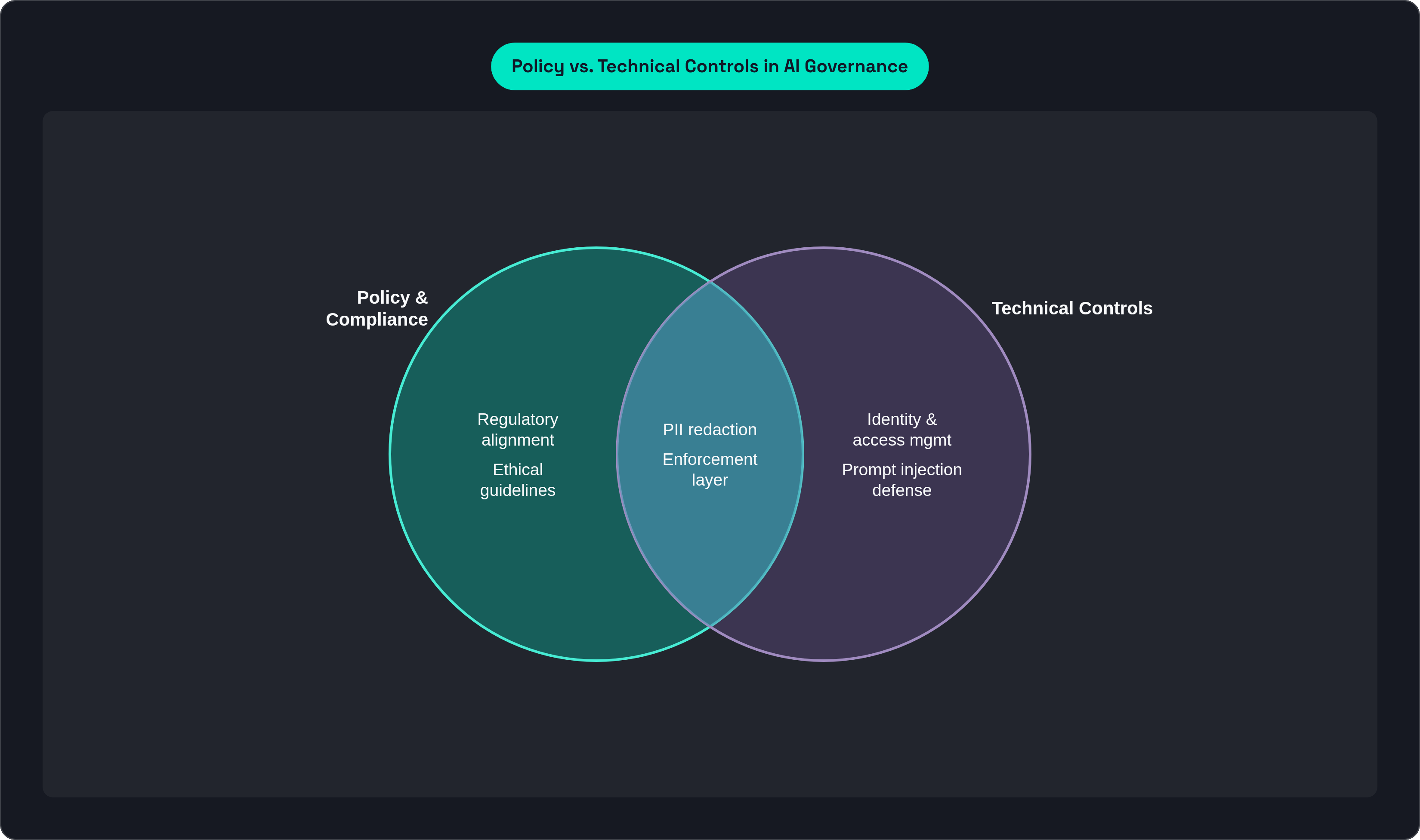
Policy without technical enforcement is a liability. A framework that relies entirely on human compliance reviews creates gaps wherever adoption outpaces the capacity of reviewers, which is everywhere and always. The gap doesn't close on its own.
Identity and Access Management for AI Agents
AI agents are in active use across a large share of enterprises, yet every security organization I know that lacks a coherent strategy for managing non-human identities has paid for it. Role-based access control at the tool level, tied to existing enterprise identity providers such as Okta or Microsoft Entra ID, is the only practical enforcement mechanism at scale. An agent should carry an identity, be authorized at the point of invocation, and have its access scoped to exactly what its function requires. Anything broader than that is a governance gap wearing the appearance of a working system.
Real-Time Threat Detection in the AI Layer
Prompt injection attacks have grown year-over-year and represent a significantly underappreciated category of AI-specific cyberattack. OWASP's AI security guidance ranks agent goal hijacking as a top risk in the agentic application category. Any agent with access to private data, exposure to untrusted content, and the ability to communicate externally is exploitable. Framework design should aim to eliminate at least one of those three conditions for every agent in production. This is an architectural constraint, not an aspirational principle.
EchoLeak, a 2025 vulnerability in Microsoft 365 Copilot documented by security researchers at Zenity, demonstrated that prompt injection can enable zero-click data exfiltration in live enterprise environments. PII, PHI, and secrets must be redacted at the infrastructure layer before they reach a model, not after, and not through model-level instructions that can themselves be overridden. System prompts should never contain credentials, API keys, or authorization logic. OWASP's System Prompt Leakage risk category reflects how frequently this mistake appears in production deployments, because it's easy to make and genuinely slow to discover.
Audit Logging and Observability
Breaches involving unsanctioned AI tools can take substantially longer to identify and contain than standard incidents. The detection lag is itself a governance failure, and it compounds. Full observability requires structured logs, cost telemetry, and distributed tracing. Security event logs alone are insufficient, and treating them as sufficient is a common and costly assumption.
No single control solves the problem. Risk reduction at the infrastructure level requires architectural controls, runtime monitoring, and governance policy working in concert. Gartner has found that a majority of application leaders believe AI agents represent a new attack vector, while only a minority believe they've got the right governance structures in place to address it. The technical controls layer is where that gap gets closed, or it doesn't get closed at all.
Why MCP Servers and Agentic Workflows Require a Governed Distribution Layer
Model Context Protocol has moved from an emerging integration pattern to a de facto standard for connecting AI agents to enterprise tools and data. The governance infrastructure hasn't kept pace with that shift, and the distance between the two is widening.
Without a control layer, every team that wants to expose a tool or data source via MCP deploys its own server independently — separate credentials, no shared inventory, no audit trail, no way for security or IT to know what is running or who has access. This is the API sprawl problem restated for agents, and it leads to the same outcome, a landscape that's ungovernable at enterprise scale.
The architectural answer is an MCP gateway, the infrastructure analog to an API gateway. A single governed entry point authenticates and authorizes every agent request, routes it to the appropriate backend, and logs the interaction before any data changes hands. The gateway doesn't slow agent workflows down. It makes them trustworthy, which is the precondition for letting them run at scale.
To satisfy enterprise governance requirements, a gateway must accomplish several things without exception. It must authenticate and authorize agents using OAuth 2.1 and OIDC, integrated with existing enterprise identity providers. It must filter tool access at the agent level, so that an agent can only invoke the tools it's explicitly authorized to use. It must redact PII, PHI, and secrets from server responses before they reach the model. It must log every interaction with sufficient detail to satisfy compliance frameworks including SOC 2, HIPAA, and GDPR. And it must enforce rate limits and budget caps without requiring code changes in individual agent implementations.
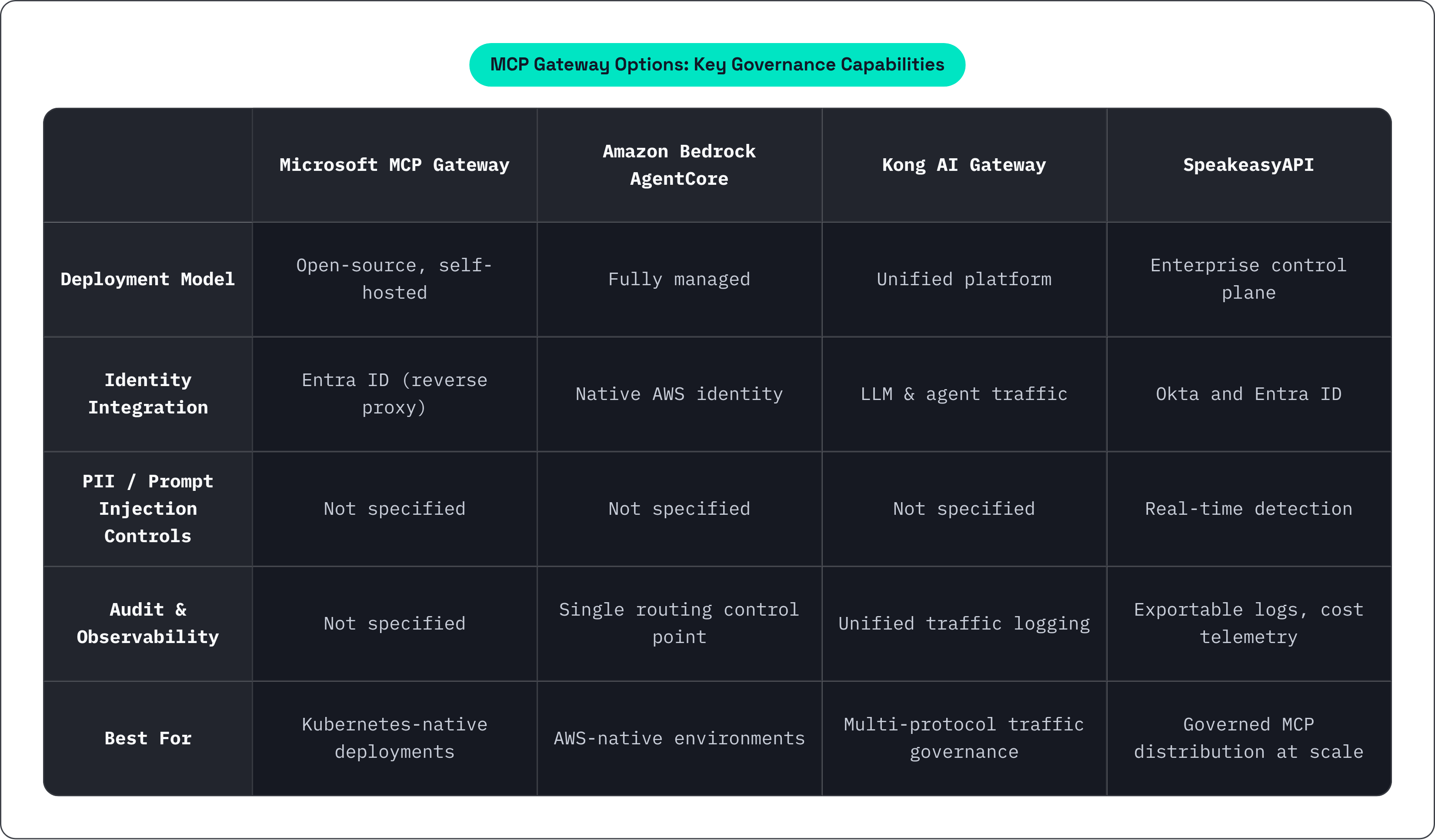
Several credible approaches exist across the vendor landscape. Microsoft has released an open-source MCP gateway that operates as a reverse proxy with Entra ID authentication and Kubernetes-native lifecycle management. Amazon Bedrock AgentCore Gateway is a fully managed option that treats existing MCP servers as native targets and provides a single control point for routing and tool management. Kong AI Gateway governs LLM, MCP, and agent-to-agent traffic on a unified platform. Speakeasy offers an enterprise AI control plane purpose-built for governed MCP distribution, with role-based access control tied to Okta and Entra ID, real-time PII and prompt injection detection, exportable audit logs, and cost and usage observability across the organization.
The evaluation criteria that matter for governance-focused selection are consistent regardless of vendor: OAuth 2.1 support, tool-level RBAC, enterprise identity provider integration, compliance-grade audit logging, structured observability, and governance controls configurable without requiring code changes. Any solution that can't meet all of these criteria without significant custom engineering isn't ready for enterprise deployment.
Enterprises learned this lesson with API gateways over the past decade. Ad hoc deployment works at small scale and becomes ungovernable at enterprise scale. The time to establish the control layer is before proliferation, not after it.
Compliance and Regulatory Obligations the Framework Must Be Designed to Satisfy
More than seventy-five countries have adopted or begun drafting AI-specific legislation, according to the OECD AI Policy Observatory. Compliance is no longer a US-centric concern, nor a matter that a single regulatory framework addresses. The obligation landscape is genuinely global, genuinely fragmented, and still expanding.
The EU AI Act, phased in through 2026, is among the most consequential regulations in force. It introduces substantial fines for prohibited AI practices and imposes obligations that reach supply chain participants and enterprise deployers directly, not just the developers who built the underlying models. Every organization operating in EU markets that hasn't yet mapped its AI deployments against the Act's risk tier structure is already behind, and the timeline for remediation is shortening with each passing quarter.
Compliance obligations establish a floor the framework must meet; they don't replace internal governance policy. A governance framework designed only to satisfy regulatory requirements is inadequate for actual risk management. The reverse is less often true, and that asymmetry should inform how governance programs are scoped from the beginning.
The framework design implications are concrete. Risk classification of AI systems must align with regulatory tier structures, not just internal business categories. Audit logs must be structured to satisfy external regulatory requests, not merely internal review. Data handling rules must reflect jurisdiction-specific requirements — GDPR for EU data subjects, HIPAA for health data, sector-specific rules for financial services. Prohibited use cases must be defined explicitly and enforced at the technical layer, not merely stated in policy.
The compliance layer is where legal and compliance representatives must hold genuine authority over technical control design, not advisory input. The gap between policy commitment and technical enforcement is precisely where regulatory exposure accumulates. A governance document that describes compliant behavior doesn't satisfy an auditor when the controls to enforce that behavior are absent.
How to Build a Framework That Scales With AI Adoption Rather Than Chasing It
AI adoption is accelerating faster than case-by-case governance review can track. This gap is structural and won't close on its own. The central design challenge is governing through automation and architecture rather than headcount, because headcount will never be sufficient.
Some of what follows will read as obvious. It rarely is in practice, because every organization I know that got this wrong understood the principles and skipped the architecture anyway.
Discovery and inventory must be automated. Shadow AI and ungoverned agents can't be governed if they're invisible. Detection must be continuous. Quarterly audits are documentation of what already happened, not governance.
Policy enforcement belongs at the infrastructure layer. Controls that depend on individual teams doing the right thing erode under delivery pressure. Controls embedded in a gateway or control plane are durable because they don't require anyone to remember to apply them.
Tying AI identity to existing enterprise identity infrastructure from day one matters more than most teams realize until they've tried to retrofit it. Applying role-based access control to agents already running in production is substantially harder than inheriting it from Okta or Entra ID at the point of deployment. The cost of getting this right early is low; the cost of correcting it later compounds in ways that are genuinely difficult to forecast.
Observability must be built into the fabric, not the audit cycle. Cost telemetry, usage logs, and risk signals must be real-time. Quarterly reporting is a lag indicator, and governance decisions can't wait for it.
Escalation paths should exist before they're needed. Clear authority structures must be in place before an incident creates the urgency to use them.
The maturity progression of a scaling framework matters considerably. Frameworks that begin with visibility and access control can layer in more sophisticated risk assessment and compliance automation as they mature. Frameworks that begin with policy documents and never reach technical enforcement don't mature; they stagnate while the deployment landscape moves past them. The difference between the two isn't ambition. It's whether the architecture was built to govern at scale from the start.