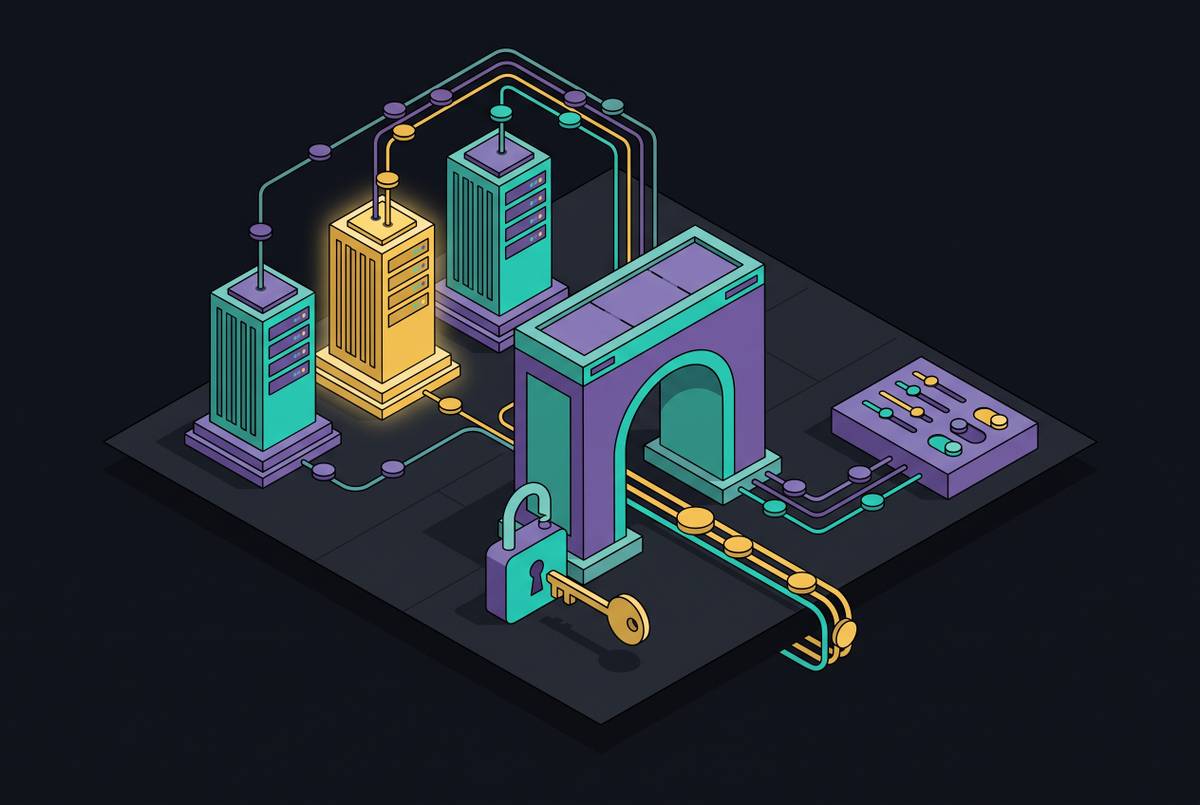
Vendor RBAC Enforcement Depth for MCP Hosting Versus Roll-Your-Own Gateway Control Planes
A four-level depth scale shows what each MCP gateway enforces.
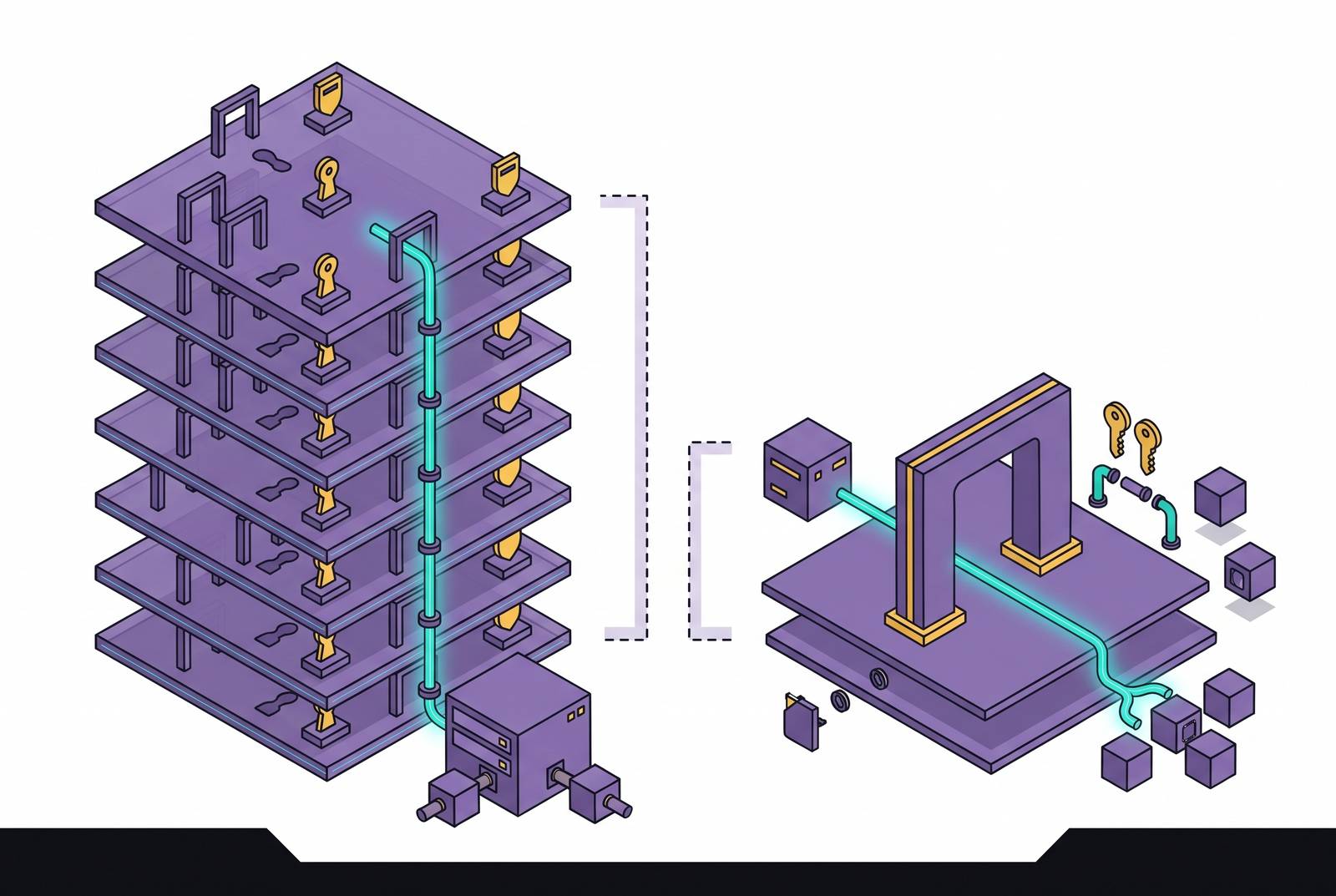
Securing enterprise agents with an MCP gateway requires OAuth 2.1 authentication and tool-level authorization before each upstream invocation. Managed products offer different depths out of the box, while a custom gateway can extend policy to individual arguments at the cost of building and maintaining the authorization layer.
Why tool-call granularity is the right unit for measuring MCP access control
The connection is authorized, but the action may not be. That is the wrong unit of control. Authorization needs to separate the agent’s legitimate task from everything else the server allows.
A GitHub MCP server makes the distinction equally plain because read-only file access and repository deletion have categorically different risks. Treating them as one permission governs access at the connection level, leaving the agent’s conduct uncontrolled. The OWASP MCP Top 10 2026 snapshot names Privilege Escalation via Scope Creep as a category, reflecting the risk of all-or-nothing server access. Broad permission can outlive the task that justified it. A later compromise can then exploit access granted for an earlier, legitimate purpose.
What the MCP protocol does and does not enforce on its own
The MCP specification defines communication between agents and servers but delegates authorization decisions to the deployer. RBAC is therefore an implementation choice. The July 2026 revision removed the initialize handshake and Mcp-Session-Id header, moving to a stateless core in which requests carry their protocol version and capabilities. Authorization did not arrive with that change. The NSA’s May 2026 advisory also said that MCP alone cannot enforce consent, privacy, or tool-safety principles at the protocol level.
The Enterprise-Managed Authorization extension, promoted to stable status in June 2026, addresses a different part of the problem. It allows an organization’s identity provider to issue an ID-JAG credential that a client exchanges for MCP access tokens, avoiding per-user consent screens. That closes an identity-provisioning gap. It does not define what the downstream server must allow once the identity arrives. Both hosted platforms and custom gateways exist partly to supply that missing decision.
The enforcement depth spectrum, from server-level gating to per-parameter policy
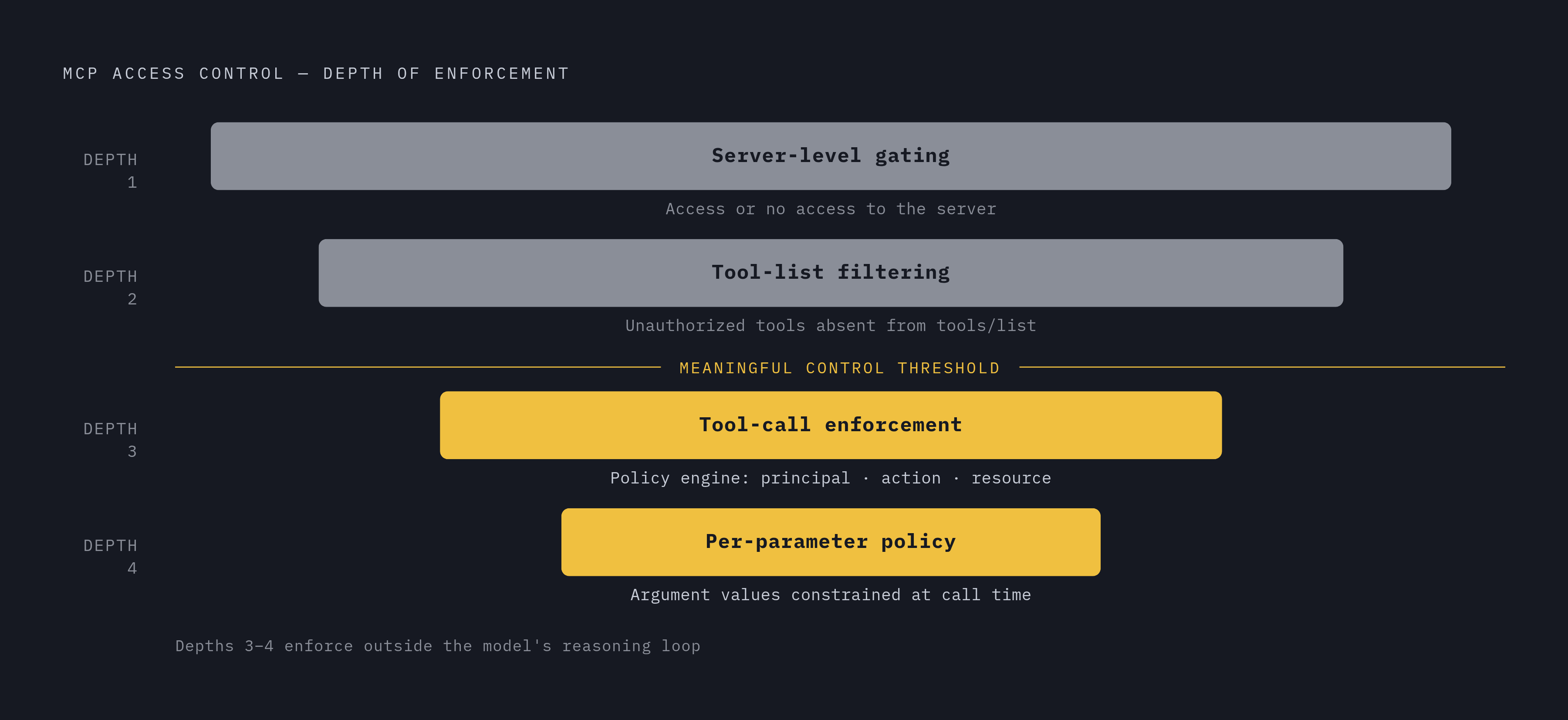
Depth 1 is server-level gating, where an agent either has access to a server or does not. It cannot distinguish operations behind that boundary. Depth 2 is tool-list filtering, where a gateway controls which tools appear in the tools/list response for a caller. An unauthorized tool is absent from the advertised choices. This reduces what a confused agent can select, although hiding a tool is not the same as rejecting an unauthorized invocation.
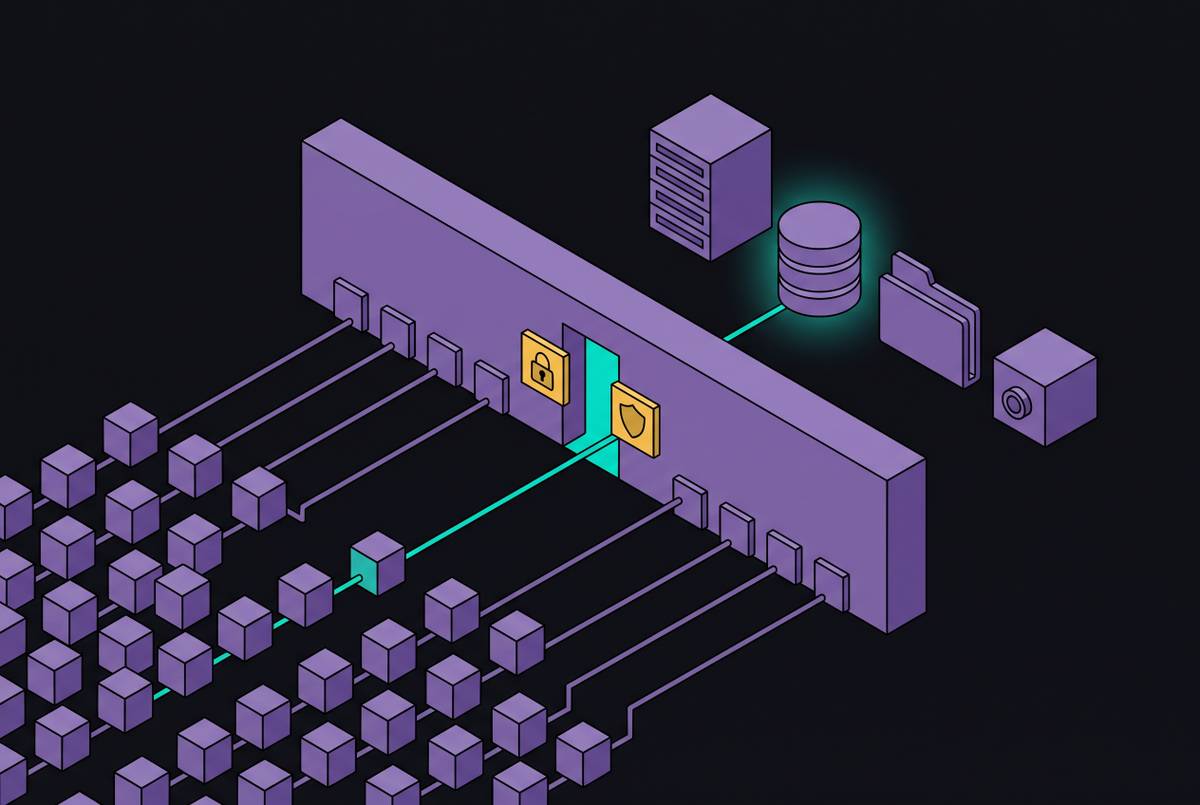
Depth 3 is tool-call enforcement, where every tools/call request passes through a policy engine before the upstream tool is invoked. The engine evaluates principal, action, and resource against deterministic rules. The agent’s reasoning does not make that decision. AWS AgentCore’s Cedar-based model works this way, allowing or denying requests before they reach the upstream server. Injected instructions cannot persuade a policy engine that evaluates structured requests rather than prompts, although permitted actions still need appropriate restrictions.
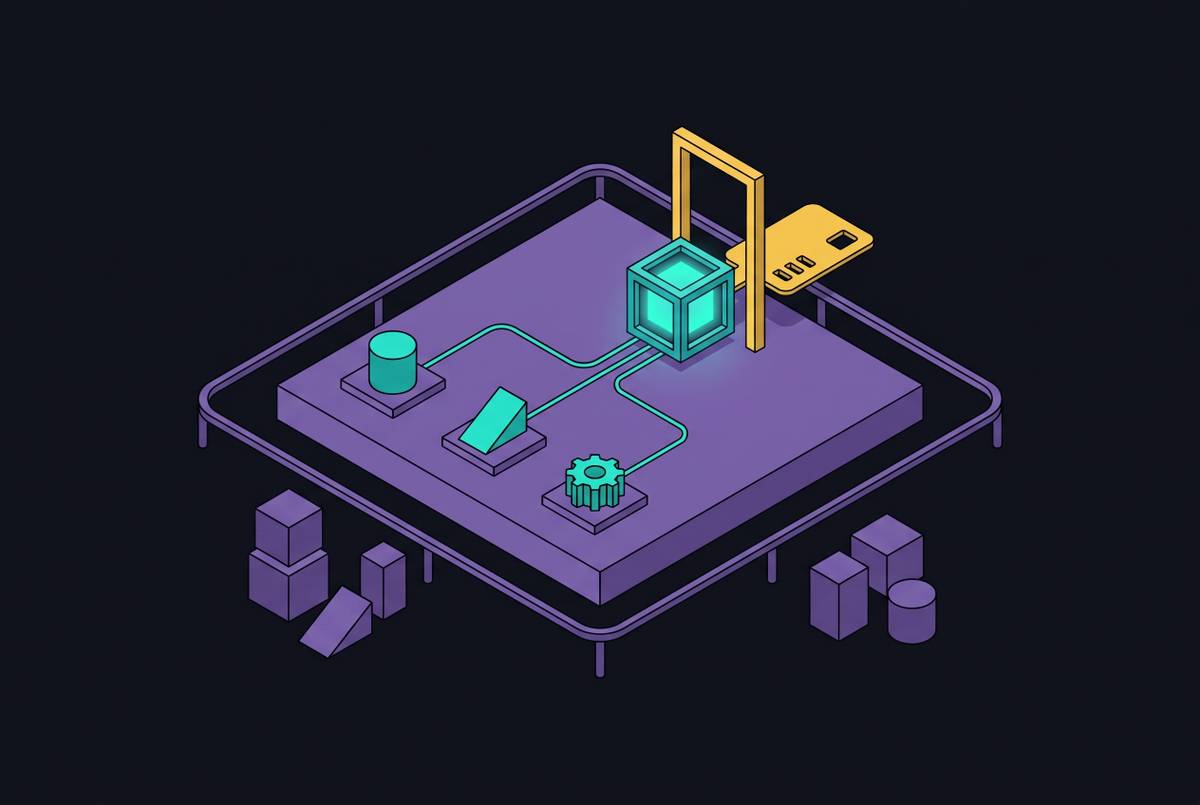
Depth 4 adds control over the specific values that arguments can take within a tool call. A policy might allow a database tool to use only read-only replicas and bar it from production write endpoints. The tool remains available, but its reach narrows. These depths help teams assess gateways, though a gateway may not offer all four as settings.
Where vendor-managed MCP platforms enforce access and where they stop
MCPX reaches beyond basic server gating through different controls in its open-source and enterprise tiers. Its MIT-licensed open-source tier has Tool Groups, which let each team or workflow see a subset of tools, along with tool customization and parameter locking. Its enterprise tier adds tool-level RBAC with access control lists per agent, team, or workflow, immutable audit trails, and credential isolation. The tier distinction is consequential for buyers. Parameter locking in an open-source product does not, by itself, establish that every enterprise identity and audit requirement is included.
Kong AI Gateway 2.0, generally available September 1, 2026, introduced MCP Server Bundling. It routes multiple MCP servers through one endpoint and filters the tool list for each caller, reaching Depth 2. That changes what agents can discover through the gateway. This filtering limits what agents can find, but it alone does not show that the gateway has per-call or per-parameter enforcement. Product comparisons need to preserve that distinction rather than treating all tool-related controls as equivalent.
Microsoft MCP Gateway, through Azure API Management, inherits APIM’s routing capabilities and conditional compliance posture. Its intelligent routing handles load balancing and circuit breaking but does not provide intent-aware access control, while tool-level RBAC and agent-identity attribution need more work to build. The compliance inheritance applies only where the entire stack lives within Azure. Docker MCP Gateway instead isolates connected servers in containers with defined resource limits. Process isolation is not tool authorization, and production RBAC, audit logging, and centralized access control are not provided by default.
These are different foundations rather than interchangeable packages. They also show why “hosted versus custom” cannot stand in for a depth assessment, since packaged controls can already reach individual tools and parameters. Nevertheless, every gateway has a shared boundary. It governs only traffic routed through it. Local stdio servers, direct API calls, and the agent’s reasoning loop need controls outside that boundary.
What a self-built gateway control plane can reach that hosted platforms cannot
A purpose-built control plane can implement Depth 3 and Depth 4 policy where a hosted product’s available controls stop. The AgentCore and Cedar pattern supplies the reference architecture. A gateway intercepts tools/call, evaluates the principal, action, and resource, then permits or denies the upstream invocation. Enforcement sits outside the model’s reasoning loop. Teams that own that policy layer can combine per-tool, per-parameter, and per-identity restrictions in ways that most hosted platforms cannot offer through configuration alone.
That flexibility comes with an engineering bill. Equivalent governance requires an MCP routing proxy, OAuth 2.1 implementation per SaaS integration, per-user token lifecycle management, an action-level RBAC engine, and audit attribution. Where SOC 2 Type II is part of the goal, its observation period also contributes to the timeline. OAuth is not a one-time adapter. SaaS applications handle it differently and can change their implementations without notice, leaving a custom authorization layer with continuing maintenance work that managed platforms absorb.
Deployment topology adds another set of choices. A centralized gateway, per-domain gateways with chained enforcement, and layered gateways trade policy granularity against operational complexity. For teams taking this route, the recommended rollout starts in monitor mode, logging policy decisions without blocking, before switching to enforce mode as policies are calibrated. Managed controls can shorten the build where they already provide the required depth, but neither approach solves an unseen route around enforcement.
Why shadow MCP makes the enforcement depth question urgent before architecture is chosen
Qualys TotalAI’s 2026 research called MCP servers “the new shadow IT for AI” and described organizations discovering dozens of unmanaged endpoints during their first audit. Many had been installed months earlier and forgotten. Forgotten does not mean disconnected or harmless. A rogue MCP server can retain privileged, scoped credentials until someone manually revokes them.
Stateful, multi-step MCP interactions can escape the context available to a WAF inspecting individual transactions, while sensitive tool results can enter a model’s context without crossing a boundary that a traditional proxy inspects. The stateless protocol core does not make those workflow-level visibility problems disappear. Finding these interactions takes behavioral analysis and runtime API discovery as well as signature matching. A well-configured gateway cannot inspect a route it never sees.
Microsoft made discovery of local AI agents and their configured MCP servers generally available in Defender on October 29, 2026. Coverage included more than 50 supported agents and MCP servers on Windows and macOS, connecting an agent to a device, account, and MCP context. Discovery therefore belongs before architecture selection or in parallel with enforcement work. It establishes what needs governing in the first place. Without it, a gateway comparison measures the strength of controls over only the known portion of the deployment.
Agent identity as the prerequisite that makes tool-level RBAC meaningful
Even after a team has found every part of its deployment, fine-grained policy needs identity it can trust to work. The Cloud Security Alliance and Aembit survey found that a majority of organizations could not distinguish human activity from AI agent activity in their audit logs. Authentication alone does not resolve authorization. The AIUC-1 Q2 2026 release, effective April 15, 2026, separated agent identity and access management into distinct control domains. One establishes who is acting, while the other determines what that actor may do.
When several agents use one credential, the policy engine sees the same account and applies the same permissions to each. The resulting log attributes activity to that account, leaving the named person or task unidentified. Persistent, verifiable agent identity is therefore a prerequisite for meaningful per-agent restrictions.
Production agent-identity features arrived in 2026 through Microsoft Entra Agent ID and Agent 365, as well as Okta’s and Auth0’s MCP-focused authorization layers. These provide concrete identity options without settling the gateway decision. EMA supplies centrally provisioned access, while On-Behalf-Of token propagation preserves the end-user identity through the gateway. Without that propagation, “gateway service account called database write tool” remains an account log with attribution limited to the service account.
What the audit trail looks like when enforcement depth and identity are both present
Microsoft Incident Response’s tool-poisoning scenario shows why action-level visibility needs to include changes to the tools themselves. In the constructed walkthrough, a developer changed the tool description for a finance workflow’s enrichment-server but kept the tool name and user-facing summary the same. Description changes did not trigger re-approval. The poisoned description thus went live in production without another review. The attack-pattern scenario Microsoft presented illustrates a concrete control gap.
An audit trail that records the description change and its caller would expose something that a server-access log misses. A record of tool invocations alone may leave out configuration changes. The distinction is important when evaluating audit coverage. OpenTelemetry v1.39 added MCP semantic conventions including mcp.method.name, mcp.session.id, and mcp.protocol.version, giving implementations a shared vocabulary for tool-layer visibility. Those attributes support instrumentation, but do not themselves supply identity attribution or policy enforcement.
MCPX’s enterprise tier provides immutable audit trails across the User → Agent → MCP → Tool chain. Its integration with Lunar’s AI Gateway extends visibility across LLM calls, MCP tool invocations, and API traffic. The complete control record goes beyond connection history. It links the named user to the agent identity, the invoked tool, the allow-or-deny decision, and the rule that applied. Each link is attributable and immutable, making the authorization decision inspectable after the request.
How to evaluate an MCP gateway with OAuth 2.1 and tool-level RBAC
For enterprise buyers, the framework becomes five practical questions. First, at what depth does access control operate, from server gating through parameter restrictions? The answer needs to describe enforcement. Second, is the decision made before the upstream server gets the request? Rejecting a call after routing it is weaker than intercepting it before the tool can act.
Third, can every tool call be attributed to a named person? The specific mechanism to ask about is On-Behalf-Of propagation from the organization’s existing identity provider, including Okta or Microsoft Entra where relevant. Fourth, does the deployment find servers outside the path it governs? Gateway coverage and discovery are separate requirements. Fifth, what continuing work does the authorization layer require, particularly for OAuth 2.1 integrations as SaaS providers change their implementations?
A mature platform team needing Depth 3 or 4 and unable to accept a managed-only deployment has a legitimate case for building, while a team needing production governance quickly and able to accept Depth 2 has managed options. Teams should also use the same questions to assess packaged deeper controls. Ownership is not a security property by itself. Either architecture can support a governed golden path with one authoritative MCP server registry, one policy engine, and one audit trail, provided enforcement depth and identity attribution are treated as requirements.