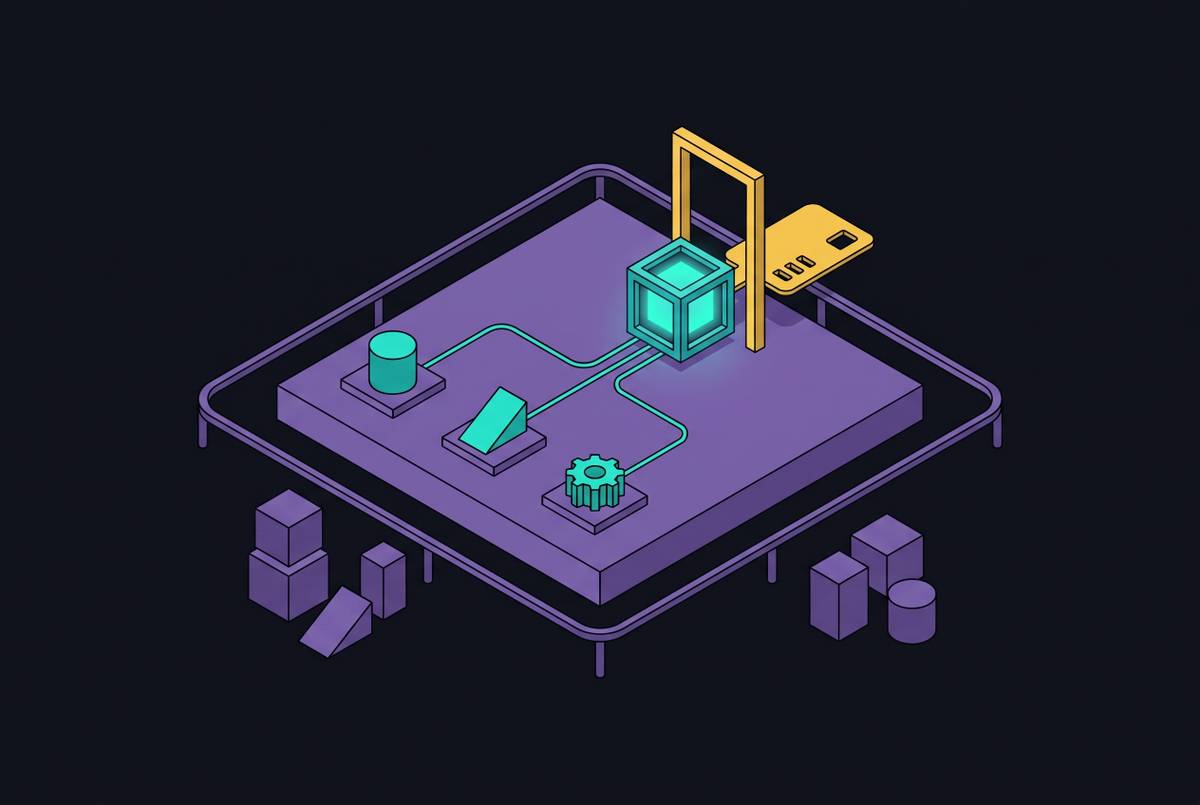
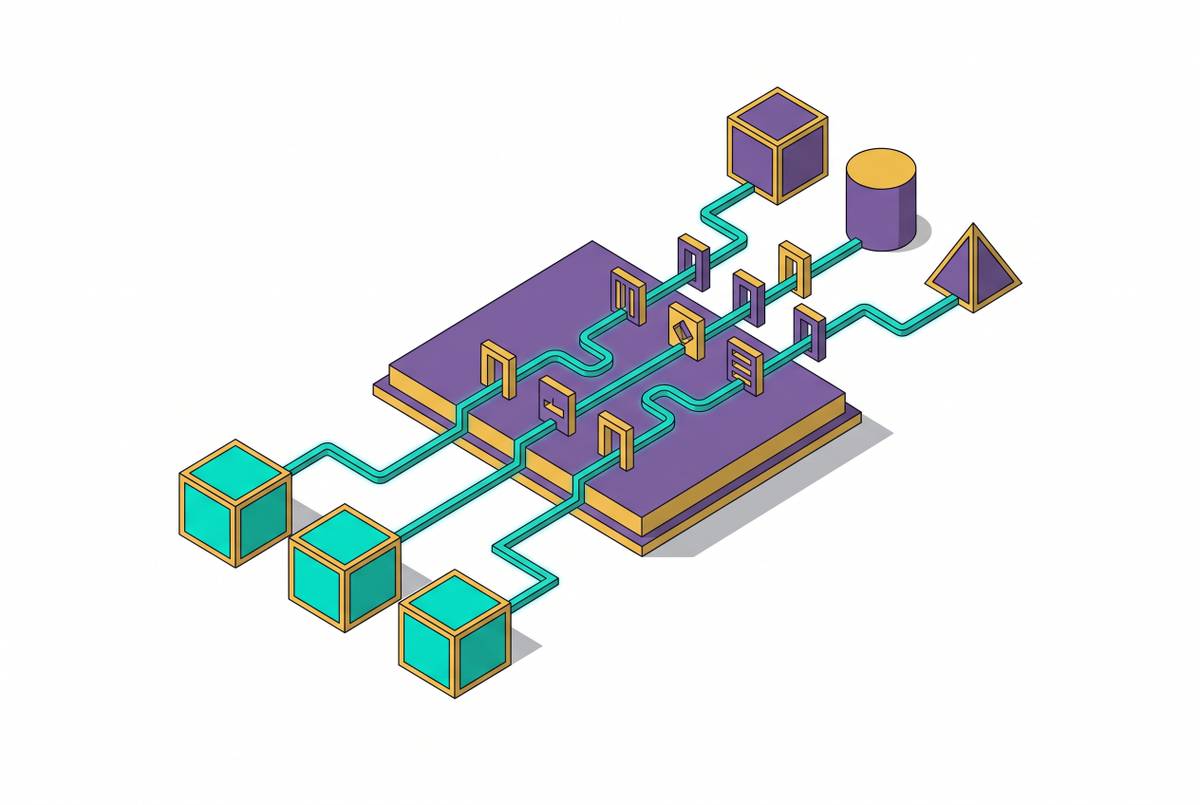
Building the MCP Gateway as a Deny-by-Default Chokepoint for Agentic Workloads
A gateway that blocks every MCP tool call until cleared.
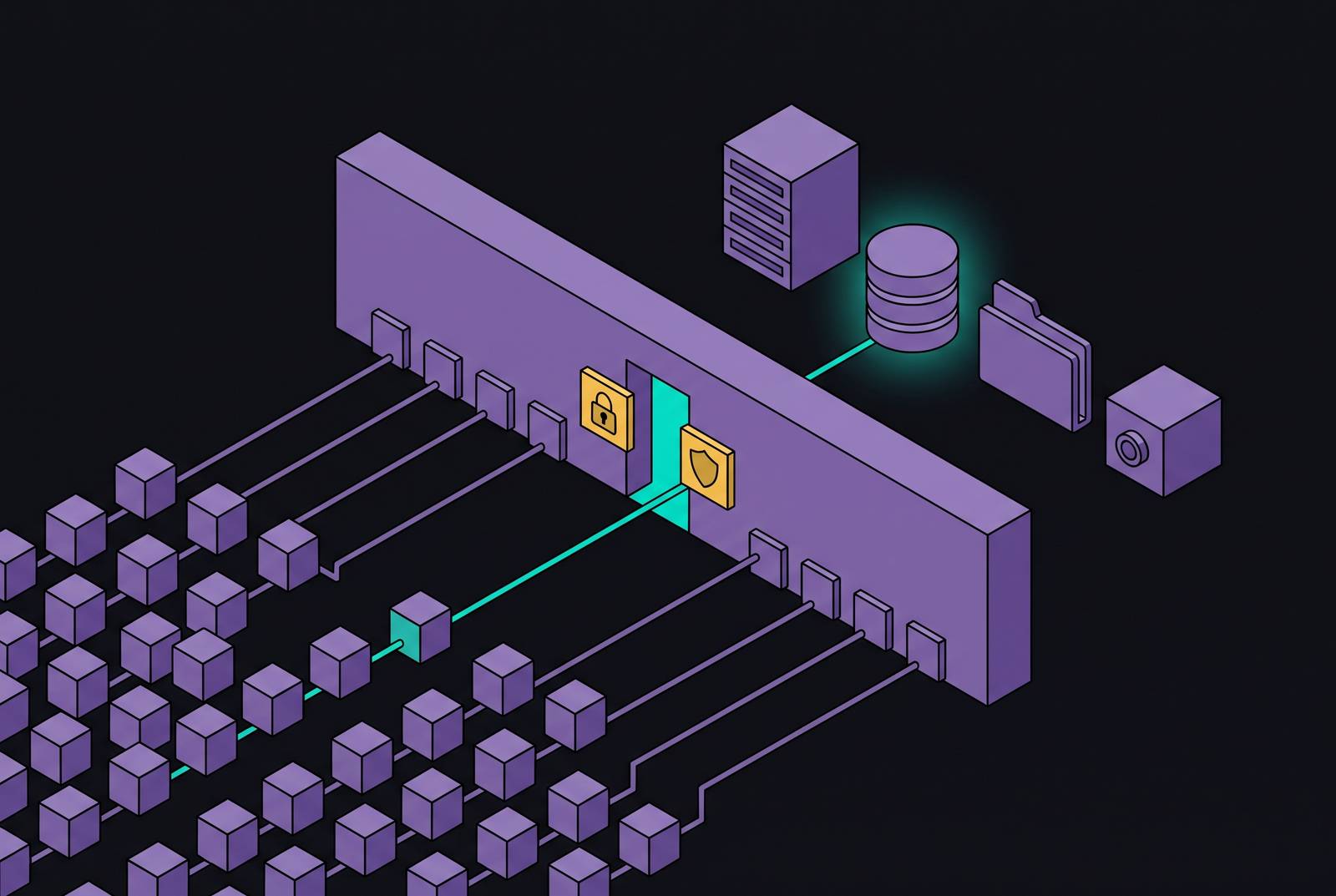
Securing enterprise agents requires an MCP gateway with OAuth 2.1 authentication and tool-level role-based access control beyond permission to connect to a server. Building that gateway as a deny-by-default chokepoint means no tool call passes until identity, policy, and scope are explicitly cleared. Runtime enforcement and short-lived credentials turn MCP’s permissive starting point into a governed boundary between agent reasoning and privileged action.
Why MCP's default posture is structurally incompatible with enterprise security
Enterprise security grants access deliberately, while MCP’s default posture exposes tools unless something restricts them. Authorization is optional in the specification, and servers expose tools without built-in scoping or filtering. A connected agent can therefore reach capabilities that no one explicitly approved for its task. Adding a tool can give an agent more access without anyone deciding to authorize it, creating a structural mismatch with enterprise security.
The mismatch becomes dangerous when an MCP client connects directly to servers that keep long-lived credentials in environment variables or configuration. Unlike a deterministic microservice, an LLM-driven agent synthesizes its next action at runtime from natural language, including untrusted content. Its control flow is not fixed beforehand. MCP simplifies integration, but an unmediated deployment also collapses the boundary between reasoning and privileged access, bypassing the API security controls that normally stand between callers and systems.
The four concrete attack vectors that the open posture enables
Indirect prompt injection begins with an apparently legitimate read. An agent retrieves a GitHub issue or email containing hidden instructions, then treats those instructions as a reason to make another tool call. The model cannot cryptographically distinguish retrieved content from authoritative instructions. If it also has database access or an external fetch tool, the injected directive can redirect those capabilities.
Tool poisoning attacks the metadata that the model reads. A server can pass review with benign definitions, then mutate its tools/list response after enough invocations or for a particular tenant. The postmark-mcp package shipped fifteen clean versions before adding a line that secretly copied outbound email to an attacker-controlled address. Approval did not freeze the package’s behavior. CVE-2026-22708, disclosed against Cursor, illustrates a related weakness in trusting approved commands when an attacker can poison the execution environment so that git delivers an arbitrary payload.
Argument smuggling targets MCP servers that wrap command-line tools. Coerced parameters can contain subshell expansions or path traversal sequences that naive allowlists miss. Ambient credential exfiltration then magnifies the damage of an arbitrary file-read into the theft of static keys stored in server environments or configuration. The attacker can keep using the secret to gain access. Together, private data access, untrusted content, and external communication form the “lethal trifecta” that lets one injected prompt turn an agent into an exfiltration channel.
Why prompt-level controls and server-side allowlists cannot fix a posture problem
“Only use read-only tools” is an instruction with no power to enforce a permission boundary. A jailbreak, confused-deputy attack, or model mistake can defeat it while leaving the underlying capability untouched. An execute_query tool that accepts arbitrary SQL keeps that power even when its prompt politely asks it to hold back.
Moving that responsibility into each application’s configuration makes Claude Desktop, Cursor, Codex, and internal agents separate places to maintain restrictions, without a central record of the decisions behind them. Server-level allowlists answer which tools exist while leaving unresolved which identity may invoke them under which scope at this moment. Enforcement must therefore be centralized and independent of both the model’s judgment and each application’s configuration.
What a deny-by-default MCP gateway actually is and where it sits
A deny-by-default MCP gateway acts as an MCP server to agents and an MCP client to downstream tool servers. Agents connect to one endpoint, where the registry and brokerage send every call through the same controlled path. The mental model adapts a corporate SSO proxy from internal web applications to tools. The gateway becomes the place where access is decided.
An explicit grant is the unit of control. A virtual key or agent session without configured access gets no tools, even if the backend server exposes many. A security-scanner agent sees only its granted capabilities. The Microsoft Agent Governance Toolkit MCP Security Gateway specification makes the failure behavior equally strict, requiring the gateway, scanner, rate limiter, and authentication enforcer to deny on error. Agents that are unknown start with no budget, session, or tool access.
This boundary separates what the specification calls the probabilistic plane of reasoning from the deterministic execution plane of side effects. A call crosses only after policy permits it. The July 2026 specification revision puts method and tool names in HTTP headers so intermediaries can route and authorize without parsing request bodies. That simplifies enforcement without reducing its granularity.
How the gateway enforces policy at runtime, not at server configuration time
The gateway offers the model only tools permitted by the caller’s policy, then checks authorization again when a call arrives for execution. Hiding a tool is not sufficient protection. Allow, deny, and sensitive-tool rules apply when the call arrives, and sensitive calls stay in PENDING until a human or automated process explicitly approves them. Per-agent sliding-window rate limits also apply before forwarding.
The return path needs its own inspection. Every response is scanned for injection patterns, embedded instructions, suspicious JSON structures, and exfiltration URLs before reaching the agent. Credential leak detection and PII redaction keep escaped secrets and personal information out of agent memory. Response policy can BLOCK, SANITIZE, or LOG. Each decision goes into an audit record.
A separate scanner watches the definitions themselves. Cryptographic fingerprints of descriptions and schemas detect changes after approval, while baseline comparisons classify additions, removals, and modifications before mutated tools reach agents. The toolkit specification also requires OSV API integration so known dependency vulnerabilities can gate access. Policy evaluation must stay separate from the data path so the rules can change without having to redeploy the proxy.
How do enterprises bind every MCP call to a human through the existing identity provider?
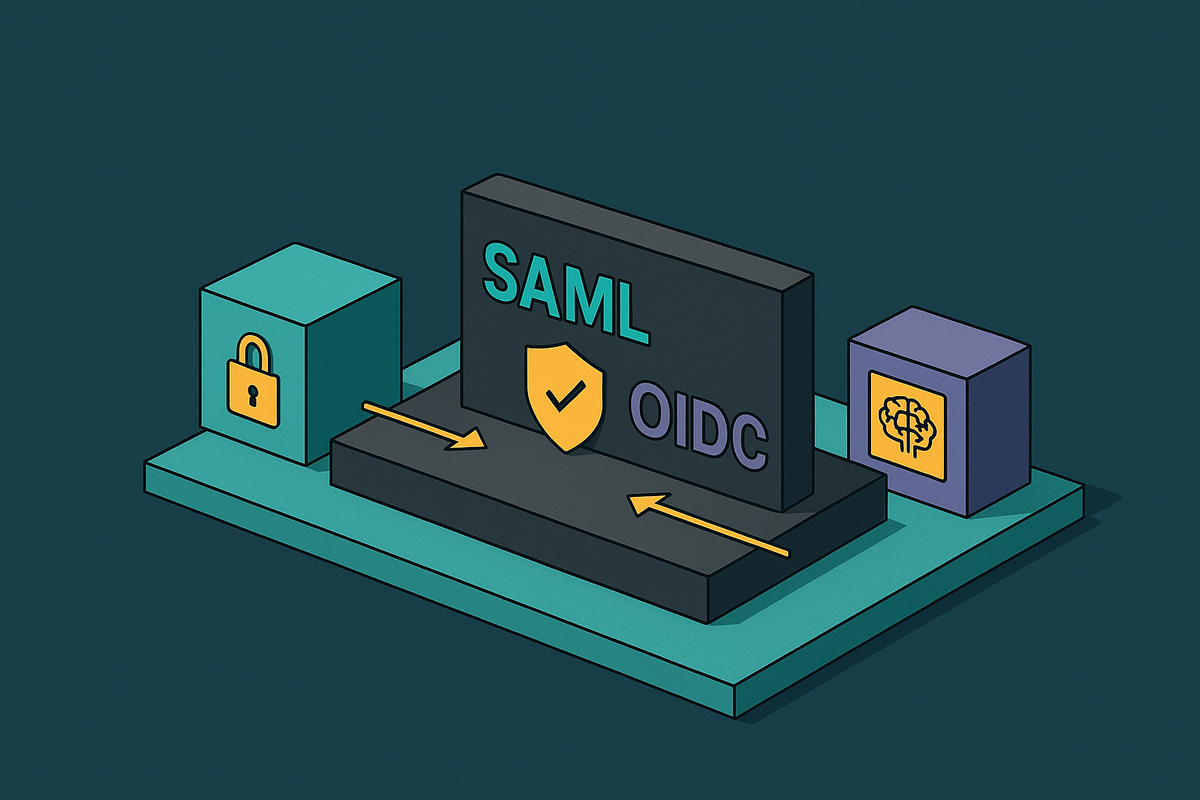
The existing identity provider ties tool-level policy to a person. Okta or Entra ID issues OIDC tokens to agent sessions, and the gateway validates them on every request before resolving team-level access from identity claims. A shared service account is not enough. The record must identify the person who authorized the session, even when an agent performs the work.
Team profiles then translate identity into reach. Sales can receive CRM read/write and Slack tools, Engineering can receive GitHub, Jira, and CI tools, while Finance receives accounting read tools. The same gateway enforces different grants for different callers. The toolkit specification calls identity-verified access with minimum trust scores Trust-Gated MCP. OWASP’s 2026 agentic application risk list identifies the corresponding failure as “Identity and Privilege Abuse (ASI03).”
Agent-native identity standards do not yet settle the whole problem. Four IETF Internet-Drafts published in early 2026, namely AIMS, WIMSE, Agentic JWT, and SCIM for agents, address parts of it without covering the full multi-hop delegation chain. That leaves a practical near-term choice for enterprises. Integration with the existing identity provider grounds policy in an established identity system while a complete new one remains unavailable.
Replacing ambient long-lived secrets with short-lived task-scoped credentials minted at the gateway
Credential brokering turns verified identity into bounded downstream access. Only after a call clears default-deny policy and payload inspection does the gateway mint a short-lived, single-purpose credential scoped exclusively to that tool call. The agent authenticates upstream with its identity-provider token. The gateway injects a signed assertion downstream, where the server validates its signature and expiration without exposing the underlying secret to the agent.
This changes the ambient credential exfiltration scenario directly. A compromised agent no longer holds a collection of reusable integration keys, and any exposed task credential is limited by its remaining TTL and scope. Session-token concurrency limits also cap how many authorized tools can be called at once. The toolkit specification requires HMAC-SHA256 signing with minimum 256-bit keys and nonce-based replay protection, rejecting duplicate nonces within the 5-minute replay window, whose duration is independent of credential lifetime. Stolen static secrets keep working until someone rotates them, while task-scoped credentials expire on their own.
Detecting and routing shadow MCP traffic through the governed path
A gateway can control only the traffic it sees. Shadow MCP discovery is therefore the operational complement to the architecture, finding unsanctioned connections so they can enter the governed path. Cloudflare has introduced specific shadow MCP detection rules in Cloudflare Gateway. Microsoft also offers shadow AI discovery as a product, treating unsanctioned use as something infrastructure teams must find as well as prohibit.
For discovered servers, the remediation is to make the MCP gateway the sole ingress point. Firewall rules and service mesh configurations must then block direct agent-to-tool connections, restoring auditability through the broker. A policy announcement does not close a route. Local MCP servers inside IDEs and desktop applications remain a separate blind spot because a network gateway cannot see them. Closing that gap requires an endpoint agent that extends allow/deny enforcement to local MCP processes.
What the audit trail must capture and how to make it attributable
OpenTelemetry explains what instrumented code reports about execution. OpenTelemetry v1.39 added MCP semantic conventions including mcp.method.name, mcp.session.id, and mcp.protocol.version, supporting consistent dashboards and distributed traces. Those signals help operations teams see how long things take and where they fail. They cannot be the security source of truth because uninstrumented, misconfigured, or hostile agents need not report their own behavior faithfully.
Gateway audit records instead come from the gateway as it brokers access. Every call must record the agent ID, tool, parameters, authorization decision, applicable rule, and named human who authorized the session. The toolkit specification requires immutable records for every allow, deny, and sanitize decision. Sensitive-tool approvals add timestamped, attributed transitions from PENDING to APPROVED or DENIED. These records can enter existing OpenTelemetry collectors, Datadog, or Grafana without requiring a separate logging destination. Operations teams need execution traces and authorization records, while a security log that says only “agent called tool” identifies neither a responsible person nor an authorizing rule.
How to evaluate an MCP gateway against the deny-by-default requirements in practice
An MCP-aware proxy is not necessarily a deny-by-default enforcement point. For procurement, the lesson is to evaluate seven controls by testing the actual behavior of features listed on a feature page. Tool-level authorization must default to deny, and execution-time checks must reject unauthorized calls even after discovery. Credential brokering must be identity-scoped and short-lived, while sensitive execution must require explicit approval. Response scanning, schema drift detection, and audit attribution complete the test.
Pomerium is the closer documented fit in these notes for OAuth 2.1 handling combined with individual-tool authorization. Its policies restrict tools and methods within a server, its upstream OAuth 2.1 handling supplies short-lived tokens, and its zero-trust architecture defaults to deny. Session-aware enforcement tracks multi-step workflows, while method-call logs include identity, tool, parameters, response status, and authorization decision. Injecting X-Pomerium-Assertion keeps the underlying credentials out of the agent process. It can be deployed as open-source, self-hosted Core or with Zero, an optional managed control-plane tier.
Bifrost, the open-source Go gateway by Maxim AI, emphasizes stacked filtering and explicit execution. Tools must pass every filter that applies in the client configuration, request headers, and virtual keys. Tool groups attach curated bundles to keys, teams, or users. By default, model-returned calls require a separate API call to execute, unless Agent Mode is explicitly configured with an auto-execute allowlist. Those controls support governed access, but the supplied details do not establish equivalent OAuth 2.1 behavior.
Deployment is also part of the security decision. Bifrost supports air-gapped deployments and VPC isolation, while candidates more broadly should be assessed for deployment inside the enterprise’s VPC or on-premises before credentials are involved. A gateway outside that boundary becomes a custodian of the credentials it brokers. Whether any tool can execute without an explicit, attributable grant matters more than how many servers a product connects.