Scoping Agent Credentials at Registration Time to Prevent Tool Sprawl in Production
Setting narrow tool permissions at registration keeps agents from inheriting broad credentials.
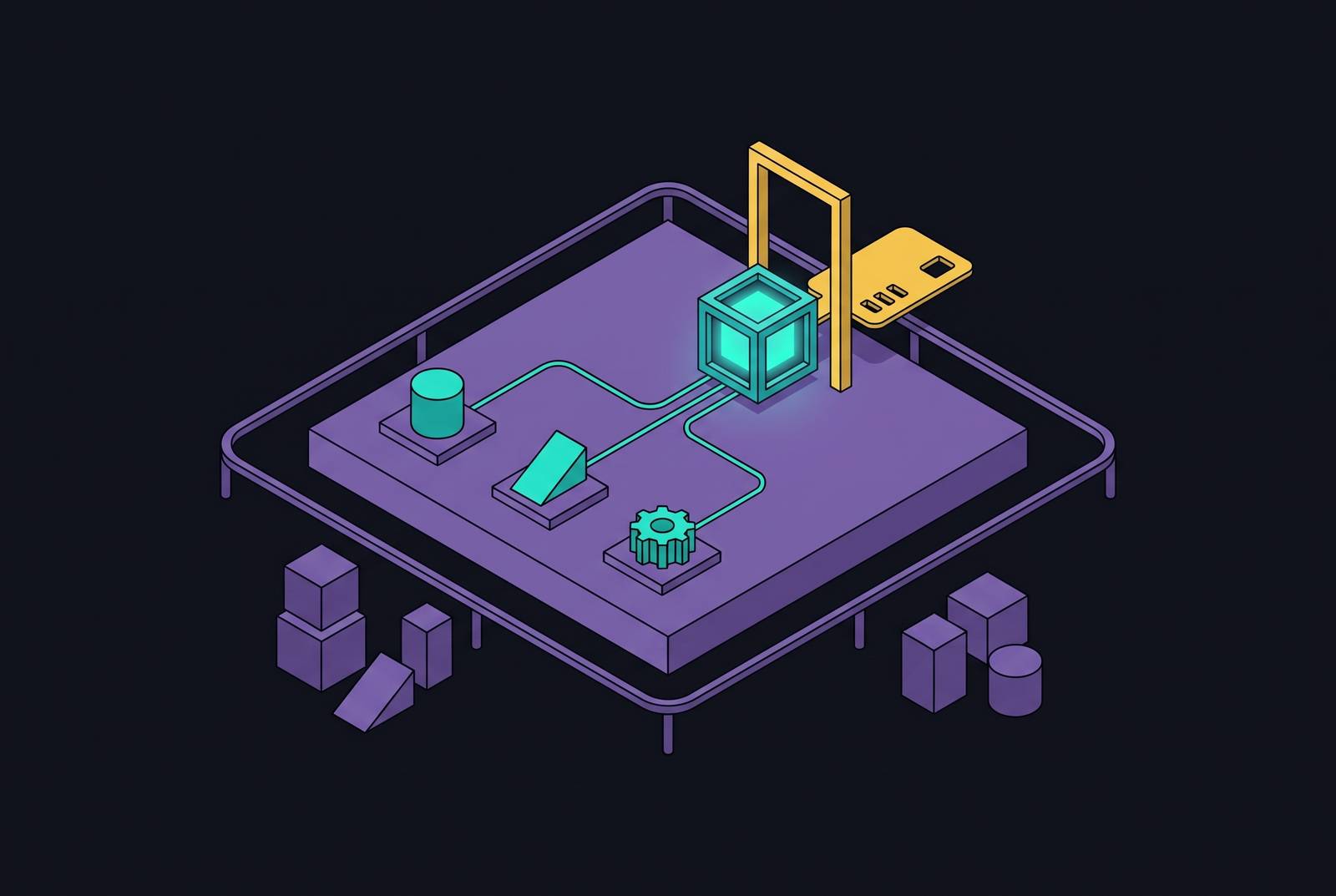
To secure enterprise agents, an MCP gateway needs narrow tool permissions set at registration, with broad credentials kept out of deployment. OAuth authentication establishes who an identity is, while tool-level role-based access control limits what that identity can do. Registration-time scoping joins those controls before production, while gateway credential injection keeps raw backend secrets out of the agent’s hands.
Why agents accumulate excess access before anyone notices
By the first audit, the extra access is already there. Security teams discover MCP servers installed months earlier, direct connections to tools, and credentials that nobody has revisited. In a typical mid-size enterprise, the discovered server count can be an order of magnitude higher than the count security knew about. The inventory was not merely incomplete. It described a smaller system than the one actually running.
Each direct agent-to-tool connection creates a credential path outside the normal gateway-and-WAF perimeter. Existing API security controls cannot control requests they never see. A compromised agent with broad credentials could read a data warehouse, query a SaaS instance, and send the results through an integration. The applications might record three separate entries without anyone correlating them into one sequence. An audit log is not automatically an explanation.
Agent chaining extends that problem beyond the first connection. When agents call other agents and propagate the original credential scope, one over-provisioned registration point spreads excess authority downstream. The NSA’s May 2026 guidance states that authorization in MCP is optional and that many implementations omit authentication entirely. Two servers that accept the same request may do equally little to protect it, so the enterprise has to add the missing control.
Why broad deploy-time credentials are the root of the problem, not a symptom
The problem begins when credentials are sized for the most demanding task an agent might ever perform. Every smaller task then runs with the same excess authority. A common shortcut is to reuse the broad IAM role or service-account credentials already available on a developer’s laptop. Creating a narrower role takes time, while the agent “just needs to work”. Convenience becomes the access model.
Persistent credentials make that initial decision harder to unwind. An agent enters more workflows, calls more tools, and joins more pipelines without its credential scope narrowing to match actual use. The credential gains dependencies while remaining without an expiry date. Access can also remain functional after the human who requested it has moved on, or after access was revoked elsewhere in the stack. The surviving credential becomes an orphaned route into the system.
Runtime policy does not erase that route. A control that blocks an unauthorized call can stop a particular action, but it does not remove the agent’s underlying read-write credential for a payroll system. Prompt injection can still try to use that authority. Monitoring alone cannot repair the original grant.
The NSA guidance places responsibility for credential isolation on the agent credential lifecycle, from initial registration through issuance and revocation. Credential governance must address why the agent has access unrelated to its task in the first place.
What registration-time scoping actually means and why it breaks the cycle
Registration is the point when an agent’s identity, capabilities, and permitted tools are declared to the control plane. It is the last opportunity to constrain scope before a live system depends on it. Registration-time scoping makes that declaration an enforceable boundary. Permission starts at zero and grows only when access is explicitly granted.
That boundary differs from a runtime decision about whether a particular request is acceptable. Registration determines which tools can be reached at all, while runtime enforcement evaluates calls within that permitted set. Amazon Bedrock AgentCore illustrates the distinction by restricting an agent to tools explicitly listed in its action group at registration. Additional tools exposed by the MCP server remain outside the agent’s reach.
The agent should never hold a raw backend credential. Instead, the gateway retrieves the secret and injects it into the outbound request at call time. A prompt asking the agent to print its API key then finds no backend key in its context.
Credentials expire when the task ends, and a payroll agent and a marketing agent share no credential surface merely because they share infrastructure. Pinterest’s internal MCP ecosystem applies a complementary registry rule. If a server is not registered, no agent surface can call it in production, while local servers remain available for experimentation. The exception does not become a production entrance.
How do you add OAuth and tool-level RBAC to an MCP deployment?
The reference pattern places a gateway between every agent and every tool server, connected to enterprise identity and a secrets store. Its four layers separate responsibilities that otherwise become tangled. The first is the identity provider, such as Okta or Entra ID, which issues short-lived tokens through OAuth flows. The gateway exchanges those tokens for scoped, short-lived backend credentials. Authentication establishes identity, but tool permission remains a separate decision.
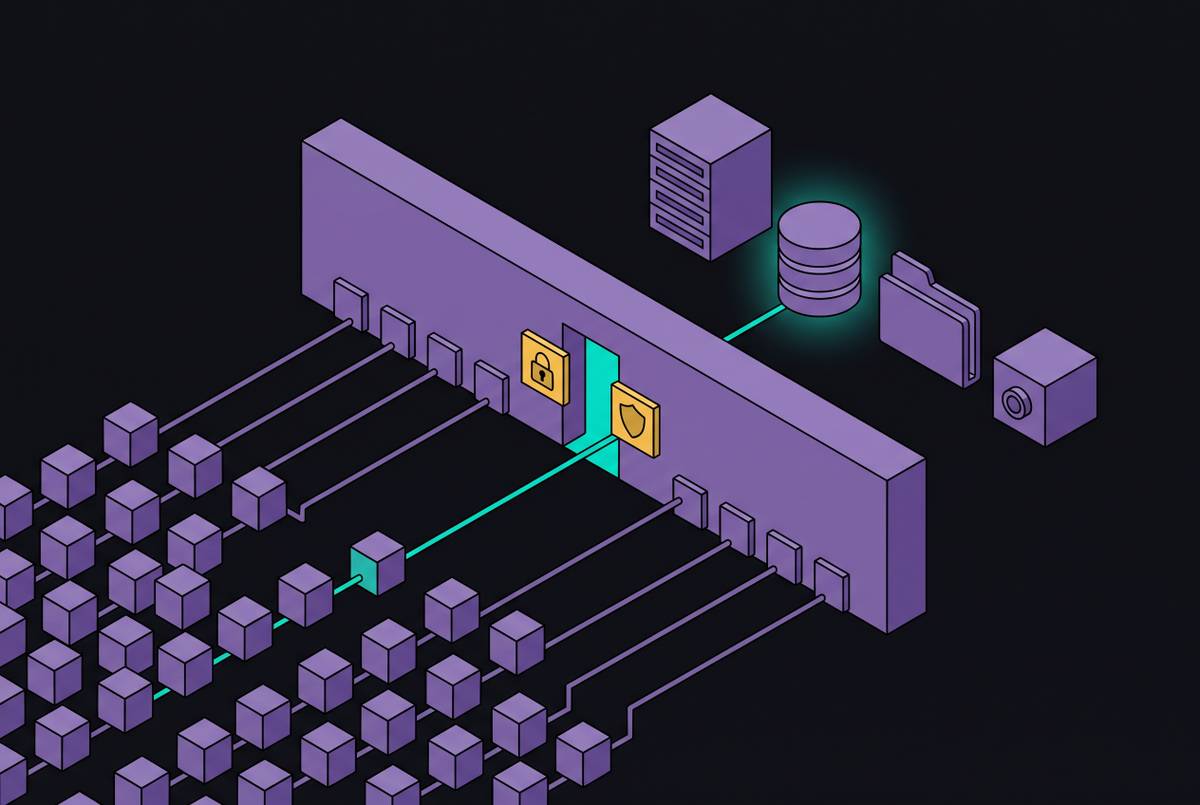
The second layer is the MCP gateway itself. It validates tokens, applies per-tool policy, maintains the registry, and injects credentials from the secrets store. The third translates legacy APIs, databases, gRPC services, and SaaS applications into MCP servers with declared schemas. The fourth provides observability through OpenTelemetry traces and metrics sent to the existing backend, including Datadog, Grafana, Splunk, or another collector. No separate monitoring island is required.
AWS MCP Gateway and Registry anchors this pattern in a concrete implementation. It integrates with Entra ID, Okta, Auth0, Amazon Cognito, Keycloak, and PingFederate, mapping identity-provider groups to scopes that specify tools, methods, and assets. The agent card records the agent’s purpose, tools, authentication requirements, and address. The gateway caches these documents and refreshes them on demand. Identity integration alone, however, is not evidence of OAuth support or individual-tool enforcement in every server.
The A2A Gateway reference implementation, published July 2026, shows how registry governance complements per-agent authorization. Its management layer uses a database-backed registry and semantic discovery, its control layer uses a Lambda authorizer to validate JWT scopes against a Permissions table, and its execution layer handles single-domain OAuth backend authentication. These are implementation layers within the wider governance pattern. HashiCorp Vault supplies the reference pattern for dynamically issuing short-lived credentials against policy.
How to scope credentials at registration in practice
First, set out what the agent is meant to do before writing configuration, and use the MCP server’s declared schema to find exactly which tools it needs. Everything else stays excluded by default. This establishes the allow-list before convenience can enlarge it. The task determines scope.
Second, give the agent a persistent identity in the enterprise identity provider, tied to a named person or team. Group membership determines which scopes it is eligible to receive. Third, record the permitted tools explicitly in the agent card. The registry’s tools array is enforced at the gateway, regardless of what the backend exposes.
Fourth, configure credential injection so the agent receives a virtual key scoped to its registered tools, while the gateway retrieves and inserts the actual backend credential at call time. Fifth, set credential lifetimes in minutes rather than hours and forbid static service-account keys. Configure automatic revocation when the agent is deregistered. That event must reach the secrets store so credentials do not survive their registration.
Sixth, scan AI assets before the registration persists. The registry can use open source Cisco AI Defense scanners, while a webhook validates tool descriptions and schemas against business rules. This brings supply-chain review into the same control event. A poisoned description can steer an agent before it makes a tool call that looks suspicious, so registration is an earlier chance to check. The threat includes packages that earn trust with clean releases before they add an exfiltration line.
Existing agents need the same treatment. Re-register them with explicit tool lists and use that event to replace their broad access with scoped credentials. Adding runtime policy while leaving the original credentials intact preserves the architectural defect. The migration is complete only when registration governs what those agents can reach.
Shadow MCP as the bypass that undoes registration-time scoping
A registry cannot constrain connections that bypass it. Shadow MCP servers leave an escape hatch in an otherwise sound design, especially when they keep privileged credentials until someone manually revokes them. Unlike an inventory entry, a credential can remain operational without anyone maintaining a record of it. Registry coverage is therefore part of credential control.
Network discovery alone cannot establish that coverage. Local stdio transports connect a desktop AI client and an MCP server through standard input/output pipes on the endpoint. Proxies, firewalls, and CASBs do not see that conversation. Detection therefore needs endpoint and identity layers as well as network visibility.
Developers may use ngrok, Cloudflare Tunnel, or localtunnel to connect a remote client to a local MCP server. A DNS query to one of those domains from a developer machine is an indicator of possible unsanctioned exposure, with a particular server’s behavior still unproven. The NSA guidance recommends scanning the network for unapproved MCP servers. Discovery belongs in baseline security operations.
Bring these servers under governance. Discover existing servers, require re-registration with scoped credentials, and make unregistered servers unreachable from governed agent surfaces. This extends the registry invariant across the organization. More monitoring on an ungoverned connection may show what is happening, but it leaves the bypass open.
Runtime enforcement as the second layer, not the substitute
Runtime controls add defense in depth once registration has narrowed what the agent can do. They still have work to do. A tool that is allowed can get an unsafe request, and a workflow that is permitted can run into hostile content. The gateway therefore needs a valid token at the entrance and policy checks on every prompt and tool call. Registration constrains the options. Runtime enforcement judges their use.
The GitHub MCP incident illustrates why both layers are needed. An attacker placed hidden instructions in a public repository file, causing a Claude agent to access a private repository and exfiltrate its contents through a later tool call. That sequence depended on private-data access and an external communication channel being available together. Researcher Simon Willison calls the combination of private data, untrusted content, and external communication the “lethal trifecta”. Separating read access from transmit access at registration makes that attack structurally harder without pretending prompt injection has disappeared.
Runtime detection can then use the agent’s identity and expected activity as context. A server reading a customer PII table at an unusual hour for a user who normally queries another schema provides a more specific signal than an undifferentiated tool-call alert. Every allow or deny also needs attribution to a named person and the rule applied. The NSA guidance calls for logging all tool and model invocations, while the Five Eyes “Careful Adoption of Agentic AI Services” guidance enumerates audit requirements. These obligations supplement scoped access.
OpenTelemetry connects those decisions to the enterprise’s existing observability backend. The audit trail closes the accountability loop between the registration, the responsible person, and the action taken in production. That is what broad deploy-time credentials leave unresolved. The complete posture is not a new security stack, but the existing enterprise stack extended to cover agents.