AI Risk Management Frameworks for Enterprise Security Teams
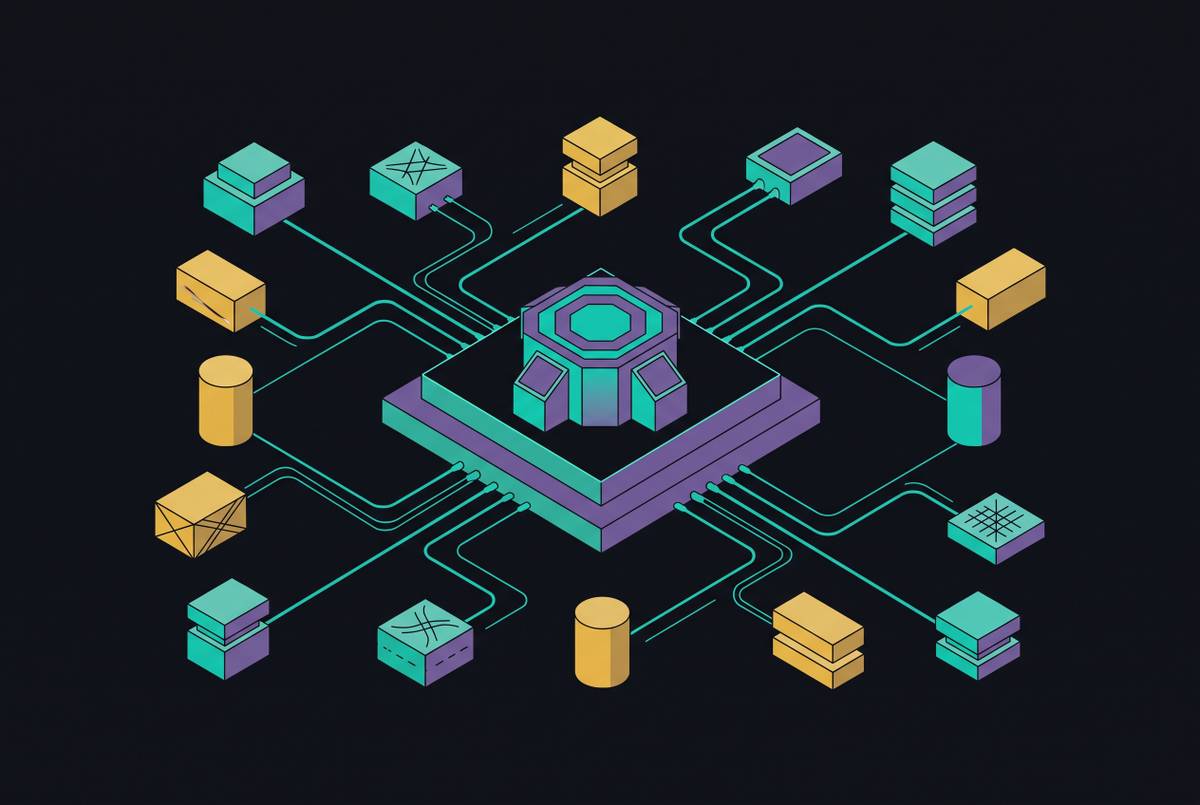
Security teams face agentic AI systems that operate beyond traditional governance boundaries.
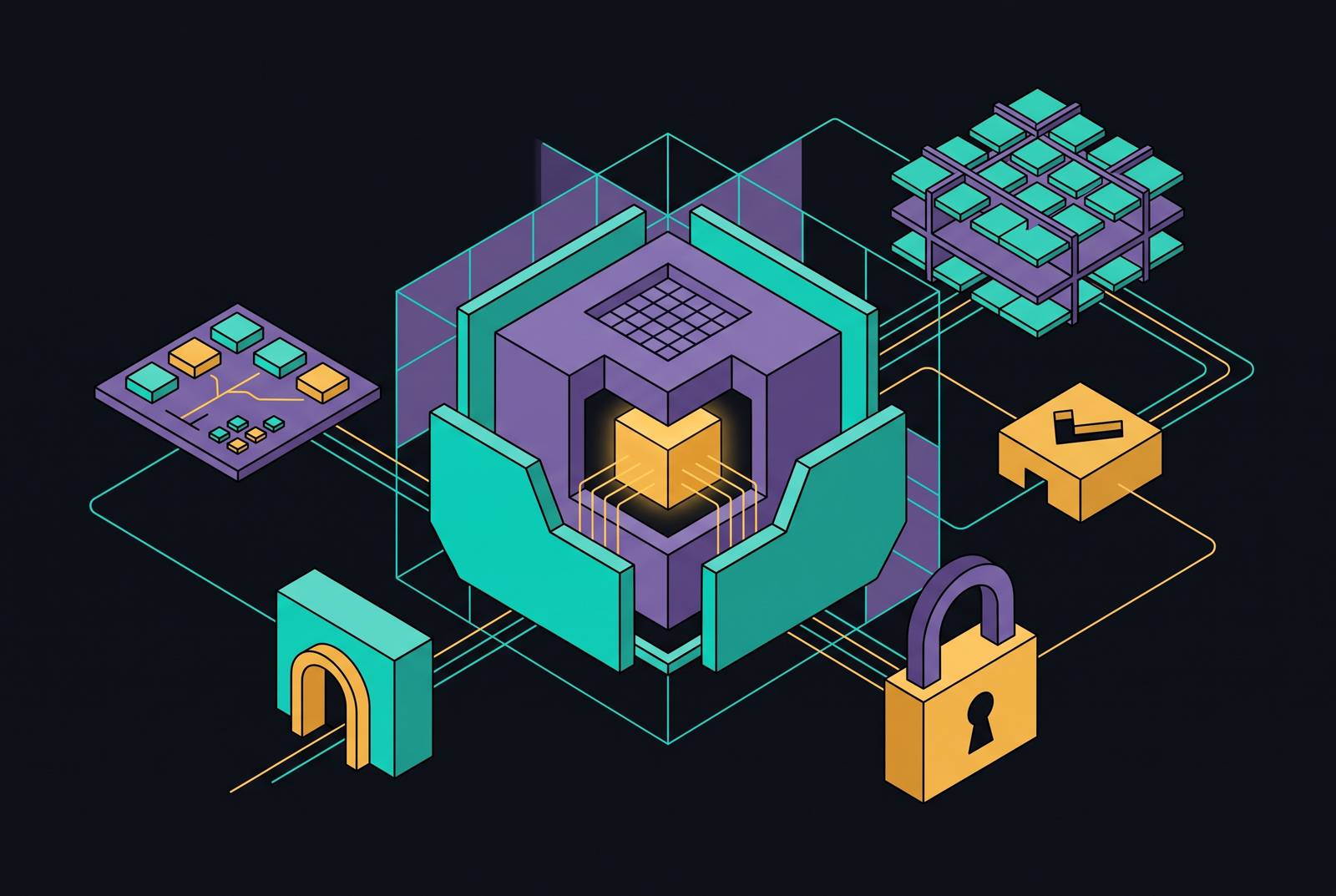
Enterprise security teams are running into a governance gap that most of them didn't see coming: AI agents now act, chain tool calls, and make consequential decisions mid-workflow, and the rules built for static software with a fixed perimeter were designed for a different era entirely. This piece lays out a layered structure for AI risk management, tying governance to the actual threat surfaces where things break (shadow AI, unmanaged tool access, agent identity, prompt injection) so a compliance checklist doesn't quietly stand in for real security work. Here's the uncomfortable part: most enterprises running agentic AI right now have no rule governing how far an agent can act before a human has to step in. That's a significant gap, arguably the whole ballgame, and pretending otherwise is how a security team ends up explaining itself to a board after the fact.
Traditional security models assume a person clicks the button, sends the email, approves the transaction. Classical machine learning governance, built around model validation, documentation, and periodic review, doesn't map onto a system that can browse, write, execute, and escalate its own permissions inside one session. Agentic AI slides between the cracks of both. What follows builds that structure layer by layer, starting with why the rulebook stopped being optional.
The regulatory environment that makes a structured approach unavoidable
More than seventy-five countries had adopted or started drafting AI-specific legislation by mid-2025. That number alone should end any debate about whether governance is optional.
Four frameworks now shape how enterprises plan: NIST AI RMF 1.0, ISO/IEC 42001:2023, the EU AI Act, and the OECD AI Principles (updated 2024). Treating them as interchangeable is how legal teams get blindsided. They differ on whether compliance is mandatory or voluntary, on geographic reach, and on whether they govern process or impose hard technical requirements. The EU AI Act stands alone on one point: it carries direct financial penalties at its highest tier, and its high-risk AI system obligations kick in August 2026, which sounds less distant once a compliance program's actual build time gets counted backward from that date.
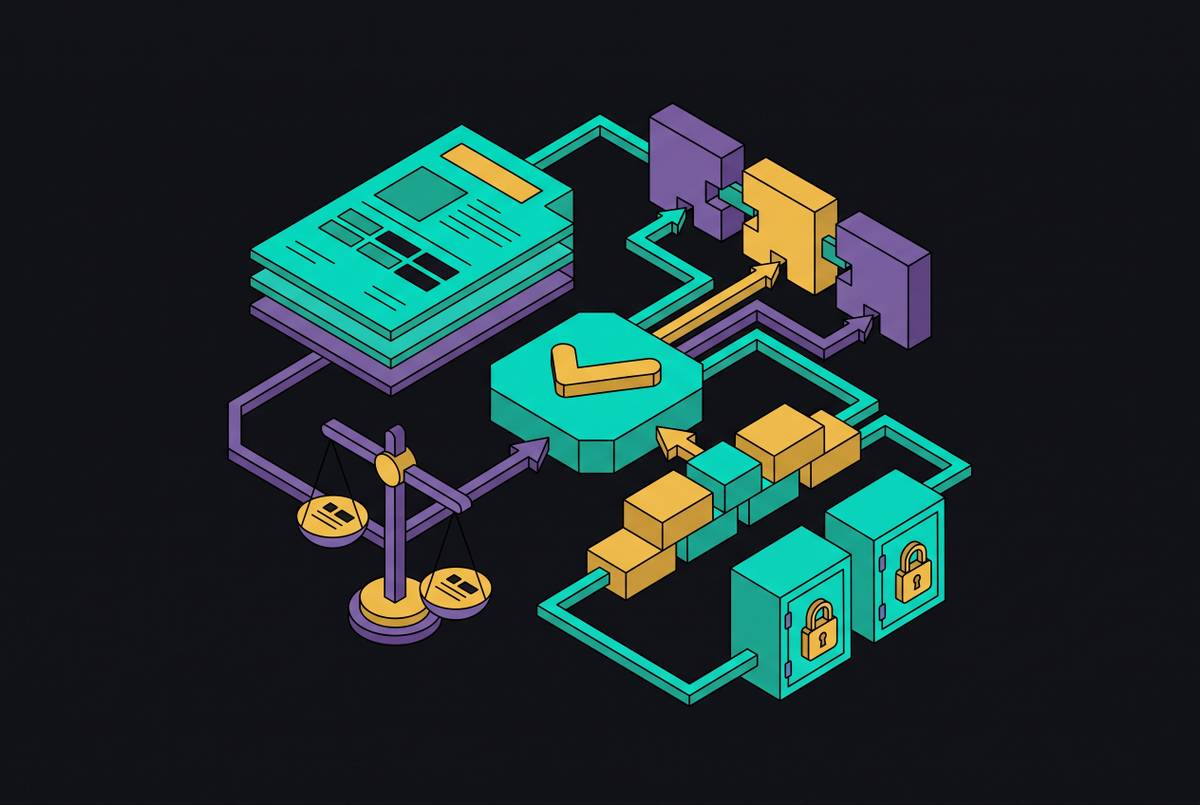
A layering pattern is emerging as the practical answer. OECD Principles work as the values statement, the thing that goes in a board deck. NIST AI RMF becomes the internal operating model, the day-to-day rules engineers actually follow. ISO 42001 supplies the certifiable management system, the artifact that proves to an outside auditor the first two aren't just decoration.
There's a domestic wrinkle too. In Texas, NIST AI RMF compliance functions as an affirmative legal defense under the state's TRAIGA statute. Revised federal guidance for banking risk management, SR 26-2, arriving April 2026, sets a supervisory bar that will ripple well past the banks it directly targets. None of these frameworks are laws in the traditional sense, but they carry legal weight anyway. Picking a framework has quietly become a legal decision as much as an engineering one, and the three-layer approach cuts the redundant paperwork since ISO 42001 and the EU Act already overlap on a lot of ground.
How to classify AI risk before writing a single policy
Nobody enforces graduated controls if every AI system in the building gets treated the same. That's the whole problem with risk classification done badly: it either doesn't happen, or it happens once and gets filed away.
The EU AI Act's four-tier model, Prohibited, High, Limited, Minimal, is a fine starting template, but it needs local tailoring. "High risk" in a hospital system and "high risk" in a logistics routing tool are not the same animal, even if both land in the same regulatory bucket.
Five questions do most of the classification work. How sensitive is the data the system touches: PII, financial records, health data, internal IP? What's the autonomy level: does the system recommend, draft, or actually act, including writing back to systems of record? What's the blast radius if the thing gets compromised or goes sideways? Are its actions reversible, or does it make durable changes like sent emails and database writes that can't be quietly undone? And is it customer-facing, since a public failure carries reputational and regulatory weight an internal tool's failure never does.
Model provenance belongs at this table too, not off in a separate spreadsheet. A fine-tuned model, a model pulled from a third-party hub, and an open-weights general-purpose model carry meaningfully different risk profiles even performing the identical task.
The output should be a living, tiered inventory, feeding straight into access policy and monitoring rules, revisited on a set cadence rather than built once for an audit and forgotten. The pattern holds consistently in practice: agentic pilots tend to land in the top two risk tiers on first assessment, because the autonomy and blast-radius dimensions push them there even when the underlying task looks routine on paper.
Shadow AI as the starting threat surface — what security teams are actually flying blind to
Shadow AI is already happening, at scale, inside most organizations, and the share of security professionals themselves using unapproved tools runs higher than the general employee base. That's its own small joke at the industry's expense.
The mechanism is simple and unglamorous: someone pastes a customer record, a chunk of internal code, or a spreadsheet of financial figures into a free-tier AI tool logged in on a personal account. No DLP sees it, no access control touches it, and it just leaves the building.
Sensitive data exposures cluster on personal free-tier accounts, not corporate-sanctioned tools, and form a meaningful share of the overall exposure problem, based on analysis of enterprise AI prompt activity. Organizations already run hundreds of SaaS applications, and a large chunk of that footprint sits unauthorized. GenAI tools are accelerating a shadow IT trend with roots that predate the technology itself.
Detection policy is the weak link here. Only a minority of organizations have anything in place that even detects shadow AI usage, let alone governs it. IBM's breach cost research found incidents with a shadow AI component carry a materially higher per-incident cost than those without one. That's a budget line worth taking seriously.
Blanket bans push usage underground, tank morale, and make the behavior harder to spot. So the industry consensus has shifted toward governed access, and for good reason: real detection needs network-level visibility into traffic headed to GenAI endpoints, SaaS discovery covering browser extensions and OAuth-connected apps rather than just the managed software list, and prompt-level telemetry on any AI tool the org officially sanctions. The parallel to shadow IT from a decade ago is exact. A governed SaaS layer solved that problem back then. Same logic, new acronym.
MCP servers as the new unmanaged API surface
Something shifted architecturally in how agents work: they don't just read context anymore, they call tools, and the Model Context Protocol has become the dominant way that connectivity happens across major AI platforms.
That makes MCP servers production API infrastructure, full stop. Most enterprises are not treating them that way. No enforced authentication standard, no audit trail, no central registry of what's running where. It's the API sprawl problem from a decade ago, wearing a new badge.
The vulnerability data isn't abstract. Empirical analysis of a sample of open-source MCP servers found a meaningful fraction carrying tool poisoning vulnerabilities: altered tool descriptions, injected false responses, redirected data flows. Misconfigured servers frequently expose unauthenticated endpoints. CVE-2025-49596, found in the Anthropic MCP Inspector, showed remote code execution achievable with no download and no user interaction beyond visiting a malicious webpage. That's the kind of finding that ends a Friday afternoon early.
Credential sprawl compounds it. Each agent tends to carry its own API keys, OAuth tokens, and service account credentials, scattered across environment variables, config files, and secret stores, with no single place to revoke all of it at once. The MCP spec added OAuth 2.1 support in early 2025, refined it mid-year, and introduced Cross App Access semantics late in the year, but implementation quality still varies a lot across server builds.
Four things need tracking for every MCP server in the environment: which agents can invoke it and under what identity, what tools it exposes and whether those tool descriptions have actually been checked, what downstream systems it can reach and with what permissions, and whether it's been patched against known CVEs. There's a supply chain angle too easy to skip past as well: MCP servers pulled from open-source registries without vetting carry the same third-party dependency risk as any unvetted package, plus the added complication of direct runtime access to enterprise systems instead of just sitting in a build pipeline.
Why an MCP gateway is the structural answer to distributed agent access
The gateway pattern isn't new. It's the same idea that cleaned up API sprawl a decade ago, applied here to agent-to-tool traffic. A single governed chokepoint routes everything through consistent authentication, authorization, and logging, instead of leaving each MCP server to enforce its own rules, or none.
Without that chokepoint, policy enforcement is manual, per-deployment work, and it stops scaling the moment the number of agents and servers starts multiplying, which it always does faster than expected.
A production MCP gateway needs to handle a specific set of jobs: OAuth 2.1 enforcement with PKCE, the standard the MCP spec now calls for; role-based access tied to enterprise identity systems like Okta or Entra ID rather than loose service-account keys; centralized audit logging that captures which agent, under which identity, called what, with what arguments, and got what response back; input validation and schema enforcement to catch malformed or injection-laden requests before they reach the server; and real-time inspection of traffic for prompt injection attempts and PII moving where it shouldn't.
Speakeasy, for instance, functions as an AI governance and observability platform that centralizes control across MCP servers and agent identities at the enterprise level. Vendors differ meaningfully here, more than the marketing copy suggests. MintMCP offers SOC 2 Type II audited controls and HIPAA-aligned hosting, turning what would otherwise be a local MCP server into something closer to a governed production service. TrueFoundry earned a spot as a Representative Vendor in the 2025 Gartner Market Guide for AI Gateways and brings that enterprise gateway muscle down to the MCP layer specifically. Docker's container-native approach gives isolation and supply chain signing, which is genuinely useful, but it stops short of a governance layer: no RBAC, no audit logging, no centralized access control built in. It functions well as a deployment mechanism, with governance left to other tools in the stack. Lasso Security focuses on real-time injection detection in live traffic, while Composio runs tool implementations inside sandboxed environments. Read together, the lesson is that defense-in-depth across several vendors is currently the best available posture, and any team shopping for a single tool to solve this is shopping for the wrong thing.
A broader pattern is worth naming too. An AI control plane approach, one that centralizes governance across MCP servers, agent identities, and tool access in a single layer, tends to plug into existing identity providers rather than forcing a second, parallel credential system into existence. Gartner's emerging practices guidance points the same direction: apply gateway-centric architecture to MCP the way enterprises already manage every other API surface. The infrastructure pattern isn't new. Its application to AI agents is.
Identity and access controls that actually work for AI agents
Agents need real identities: scoped, revocable, tied to a specific human or team who answers for what the agent does, rather than the loose, borrowed service accounts most of them run on today. Right now, most agents authenticate with broad-scope credentials, admin API keys, shared service accounts, because fine-grained identity provisioning for non-human actors is still immature across most enterprises. It's a bit like handing every new hire the master key because cutting individual keys felt like too much work.
There's movement worth watching here. Okta and Microsoft Entra ID are both actively building native MCP connector support, which is a signal in itself: the enterprise identity market has started treating agent identity as a first-class problem rather than an edge case to patch later.
The RBAC principles aren't exotic. They're just rarely applied with any consistency. Least privilege by default, so an agent gets exactly the tools and data its task requires and nothing beyond that. Time-bounded tokens instead of standing credentials, wherever the workflow allows it. Separate identities for separate roles, meaning a summarization agent and a data-writing agent shouldn't share credentials even if they're built on the identical underlying model. And human-in-the-loop escalation paths for any action that would push past a defined permission boundary.
Multi-agent systems make this harder, not easier. When one agent delegates a task to another, the permission chain has to stay traceable: which agent handed off what authority to which downstream agent, and under whose original scope. Lose that thread and an audit turns into archaeology.
Here's the governance gap stated plainly: most enterprises running agentic AI today have no framework defining what decisions an agent may make on its own versus what needs a human sign-off first, and that absence characterizes virtually every other agentic team he's compared notes with is in the same spot. That boundary belongs in a written policy artifact, the same way an access control list gets written down rather than remembered. The practical fix is an agent registry, run alongside a model registry, recording each agent's identity, its permission scope, its escalation rules, and the human or team accountable when it misbehaves.
Prompt injection and data leakage as the active attack surface security teams must instrument
OWASP's 2026 Top 10 for Agentic Applications now classifies prompt injection as a core threat category, and the consequences have moved well past an embarrassing chatbot response. Unauthorized data access and outright system compromise are on the table now.
Traditional perimeter defenses miss this entirely because the attack happens at the semantic layer. A malicious instruction sits inside an email, a Slack message, a shared document; the agent reads it, treats it as legitimate input, and acts on it. No malware signature, no network anomaly, nothing a firewall would ever flag.
Indirect injection is the sharper-edged version. The attacker never needs access to the AI interface at all. They just need the agent to process content they control: a web page, a shared file, an email sitting in a monitored inbox. EchoLeak, disclosed in mid-2025, demonstrated the first zero-click data exfiltration attack against Microsoft 365 Copilot, proving that even a well-resourced, enterprise-provisioned AI deployment carries this exposure.
Leakage compounds the injection problem. Employees paste sensitive content into AI tools routinely without recognizing it as a data exposure event in the moment. Agents processing internal documents, emails, and support tickets are going to run into PII and embedded secrets as a matter of course; the real question is whether that content gets logged, sent somewhere it shouldn't go, or surfaced externally. Secrets like API keys and credentials sitting inside code or config files that an agent reads mark a distinct leakage path, separate from PII but no less damaging.
Detection at this layer needs a few specific pieces working together: input and output scanning for PII patterns, credential formats, and odd instruction syntax, applied at the gateway or control plane rather than hoping the model catches it itself; behavioral detection that flags agents invoking tools outside their normal pattern or sending data to unexpected endpoints; and allowlisting, so an agent physically cannot call a tool it wasn't explicitly configured to use in the first place. No single layer here catches everything. Input validation misses what output filtering catches, and behavioral monitoring catches what both of the others miss. Defense-in-depth carries real weight in this section: it's the only posture with a chance.
Observability as the operational foundation of security
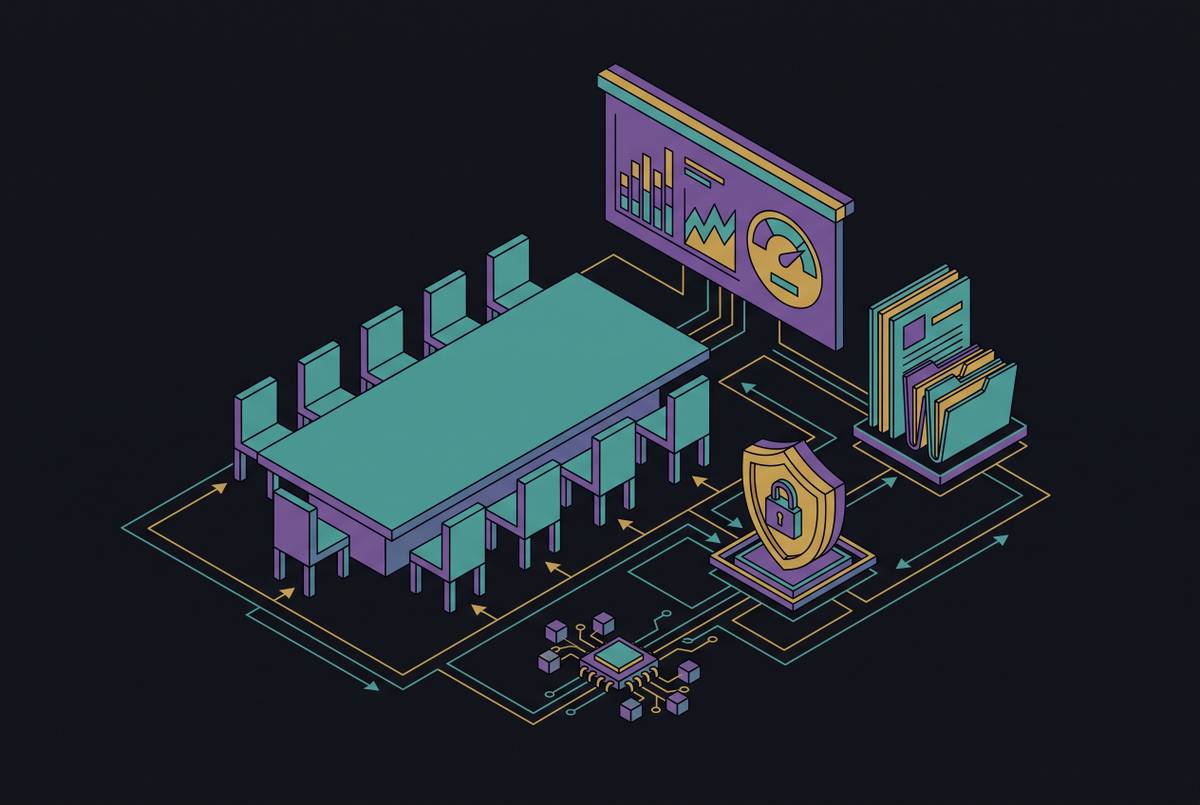
Everything above, classification, access control, gateway enforcement, injection detection, produces data. Observability is what turns that data into something a security team can act on, in something close to real time, instead of finding the problem during a post-incident review three weeks later.
A log tells you what happened; observability tells you what's happening now and lets someone act on it before the damage compounds. That distinction matters more with agentic systems than with almost anything else in the stack, because an agent can chain a dozen tool calls in the time it takes a human analyst to open a dashboard.
The centralized audit logging built into a proper MCP gateway, capturing agent identity, invoked tool, arguments, and response for every call, is the raw material. What observability adds is correlation: tying a spike in unusual tool invocations to a specific agent identity, tying that identity back to the human or team accountable for it in the registry, and tying the whole chain back to the risk tier assigned during classification. Without that thread, every layer built earlier in this piece operates alone, which is functionally the same as not having built them at all.
Incident response for agentic systems has to assume a speed that human-triggered incidents never had to account for. An agent with a compromised credential doesn't wait for a lunch break to keep acting; it keeps calling tools at machine pace until something stops it. That's the case for instrumenting this whole stack now, rather than after the first incident makes the argument for you, the hard way. The frameworks, the classification tiers, the gateways, the identity controls: none of it holds together without the observability layer watching all of it move in real time.