Centralizing Multi-Server MCP Orchestration Through a Single Gateway Control Plane
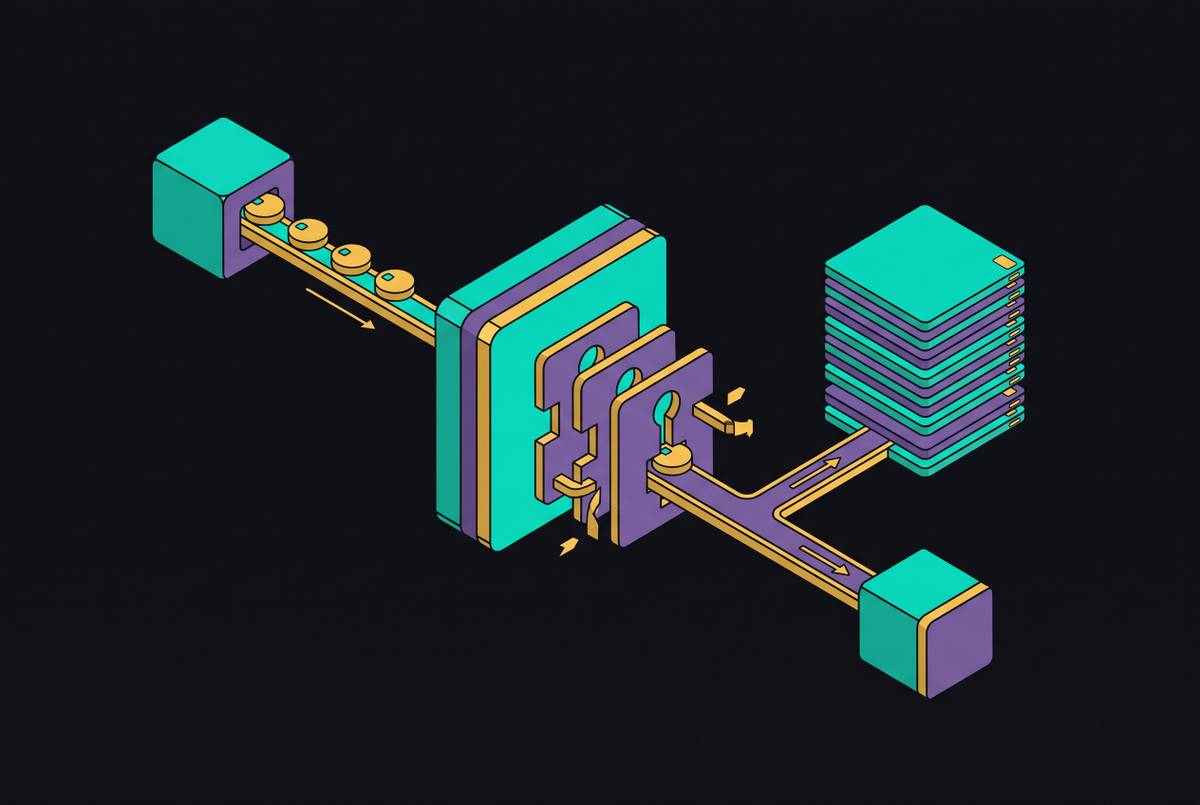
A centralized gateway enforces security and audit controls across distributed MCP servers.
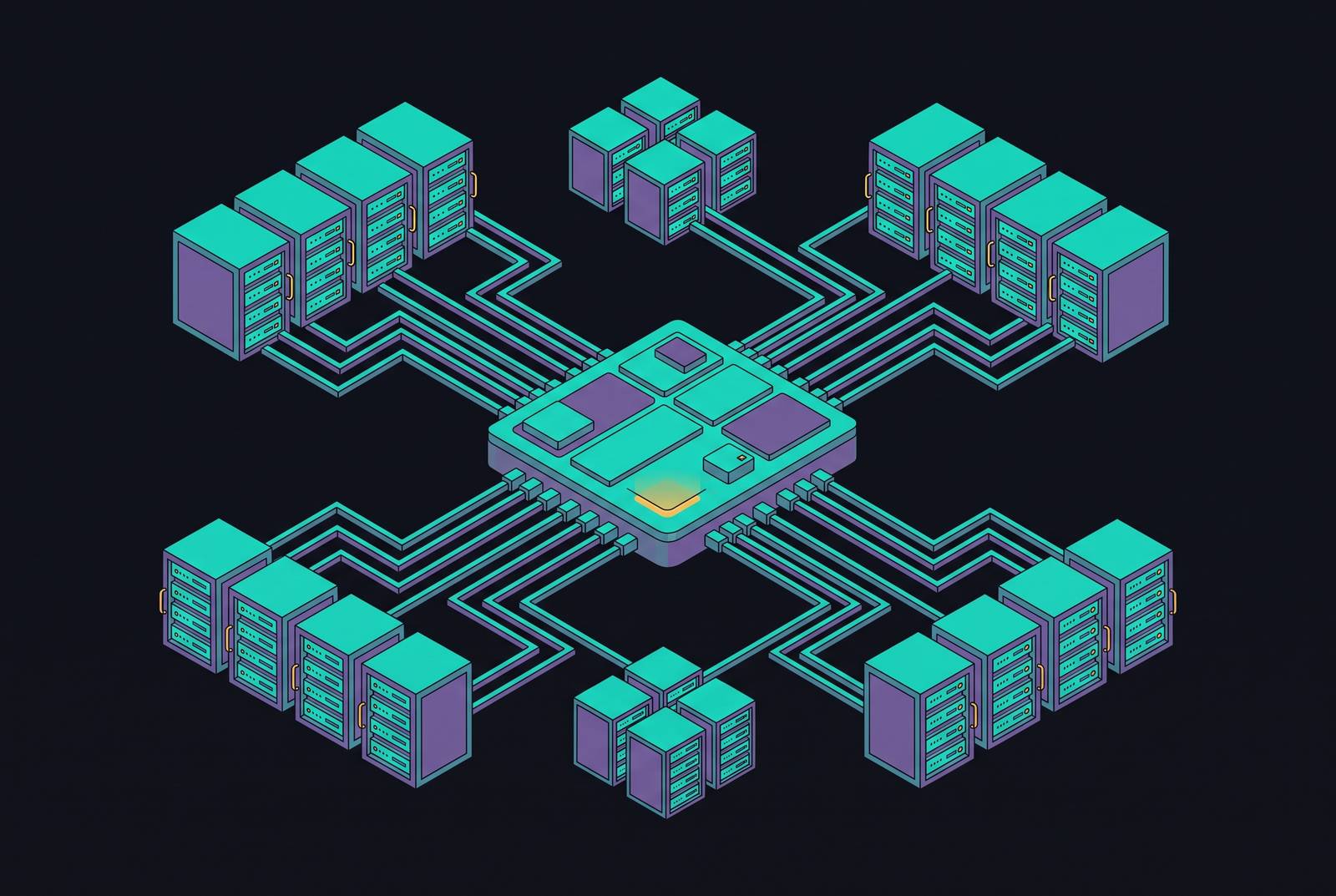
An MCP gateway is middleware that connects AI agents to multiple MCP servers through one governed endpoint, applying policy before routing each tool call.
Why direct agent-to-server MCP connections break at enterprise scale
The Model Context Protocol defines a clean contract between MCP clients, which are agents or LLM applications, and MCP servers, which expose tools, resources, and prompt templates through JSON-RPC. Its interoperability is valuable because compliant clients and servers can communicate without bespoke integrations. But the base protocol does not supply the enterprise governance layer for authentication, authorization, audit trails, rate limits, or cost control. Those responsibilities fall to implementers, so a working connection is not evidence of a governed one.
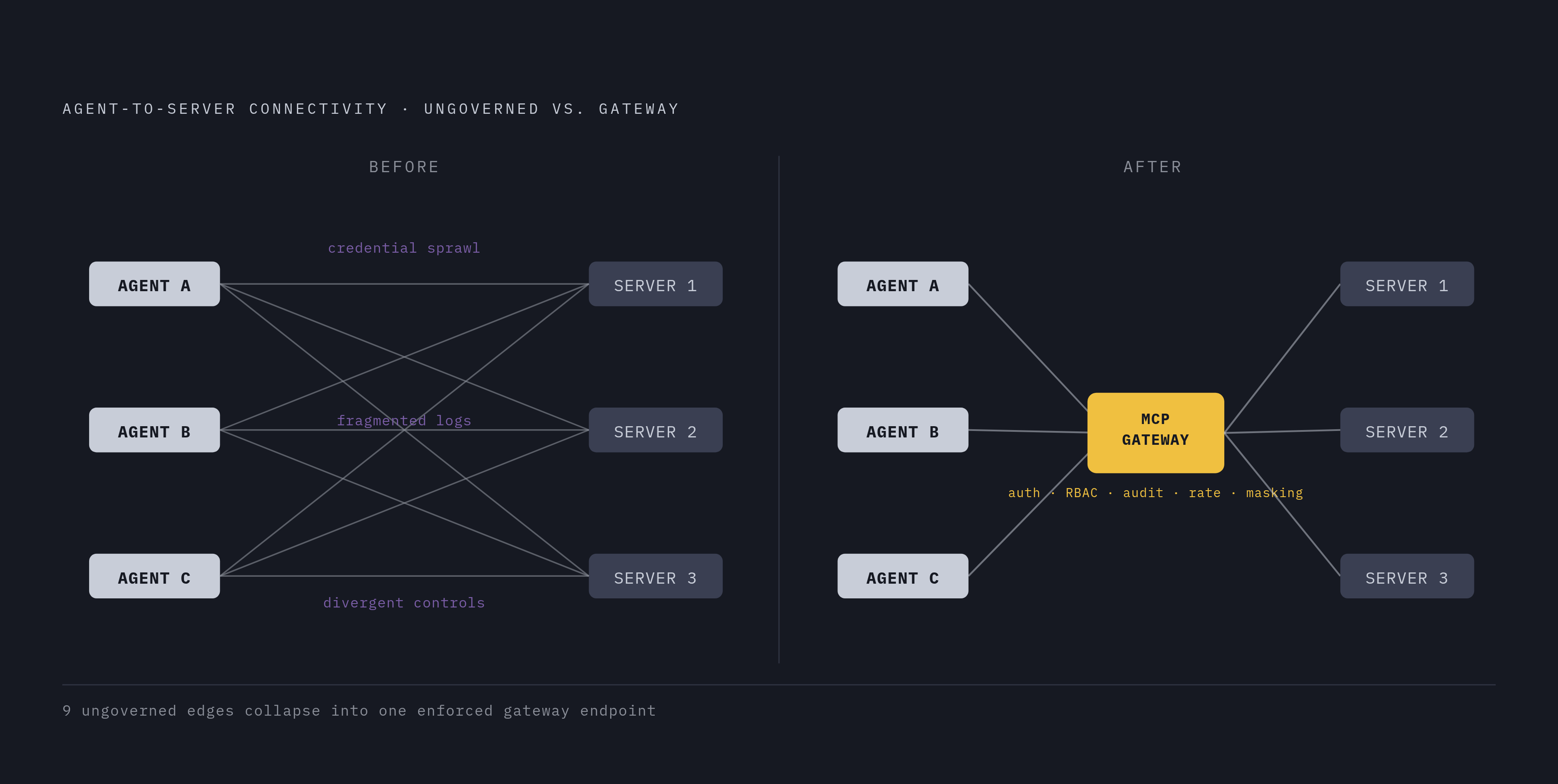
That distinction becomes expensive when dozens of agents connect to hundreds of servers. Each server implements authentication, each agent manages credentials, and every integration adds another place where controls can diverge. API keys, database passwords, and OAuth tokens held by agents can leak through prompts or logs. Meanwhile, quotas and data-privacy rules lack a common enforcement point, and debugging requires stitching together records from separate agents and tools.
A new server does not merely add useful capabilities, but also another entry point and another set of controls to maintain. Even competent teams cannot make fragmented logs behave like a single audit trail by wishing firmly at them.
How a centralized MCP gateway converts a mesh into a governed hub-and-spoke architecture
With a gateway, agents share a route through policy enforcement to upstream MCP servers in place of those direct connections. Each agent connects to one endpoint, while the gateway manages the server topology. It intercepts requests, applies security rules, and routes permitted calls to the appropriate service. The N×M integration problem becomes a hub-and-spoke arrangement with one place to attach governance. This is the gap enterprise control planes, including Speakeasy, address rather than leaving every integration to reinvent security and observability.
Centralizing policy does not require all operational work to happen in the same process. The control plane handles registration, configuration, changes to policy, and role-based routing. The data plane handles live operations, including tools/list, tools/call, authentication, routing, rate limiting, caching, and observability. Speakeasy’s enterprise AI control plane follows this separation, keeping configuration management apart from latency-sensitive request handling. Rules still apply to live traffic, but the work of managing policy can stay out of the hot path.
In-process deployment has no extra network hop, while a sidecar runs nearly as fast and offers more isolation and more ways to run it. A centralized gateway is simpler to govern but can become a throughput bottleneck at very large scale. Federated deployments offer aggregate throughput and regional resilience at the cost of greater operational complexity. Scale, sovereignty, and existing infrastructure determine the fit.
The six functional controls an enterprise MCP gateway must enforce
Routing alone does not make an enterprise gateway. Its first control is authentication, including OAuth 2.0 with credentials kept outside AI context rather than exposed in configuration files or to end users. The stable MCP Enterprise-Managed Authorization extension replaces per-server consent prompts with an SSO-integrated flow. Its second control is fine-grained authorization through per-operation RBAC and ABAC. Access must distinguish a server from its tools and parameters, rather than treating entry to the server as permission to do everything inside.
The third control is audit logging at the attribution level. Immutable records must connect the user, agent, MCP interaction, and tool so an invocation can be traced to both its executor and the person behind it. The fourth control is path and scope enforcement through filtered discovery. Returning only permitted tools constrains exposure before an agent attempts a call. Together, these controls make identity meaningful both before an action and when someone later needs to explain it.
The fifth control is rate limiting and cost governance through hierarchical budgets and per-key tool allow-lists. These limits constrain runaway spending and protect internal services from excessive calls. The sixth is sensitivity label evaluation and data masking, including inline PII masking and secret detection in requests and responses. This is semantic enforcement at the tool and agent layer. With a shared policy layer such as Speakeasy’s, roles from Okta and Entra ID can govern interactions without each tool independently rebuilding authentication and authorization.
What the threat landscape looks like without these controls in place
CVE-2025-54135 provides a concrete example of why MCP governance must reach beyond connection permissions. Indirect prompt injection caused Cursor’s AI agent to create a malicious.cursor/mcp.json configuration without user approval. That configuration then enabled remote code execution. The missing approval gate on configuration changes mattered as much as the content that triggered the change. A legitimate agent had become the mechanism for introducing an unsafe MCP connection.
Related incidents show why inspecting content is a separate requirement from authenticating its sender. CVE-2025-53773 involved hidden prompt injection in source code files, web pages, or repository content that enabled remote code execution with GitHub Copilot and carried a CVSS score of 7.8. EchoLeak in Microsoft 365 Copilot demonstrated zero-click prompt injection that accessed and silently exfiltrated enterprise data. These incidents illustrate the content-level risks that autonomous tool use must confront. A semantic gateway provides a policy surface for inspection.
The structural risks in ungoverned MCP deployments are credential exposure, autonomous action without approval, and a growing number of entry points. Authorization asks whether the caller is allowed to use a tool. Runtime content security asks whether the request or response itself is safe. Those questions remain distinct when abuse unfolds across several individually innocuous-looking calls. An audit log can document an authorized mistake perfectly well, which is useful but not the same as preventing it.
Why compliance timelines are accelerating the governance requirement beyond security teams
When evidence is missing, deadlines set by regulators make it a problem for more than the security team. The EU AI Act’s Article 50 transparency obligations and enforcement powers came into force on 2 August 2026. Regulation (EU) 2026/1744, the Digital Omnibus on AI, changed the date for Annex III high-risk obligations to 2 December 2027. Those dates must not be collapsed into a claim that every high-risk obligation began in August. The applicable duties depend on the system and use case, while penalties for prohibited practices can reach tens of millions of euros or a meaningful share of global annual turnover.
A gateway’s audit trail provides evidence of what agents did, which tools they used, and whose authority they exercised. That evidence matters when agents operate in credit, employment, healthcare, or critical infrastructure. Without it, a regulatory response begins with reconstructing the missing records. Part of the governance gap is being unable to see what happened, alongside the lack of security features.
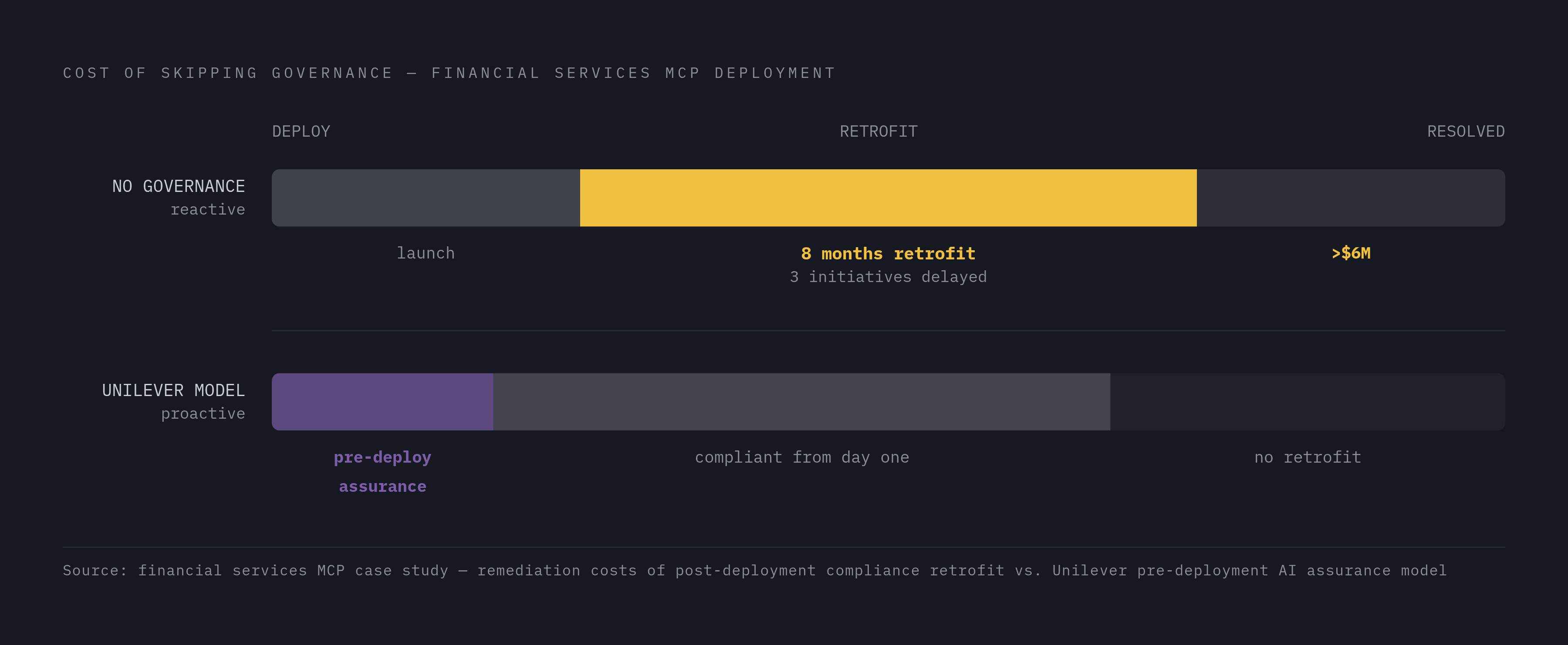
One multinational financial services firm shows what it costs to close that gap after deployment: it had to retrofit a production MCP system for compliance. Unilever offers a contrasting model through a structured AI assurance process that evaluates proposed use cases before deployment. Experts from across the business check for risks to ethics, the law, and operations. The contrast is not between buying different products, but between making governance part of approval and discovering later that production lacks the evidence approval requires.
How the leading enterprise MCP gateway options compare on the controls that matter
A comparison should start with how deep access-control goes, how complete the full-chain audit is, runtime content inspection, and deployment sovereignty. Catalog breadth offers convenience. Speakeasy combines a governed MCP path with identity-based access, scoped RBAC, audit records, and inspection of prompts, responses, and tool calls in flight. Its documented capabilities also include server curation, cost and usage telemetry, and integration with existing identity providers. Its fit is an enterprise seeking a shared policy layer for agent access to internal and external systems.
Bifrost from Maxim AI unifies LLM, MCP, and agent gateways in one binary with shared virtual keys, audit logs, and observability. With its virtual-key model, teams can use hierarchical budgets, rate limits, and per-key MCP tool allow-lists. Support for air-gapped deployments, VPC isolation, and on-prem infrastructure makes deployment sovereignty a substantive part of its fit. MCPX by Lunar.dev is open-source and permissively licensed, with an enterprise tier adding tool-level RBAC, immutable full-chain audit trails, and credential isolation through secret references. Its Enterprise tier is SOC 2 certified.
Cloudflare AI Gateway with MCP Server Portals combines those services with Cloudflare Gateway to govern MCP traffic through an existing edge footprint. Kong AI Gateway extends API management to MCP traffic, LLM calls, and agent-to-agent communication on its OpenResty core. Their documentation describes how organizations already using their infrastructure can bring these services together. Microsoft MCP Gateway and Docker MCP Gateway are also options, although the supplied details do not establish comparable control coverage for either. Microsoft’s offering is discussed in the context of enterprise identity infrastructure, which is not enough by itself to infer tool-level enforcement.
NeuralTrust positions TrustGate around inline runtime security. Its Security Engine inspects tool-call content and reasons across a session rather than only deciding whether the caller has access. That distinction makes content inspection a separate evaluation dimension. Choose documented controls that match the enterprise’s risks and accommodate where its data plane must run.
What the strongest objection to centralized gateways gets right, and where it falls short
Federation is a legitimate answer to organizational and infrastructure constraints. After mergers, across clouds, or between independent business units, forcing every team onto one gateway platform can be disruptive and politically difficult. An overlay can connect the gateways already in place while letting local teams keep running them. Performance objections are equally real because a centralized data path can bottleneck high-throughput workloads. In-process and sidecar deployments reduce the network cost of mediation.
These objections challenge a physical topology, however. A control plane and its enforcement points need not share one deployment location. What matters is whether the resulting system applies consistent policy and produces a coherent account of activity. Federation can meet that requirement, but distributing responsibility to individual servers without shared controls recreates the original mesh problem. Local autonomy is not automatically policy consistency.
The EMA extension illustrates the remaining boundary. It governs whether a user may connect a client to a server and at what scope, but it does not inspect call or response content. A federated architecture still needs to answer which user invoked which tool, through which agent, with what arguments, and what came back.
Building the business case for a governed MCP control plane inside an enterprise
The internal business case starts with exposure already present. Over-privileged agents can exercise more authority than the people initiating their tasks, making ungoverned tool access a form of shadow IT inside the perimeter. Compliance deadlines do not wait for that access to be cataloged. The financial services retrofit provides a concrete example of remediation cost: it required eight months of engineering time, delayed three AI initiatives, and cost more than $6 million.
Building controls from point solutions is possible, but component coverage does not establish system-wide governance. Authentication, RBAC, masking, and rate limiting can each work while the overall system still lacks one attributable audit trail. The decision is therefore not simply whether individual features can be built. It is whether the organization can operate them as one policy boundary without negotiating controls tool by tool. The goal is governed infrastructure that supports employee adoption and removes the need for manual review of every deployment.
Speakeasy offers a place to start with a shared layer that has identity, role-based access, real-time shadow AI and prompt-injection detection, and cost and usage telemetry. The first step, regardless of product, is to audit current MCP server connections and agent identities. From that inventory, establish a baseline for tool-level access by role and integrate identity through existing SSO, replacing server-by-server credentials. Set up full-chain audit logging before the next EU AI Act enforcement cycle that applies. The approval request can then be concrete, covering the connections to govern, the permissions to enforce, and the evidence the enterprise needs to retain.