Wiring RBAC Policies and Audit Trails Into MCP Tool Call Pipelines at the Gateway Layer
Gateway RBAC and audit logging enforce authorization where the MCP protocol cannot.
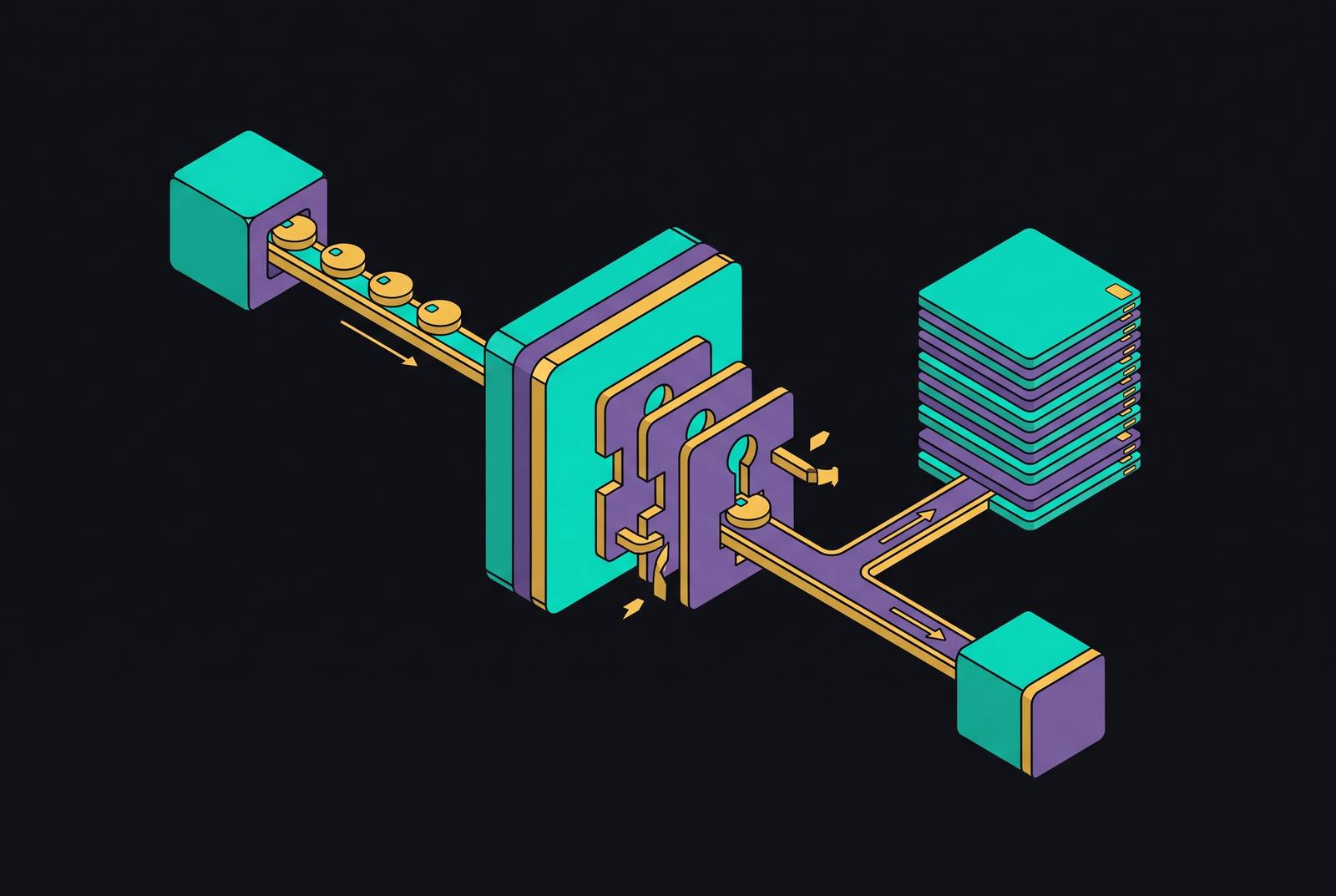
An MCP gateway with RBAC and audit logging for enterprise environments must authorize individual tool calls, bind agent identity to a human principal, and record decisions across the full execution chain. MCP itself lacks those governance controls, so the gateway is the practical place to enforce them. Speakeasy supports this pattern through tool-level permissions, Okta and Entra ID integration, and full-chain audit trails, while other options differ in scope, deployment model, and identity support.
Why the MCP protocol itself cannot enforce access control or auditability
MCP defines how agents and tools communicate, leaving authorization for each operation and recording requirements outside its scope. That separation is deliberate. The July 2026 specification hardened authentication through issuer validation, credential binding, and stateless sessions, but authentication does not settle authorization. Establishing who presented a credential is different from deciding whether that identity may delete a record.
The remaining enterprise work includes binding an agent to a human principal, mapping identity-provider groups to tool permissions, and defining the lifetime of delegated authority. Structured audit logging is on the 2026 roadmap as an extension. The joint NSA/CISA security advisory also points out limits on what the protocol can do to enforce consent, privacy, and tool safety. A compliant conversation is not necessarily an authorized one.
Per-server access controls can protect a particular server, and logging in agent code can record that agent’s activity. Neither approach on its own can keep authorization and attribution consistent across distributed agents and servers. Without per-operation checks, a server can become a “confused deputy”, executing requests with its broad service-account privileges and bypassing the requesting user’s permissions. Infrastructure such as Speakeasy’s AI control plane closes that gap by applying RBAC, identity binding, and real-time audit logging at the gateway.
What an MCP gateway is and what distinguishes it from a traditional API gateway
An MCP gateway sits between agents and MCP servers, where it resolves credentials, routes requests, and enforces policy before tools run. Its distinguishing feature is an understanding of MCP operations. Traditional API gateways handle transport security, rate limits, and DDoS protection. Those controls remain useful, but they do not natively express the permissions within a discovery-then-call cycle or a multi-turn agent session.
Filtered tool discovery makes the distinction concrete. When an agent requests available tools, the gateway exposes only those permitted by its role. It also inspects JSON-RPC bodies, enforces per-tool and per-resource RBAC, and tracks rate limits independently by consumer and operation. OAuth 2.1 with Protected Resource Metadata supports spec-compliant client discovery.
Central routing also reduces integration sprawl. When five agents each connect to ten enterprise tools, there are fifty paths to keep secure, monitor, and maintain. A gateway gives those connections one place to enforce governance rules that would otherwise have to be managed for each connection. Within the broader AI Control Stack, that gateway works with an AI gateway for prompt governance, PII redaction, and LLM routing, plus a portal or catalog for self-service discovery. Speakeasy uses the single-plane approach to manage MCP servers and agents, so teams share infrastructure for access control and observability.
How RBAC wires into a tool-call pipeline at the JSON-RPC level
Consider an analyst whose agent needs a data warehouse read tool but must not use a deletion tool that the same server exposes. A server-level permission cannot express that distinction on its own. The gateway must resolve the requesting identity and evaluate the particular operation before forwarding it. The identity join must link the token to the agent identity, then to the human principal and the set of tools that principal may use.
Discovery is the first point where that policy becomes visible. When the agent invokes tools/list, the gateway returns the read tool but does not disclose the restricted deletion tool. Discovery filtering is not, however, a substitute for enforcement when a call arrives. The gateway must inspect the JSON-RPC method and requested tool, apply the role’s allowlist or blocklist, and reject an unauthorized operation before it reaches the server. Permission to enter the building is not permission to empty the filing cabinets.
Role checks also have limits. A viewer’s permission to read files says little about whether an agent should send their contents through a downstream API. Attribute-based access control, or ABAC, and relationship-based access control, or ReBAC, can account for context that a role alone does not capture. Path and scope controls and checks of sensitivity labels set further boundaries, while credentials stay outside AI context.
Per-tool rate limits provide a separate safeguard. They constrain the volume of otherwise permitted calls that could enable data exfiltration or exhaust resources. Together, authentication, per-operation authorization, attribution logging, scope controls, rate limits, and sensitivity checks turn a server connection into a governed tool-call pipeline.
Connecting gateway RBAC to enterprise identity providers
The gateway’s policy engine should translate existing enterprise identity into tool permissions. Microsoft Entra Agent ID reached general availability in April 2026, and Okta’s Agent SSO reached general availability on August 24, 2026. These agent-identity products let enterprise identity cover more than human sign-in. They do not remove the need to apply that identity to each MCP operation.
Okta for AI Agents uses a scoped authorization token called ID-JAG through its Cross App Access framework, an extension of OAuth 2.0. It can work with non-Okta identity providers, allowing Entra ID, Ping, or another provider to remain the human identity system of record. Yet Microsoft’s and Okta’s agent-identity approaches are not interoperable out of the box. With the underlying IETF standardization unfinished, the gateway must resolve that variation into one enforcement model.
Group provisioning makes the connection operational. SCIM groups can propagate from the identity provider into gateway access control lists, so organizational role changes update the agent’s permitted tool set without separate manual grants. For deployments using Speakeasy, those lists map to existing IdP groups, including those in Okta and Entra ID.
Microsoft’s Azure MCP Server guidance recommends considering Azure API Management as an enforcement gateway for remote self-hosted deployments. Its broader deployment guidance includes TLS, tighter controls for sensitive endpoints, approved outbound destinations, and policy-as-code. Identity establishes the principal, while the gateway makes that principal’s permissions effective at the tool boundary.
What a complete audit trail requires across the User → Agent → MCP → Tool chain
Once identity is bound at the tool boundary, that same binding must be part of the audit record. A useful trail answers which human used which agent, which tool ran, and what data was accessed. An agent process name or a shared service account cannot supply that attribution alone. Immutable records across the User → Agent → MCP → Tool chain preserve the connection that isolated logs leave unresolved.
The July 2026 MCP specification added W3C trace-context support and protocol metadata useful for routing and observability. Those features provide a foundation for stitching together a distributed trace. They do not specify which audit fields to capture or how to store them. Logging added to agent code can help explain that agent’s behavior, but it does not by itself perform the full-chain identity join at the enforcement point.
Capturing everything indiscriminately is not the answer either. Prompts, tool inputs, and outputs may contain sensitive data, so the logging system can itself become a source of exposure. Security teams must define fields, protection, retention, and access, with gateway controls that support those choices.
The trail must also include denied calls. Rejections can reveal misconfigured agents, attempted privilege escalation, and attempts to reach shadow tools. But a denial record exists only if a policy generated the denial. Auditability and RBAC are therefore coupled production controls.
How shadow MCP servers defeat gateway controls before they are in place
A gateway can govern only traffic that passes through it. Shadow MCP servers break that condition by connecting enterprise AI workflows directly to internal APIs, databases, or SaaS systems. These are unauthorized or unmanaged servers. They create an alternate route to systems the gateway is supposed to protect.
Developer tools such as Cursor and Claude Code make installing and activating MCP servers relatively easy. That convenience is useful for development, but it also lowers the effort required to create an unaudited connection. A checkpoint does little good if the road beside it remains open.
The gateway must become the mandatory path to enterprise systems before agents proliferate further. Network and egress boundaries must support that design, rather than treating the endpoint as an optional convention. Server onboarding can then include automated risk scoring for known vulnerabilities, supply chain risk, and tool poisoning indicators. The July 2026 specification does not resolve tool poisoning or supply chain risk, leaving vetting to implementers.
NSA/CISA guidance recommends scanning networks for unapproved MCP servers.
Speakeasy and the other gateway options enterprises are evaluating in 2026
Speakeasy brings the preceding controls together in an enterprise AI control plane for agents, MCP servers, skills, and assistants. It applies RBAC per tool, agent, team, and workflow through existing identity providers, including Okta and Entra ID. Its immutable audit trails attribute tool invocations to human principals across the full execution chain.
Speakeasy also detects shadow AI and shadow MCP in real time, with prompt injection defense, PII blocking, and secrets leakage prevention in the enforcement layer. Cost and usage telemetry shows which agents invoke which tools, at what volume and cost. Virtual MCP server abstractions bundle approved connectors and curated tool surfaces behind governed endpoints, allowing backend changes without changes to agent code. Agent Gateway extends the model to autonomous agents with independently scoped, revocable identities and credentials. These capabilities fit organizations where multiple teams need to share infrastructure and governance.
MCPX by Lunar.dev offers an open-source tier with Tool Groups, tool customization, OAuth authentication, basic invocation logging, and metrics compatible with a monitoring system. Its Enterprise tier adds tool-level RBAC, immutable full-chain audit trails, credential isolation by reference, context-based policy gating, and automated server risk scoring. It provides a path from engineering-led infrastructure control to enterprise governance.
Composio focuses on managed integration and pre-built SaaS connectors. Its enterprise controls include SAML SSO, RBAC, audit logs, in-VPC deployment, and vault integration, although customer-managed secrets and BYOK through the named external vault products are not publicly documented. Self-hosted and VPC options are available through Enterprise sales and are outside the standard managed offering.
IBM ContextForge federates MCP, A2A, and REST/gRPC through one endpoint, including gRPC-to-MCP translation. Its open-source approach gives teams infrastructure control where multiple protocols and clusters are the main constraint. Kong instead extends an existing policy plane across API, LLM, MCP, and A2A traffic, with a mature plugin ecosystem and automatic MCP tool generation from REST APIs. That makes it relevant to organizations already operating Kong.
Tyk MCP Gateway provides per-tool access control, audit logging, and RBAC within its three-layer AI Control Stack, with SaaS, self-hosted, and hybrid deployment options. Amazon Bedrock AgentCore Gateway also offers per-tool access control, audit logging, and RBAC, with a natural fit for AWS-centered AI infrastructure. Those shared labels do not establish identical identity integration or audit attribution. Each implementation still needs to be checked against the full governance chain.
Evaluating an MCP gateway against the governance requirements the protocol left open
The first evaluation should expose the identity join from token to agent to human principal to permitted tools. Ask how the implementation performs that join before comparing broader feature lists. Then check whether discovery is filtered and authorization is enforced on each JSON-RPC tool call, beyond the check when a session starts. OAuth 2.1 with Protected Resource Metadata, group-to-ACL mapping, and the absence of a parallel credential store are distinct requirements.
Audit evaluation should test full-chain attribution, denial logging, and configurable field-level redaction. Server vetting must occur before onboarding, while deployment options must satisfy applicable residency and air-gap requirements. For regulated organizations, a managed-only deployment that fails those requirements is disqualifying regardless of its feature set.
Operational governance also needs versioned policy. Allowlists, consent rules, egress boundaries, and RBAC definitions should be testable in CI rather than confined to a UI that creates ungoverned state. The 2026 roadmap’s SSO extensions, audit extensions, gateway behavior, and configuration portability are capabilities to verify in current releases.
The practical first step is narrower than a full platform procurement. Route all MCP traffic through one gateway endpoint, make sure every call has an audit record with the right controls for sensitive data, and build RBAC policy from how the tools are used. Start with the path agents actually take, then govern what travels through it.