Instrumenting Multi-Team Agent Fleets for Runtime Observability Without Rewriting Agent Code
A gateway layer observes agent tool traffic without rewriting code.
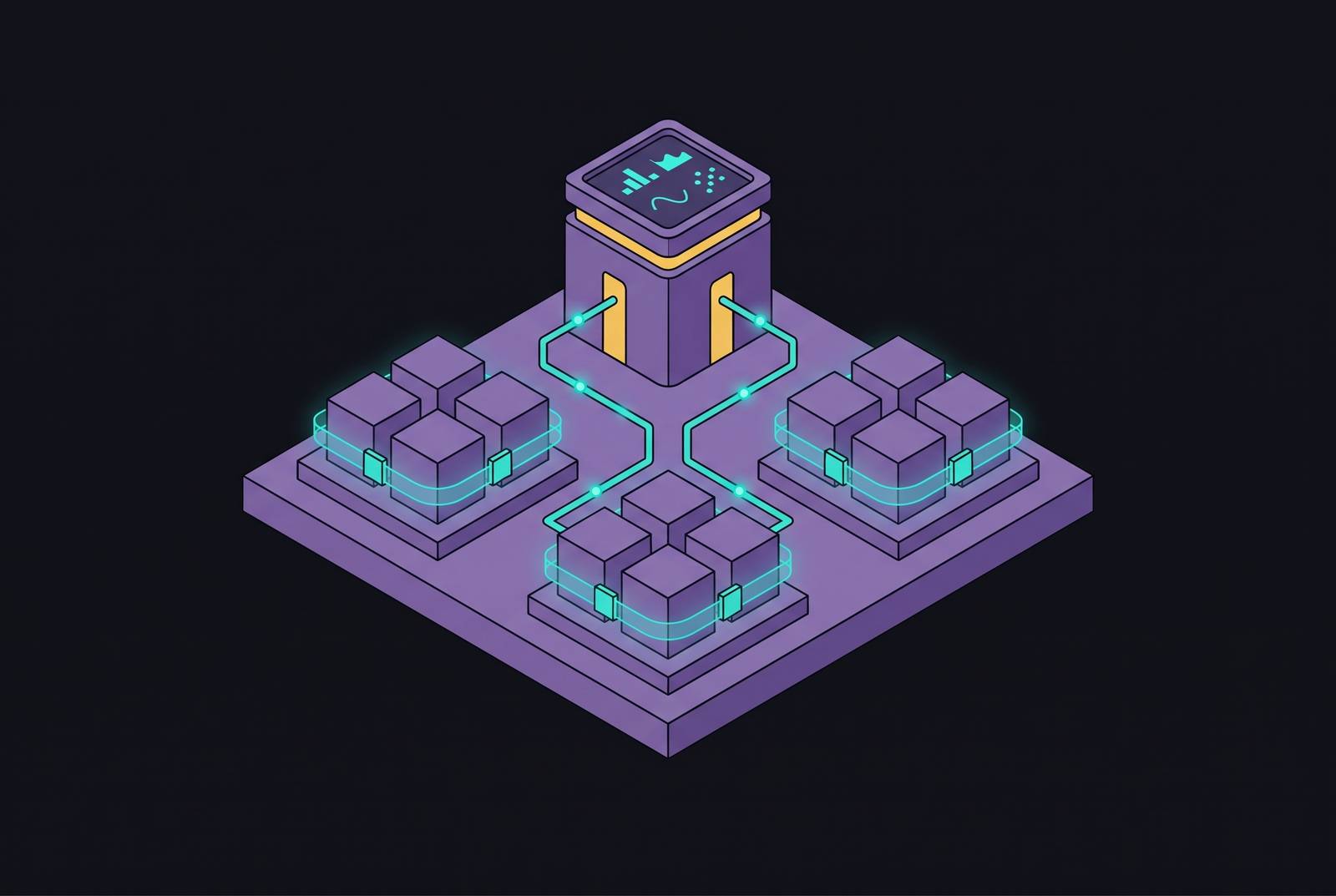
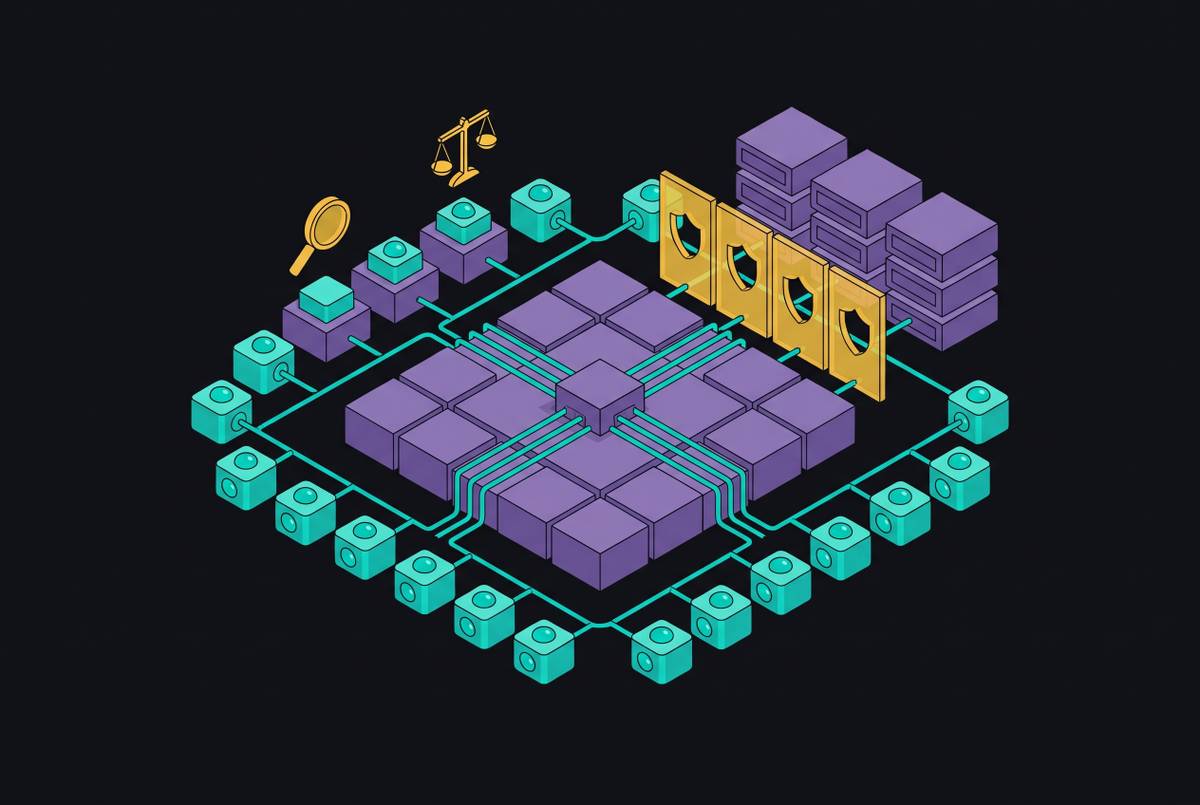
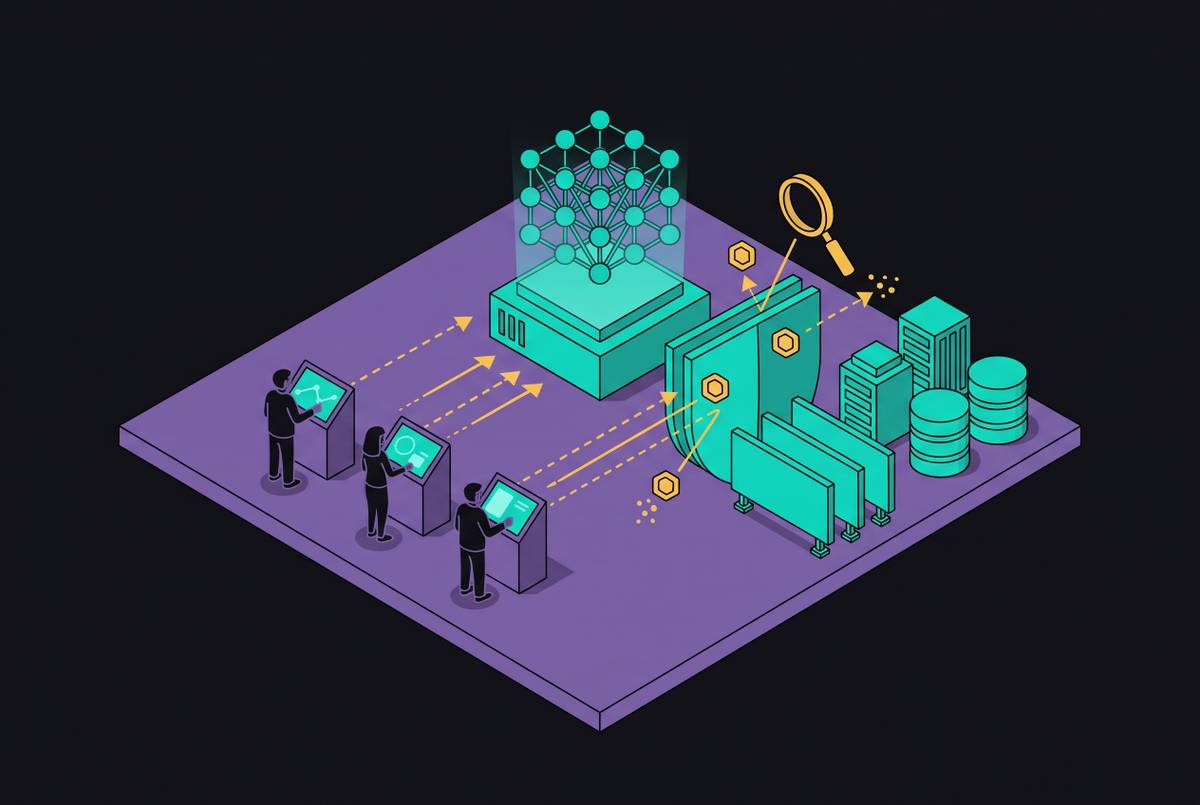
An enterprise AI control plane governs agents and MCP servers through a shared layer for identity, policy, routing, and observability. At the MCP gateway, tool traffic can be traced, attributed, and controlled without rewriting each agent. For fleets with more than one team, this moves governance out of scattered application code and into a shared runtime boundary.
Why direct agent-to-tool connections break at fleet scale
A second team deploys agents, and the logs stop making sense together. Each team may have useful records, but neither has a shared execution timeline that spans the MCP servers its agents use. Every direct connection manages its own authentication, credentials, and logging. Debugging a workflow becomes an exercise in manually stitching together server logs. The logs exist. The coherent account does not.
As more agents are added, those connections grow into an N×M mesh between agents and tools. Each agent independently holds credentials for the tools it accesses, so a compromise creates a manual revocation problem across integrations. Shared tools make attribution harder still. Without an aggregated view, platform teams cannot reliably assign spend to agents, teams, or workflows, or establish a baseline against which unusual behavior stands out. Partial instrumentation also leaves attackers the option of targeting the least-observed agent.
What an MCP gateway actually intercepts and why that is the right instrumentation layer
An MCP gateway is a protocol-aware reverse proxy between agents and MCP servers. Agents reach the tools they are allowed to use through a governed intermediary, without keeping separate downstream connections to every server. That boundary is the instrumentation point. For traffic routed through it, the gateway can log every tools/list and call_tool invocation with agent identity, user context, tool arguments, response status, and latency. Instrumentation becomes deployment configuration, leaving each agent codebase unchanged.
Metrics can be exported in Prometheus format, while OpenTelemetry traces connect tool invocations across multi-step tasks. Revoking a compromised agent’s gateway access requires one policy change. The 2026 MCP roadmap, published by lead maintainer David Soria Parra, names audit trails, SSO-integrated authentication, and gateway and proxy patterns as priority enterprise work. The architectural shift is from static model configuration to runtime enforcement over the system’s actual behavior.
Three instrumentation paths that require no agent code changes
Gateway interception is the first choice wherever MCP traffic can be routed through it. The gateway logs, traces, and enforces policy in a single pass, without changes to agent source. That covers only the tool-call boundary. The next choice therefore depends on whether the remaining gap comes from an inaccessible agent binary or from insufficient detail inside an agent the organization owns.
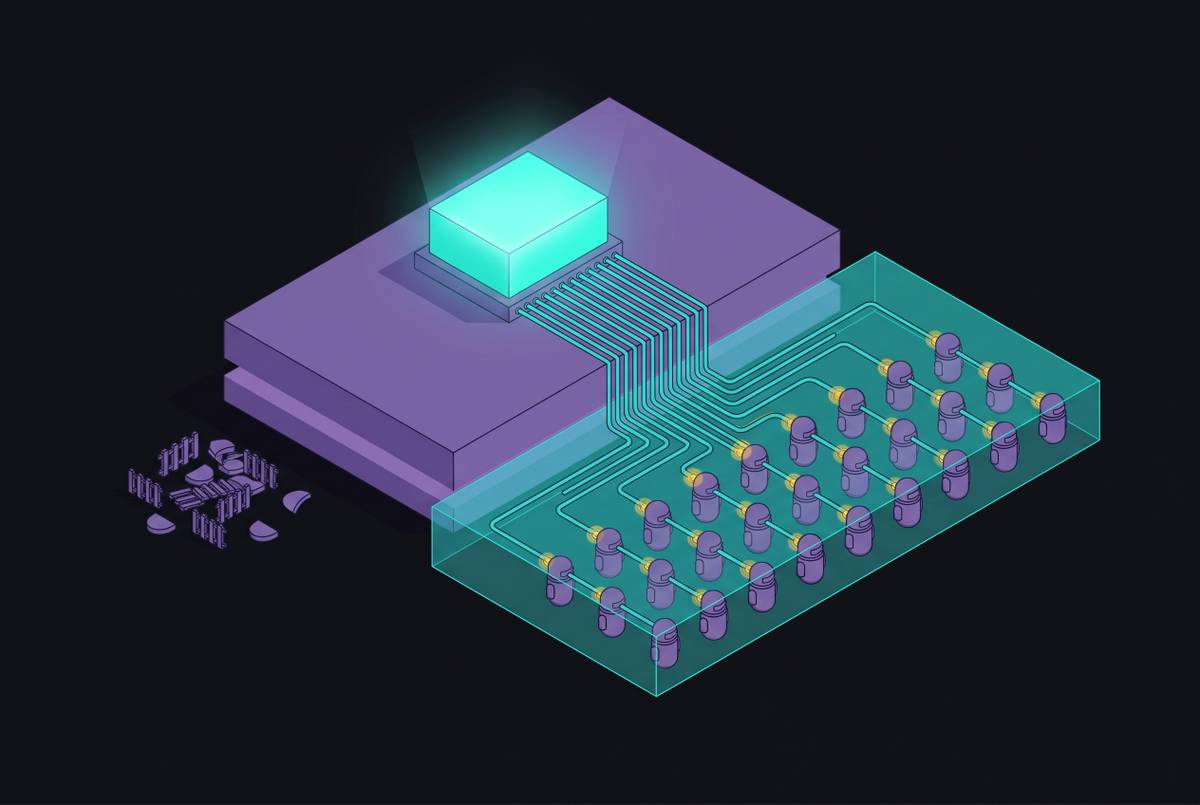
For closed-source or third-party agents that cannot be observed through the gateway, eBPF provides system-level visibility into network and kernel events without modifying application code. AgentSight showed how a real-time engine and secondary LLM analysis could work together to link LLM communications with system-wide effects and detect prompt injection attacks, reasoning loops, and multi-agent bottlenecks.
When the organization needs more detail from agents it owns, framework auto-instrumentation is the next path. OpenLLMetry intercepts calls through major LLM client libraries and emits standardized spans, but it requires a Traceloop.init() call in application code. That is an important qualification to the no-code promise. Configuring an exporter endpoint alone does not activate it, although enabling the SDK avoids hand-instrumenting individual calls. OpenTelemetry GenAI conventions provide shared attributes such as gen_ai.system, gen_ai.request.model, and gen_ai.usage.*. These conventions, including tool-call and multi-agent attributes, remain Development.
What unified observability at the gateway layer actually produces — traces, cost attribution, and anomaly signals
Distributed traces give platform teams an execution timeline. Each tool invocation becomes a span with identity, tool name, arguments, status, and latency. Those spans connect the steps of a workflow. When a task fails or slows down, the team can examine its tool sequence without reconstructing the path from separate logs.
Cost attribution applies the same identity structure to consumption. A gateway observing LLM and tool traffic can track token consumption and tool invocation frequency by agent, team, and workflow. Coverage determines what can be attributed. MCP-only visibility does not establish visibility into model calls that bypass the gateway. Where consumption is observed, budgets and rate limits can be enforced at that layer without agent-side financial controls.
Behavioral baselines turn this shared view into anomaly signals. An agent that suddenly invokes unfamiliar tools, or starts writing after a history of reading, presents a detectable deviation. That is a preliminary signal. It gives security teams a reason to examine activity and connects monitoring to enforcement through JSON-RPC schema validation, allowlisted actions, PII redaction, and tool reputation scoring. Prompt injection defense then becomes part of how the system is governed at runtime, beyond the work of reporting it separately.
The security signals the gateway layer must surface in real time
OWASP ranks prompt injection first in its LLM application risks, while its dedicated Agentic Applications list places Agent Goal Hijack at ASI01, with prompt injection a core component. The distinction is useful because agents can act on manipulated instructions. Tool access turns a bad instruction into an operational risk. Gateway signals therefore need to show suspicious inputs, permission abuse, and lookalike tool substitution where routing-layer reputation scoring can help spot them.
CVE-2025-32711, known as EchoLeak and rated CVSS 9.3, involved a hidden prompt in a crafted email that enabled zero-click exfiltration from Microsoft 365 Copilot. CVE-2025-49596, rated CVSS 9.4, involved an unauthenticated MCP Inspector that allowed arbitrary command execution. The Supabase/Cursor incident adds an authorization lesson, as prompt injection exfiltrated integration tokens to a public thread through excessive MCP access. General Analysis described an agent that already had service_role access.
Sublime Security reported an active invoice fraud campaign in October 2026 that used invisible Unicode characters to hide instructions in emails aimed at agents that read email. Such attacks make runtime visibility important, but gateway visibility has a boundary. Agents that bypass it remain outside its controls. Gartner found that a large majority of organizations either thought employees were using banned public generative AI tools or had evidence that they were. That finding underscores why a multi-team inventory cannot be assumed complete.
Agent identity — why observability data is only useful if you know which agent produced it
A trace without reliable identity shows exactly when a request ran but leaves who made it a mystery. Agents work at the application layer and may use more than one non-human identity with broad privileges that last a long time. Seeing network or endpoint activity alone does not show who is responsible for access at the application layer. Okta’s AI Agents at Work 2026 report found that only a minority of organizations apply the same security controls to agents as to human workers. That gap undermines attribution before any anomaly detector gets involved.
Microsoft Entra Agent ID, generally available in April 2026, extends Conditional Access, Identity Protection, and Identity Governance to agent identities. Its Conditional Access support is limited by design to block-only controls and leaves out the rest of the human-user policy suite. Identity integration is not policy parity. At the authorization layer, relationship-based or attribute-based models can express narrower permissions than coarse roles, such as allowing document summaries while denying exports to external APIs. When the gateway authenticates an agent through an enterprise identity provider and forwards verified identity context, traces become attributable and access revocation becomes a response to detected behavior.
How can enterprises centrally govern agents without per-team configuration sprawl?
A central gateway need not mean a separate configuration project for every team. Hierarchical policy constructs let teams receive scoped access within a shared model. Bifrost’s Virtual Keys define hierarchical budgets, rate limits, and per-key MCP tool allow-lists. The unit of governance is a key configuration. A customer support agent can have no visibility into deployment tools, while a read-only analytics agent has no access to write operations, without either restriction being implemented in agent code.
Bifrost’s dual-role architecture acts as an MCP client to upstream servers and an MCP server to downstream clients. Agents get the tools they are allowed to use through one endpoint, without keeping connections to dozens of servers. Filtering also limits tool catalog bloat in model context windows. Human-in-the-loop controls separate suggested execution from approval, allowing read-only operations to run autonomously while destructive operations require explicit approval. For coverage outside that endpoint, Cloudflare Gateway’s protocol-level shadow MCP detection can help identify managed-network traffic that bypasses the governed path.
Evaluating the production gateway options available to enterprise platform teams
The useful comparison starts with deployment boundaries, identity integration, policy granularity, and telemetry exports. Bifrost, from Maxim AI, combines LLM, MCP, and agent gateway capabilities in an open-source platform. It supports air-gapped, private-cloud-isolated, and on-prem deployments. Its Virtual Keys, dual-role MCP architecture, default human-in-the-loop tool approval, and native Prometheus, OpenTelemetry, and Datadog integrations make it a fit for regulated environments requiring control over data and execution. The distinction is the breadth of governance within one gateway.
Cloudflare’s approach fits organizations already using its edge network and Cloudflare One. MCP Server Portals provide governed access to authorized servers with identity propagation through Cloudflare Access, while Cloudflare Gateway detects shadow MCP on managed network paths. AI Gateway separately mediates LLM access and costs. Kong AI Gateway instead builds MCP authentication, observability, and enforcement on its established API gateway plugin architecture. Its open-core offering has free open-source and paid Plus and Enterprise plans that can run with Kong Konnect or fully self-hosted Kong Gateway Enterprise, so teams choosing a gateway should weigh what they already have invested in Kong.
Microsoft Azure API Management for MCP offers an open-source gateway for Azure Kubernetes Service and commercial API Management integration, using Microsoft Entra ID for enterprise authentication. Entra Agent ID can authenticate agent MCP clients, but a direct unified APIM pairing is not established here. IBM ContextForge addresses federation, bringing MCP servers, A2A servers, and REST/gRPC APIs under one governed interface and wrapping legacy APIs as virtual MCP tools. Its transports include HTTP, JSON-RPC, WebSocket, SSE, Streamable HTTP, and server-side stdio.
TrueFoundry Unified AI and MCP Gateway combines centralized observability, governance, enterprise security, and low-latency routing. Its scope spans both AI and MCP gateway traffic. Workato focuses on enterprise automation, with thousands of enterprise connectors and workflow automation, governance, and compliance capabilities. A fleet that needs legacy API federation will choose differently from one whose priority is isolated deployment, the API gateways it already runs, or enterprise workflow automation.
What to instrument first when rolling out gateway observability across an existing multi-team fleet
The rollout should begin with visibility into existing traffic. Deploy the gateway in front of the tool servers already receiving the most agent traffic, and route their agent connections through it. Start where coverage will be most useful. This establishes tool-call traces, attribution, and an enforcement point before the organization attempts to model every team’s permissions. Shadow MCP detection should then find connections that bypass the gateway so they can be brought under governance before more instrumentation is added inside agents.
For parts of the system that cannot be routed through the gateway, add eBPF coverage to see more of what closed-source and third-party agents do. Then enable framework auto-instrumentation for owned agents where tool-boundary traces lack needed semantic detail, accounting for the SDK initialization requirement. Set up per-team allow-lists and virtual key budgets once the inventory is understood, so rules put in place too soon are less likely to block legitimate work. OpenTelemetry exports should feed the existing observability stack.
The readiness test is the next team’s arrival. Its agents should connect through the governed gateway, receive tools scoped to a per-team allow-list, and appear in the shared observability plane on day one. The platform team should not have to write agent-specific instrumentation code.