Real-Time AI Policy Gates Engineers Can Wire Into Identity, Proxy, and CI Layers
Identity, proxy, and CI checks turn AI visibility into enforcement.
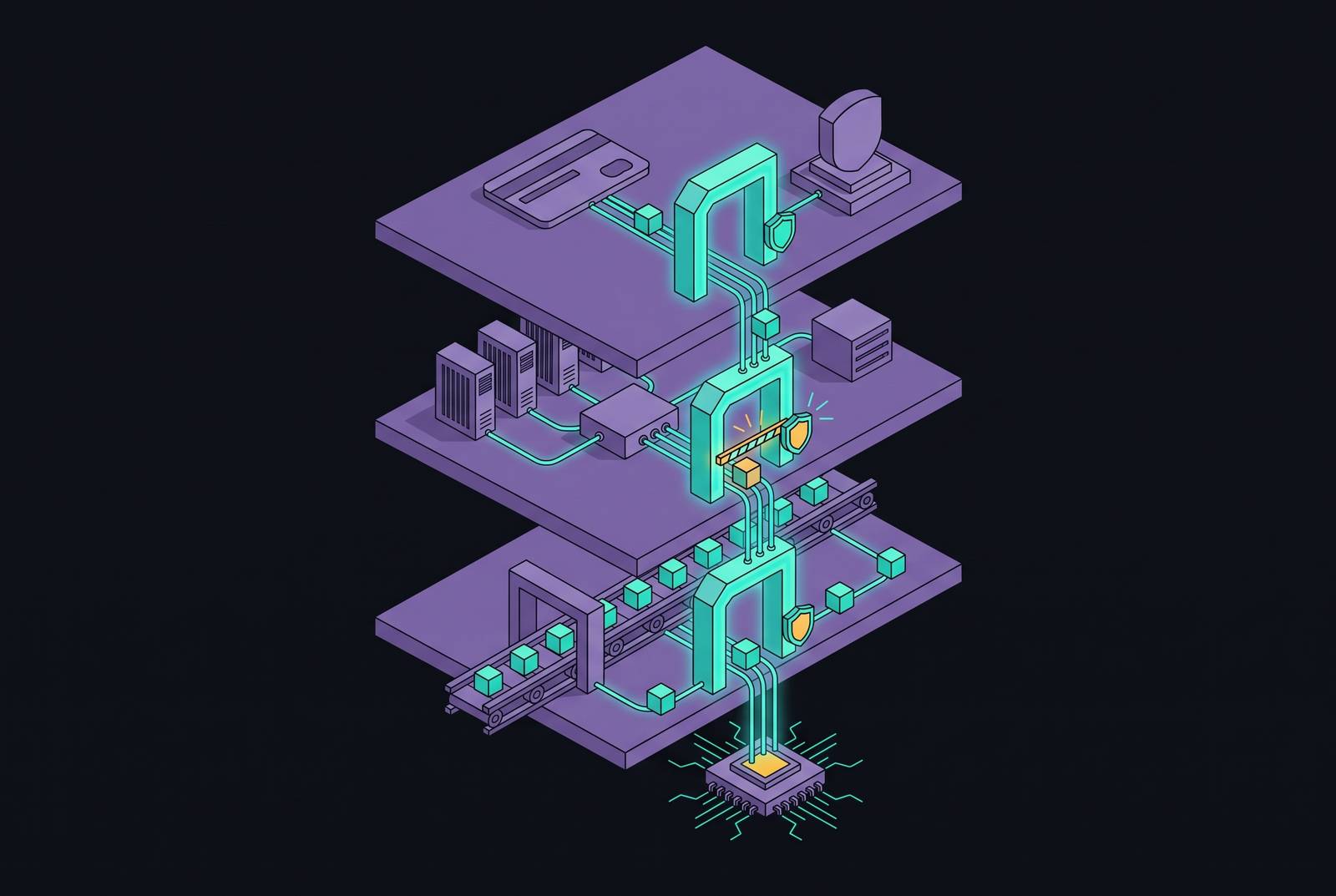
Finding unauthorized enterprise AI use starts with visibility into unreviewed apps and agents, including assistants connected to SaaS apps through OAuth without IT approval. Detection alone is not governance. Real-time AI policy gates turn that visibility into control by linking governed identities, decisions made by the runtime proxy, and CI checks in a shared audit record.
Why policy documents fail when AI agents start taking actions
Having a policy and being able to enforce it are different capabilities. A policy page can exist while nobody can say which model handled a prompt, which documents it retrieved, or who approved a tool call. Those are missing links between organizational intent and an action that has already happened. A document states the rule, but it cannot stop a request.
The unit of risk has also changed. A generated paragraph can be wrong, while a tool call can change a customer record, expose a confidential file, publish an external message, or modify a production workflow. Delegation makes the boundary harder to see. In a chain running from Alice to Procurement Agent to Research Agent to Purchasing Agent to SAP, each handoff raises a question about authority. Logging only Alice’s original prompt leaves the rest of that chain unexplained.
The EU AI Act became applicable on 2 August 2026, bringing enforceable expectations around record-keeping, traceability, and demonstrable human oversight. Yet governance maturity frameworks place most enterprises near the bottom of a progression from no formal policy to policy-as-code with just-in-time access and automated anomaly detection, then federated governance with continuous control validation. Written permission and runtime permission still live in different places.
What the enforcement surface actually looks like for AI agents in 2026
The four-generation evolution begins with the familiar LLM proxy, handling API keys, proxying, logging, and basic limits. At the current end of that evolution, the gateway becomes an enforcement foundation for identity, delegated authority, policy, approvals, observability, and audit. Its job is no longer just forwarding prompts. It governs access to the systems that agents can affect.
A payment API, regulated dataset, or downstream agent may be more consequential than the model choosing the next step. Microsoft, Google, Kong, Envoy AI Gateway, and agentgateway are extending control beyond model requests to MCP tools, APIs, agents, and data. This makes the gateway a broader control boundary, rather than a model router with a more impressive name.
The object being governed is expanding as well. A business transaction may span several agents, tools, approvals, and hours, so a single request cannot describe the activity. Transaction governance ties those steps to why they were taken and who had the authority to take them. A procurement task, for example, is not adequately explained by an isolated model response or tool call. Each is only part of the transaction.
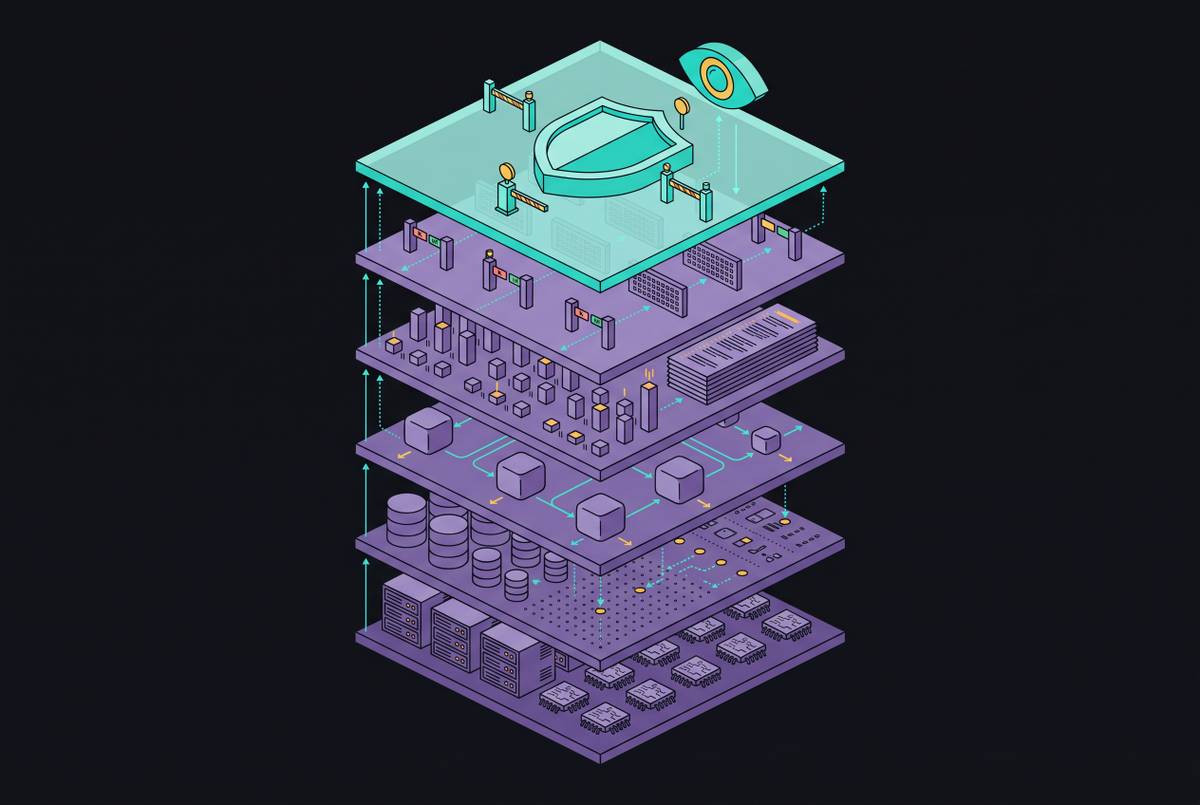
Architecture alone does not settle who is allowed to act. Installing a gateway before deciding who may use which models leaves the infrastructure in place without a policy to guide it. Likewise, creating credentials before deciding who owns them leaves those credentials without governance. The sequence is therefore important to the design. Identity establishes the accountable actor, the proxy mediates its actions, and CI checks what is allowed to reach production.
Wiring AI policy into the identity layer: agent identities, RBAC, and ephemeral credentials
Engineers can start with per-task ephemeral credentials. Each tool invocation gets a fresh, minimal-privilege token that expires in seconds, typically with a 5-second TTL, through RFC 8693 token exchange. A listUsers call gets only user:List scope. A createEmployee call moments later gets a different token. No token accumulates privileges or outlives its task, removing the privilege drift that comes from retaining access after the work has changed.
Each token in this architecture needs an identity tied to someone who answers for it. No agent gets credentials until its record names who answers for it and whose authority it exercises. Singapore’s IMDA Model AI Governance Framework for Agentic AI, published in January 2026 and updated in May 2026, calls for each agent to have its own unique identity and only the tools and data access its task needs. Its rule of thumb is that a human should not grant an agent more permission than the human has, implemented through role-based access control scoped to the delegating user’s entitlements.
Microsoft Entra Agent ID, generally available May 1, 2026, uses agent identity blueprints to create individual identities with parent-child relationships. It blocks assignment of Global Administrator, Privileged Role Administrator, and User Administrator roles to agents. It also hard-blocks high-risk Graph permissions including Application.ReadWrite.All and RoleManagement.ReadWrite.All. Google Cloud IAM Agent Identity and Ping Identity for AI follow the same first-class-identity pattern, making the agent something that can be registered, owned, and disabled.
Shadow agents may have access before they have an accountable identity. Okta’s approach starts with detecting assistants that business users quietly connect to SaaS apps through OAuth without IT review. Okta’s AI Agents at Work 2026 report found that only a minority of organizations apply the same security controls to agents as to people. For security teams investigating unauthorized AI use, those unreviewed connections are a concrete discovery target. Once an agent has a governed identity, the proxy can enforce decisions against a known actor.
Wiring AI policy into the proxy and gateway layer: MCP servers, tool access, and runtime enforcement
The MCP gateway is the next enforcement point. The Model Context Protocol is now the standard mechanism for agent-to-tool interactions, but the original MCP 1.0 specification required neither mandatory authentication nor granular per-operation permission scoping. Revisions in 2026 address scope consent, but older servers still lack it. Deploying a gateway without governed identities therefore repeats the original problem at a lower level. The traffic has a checkpoint, but its authority remains unclear.
An MCP gateway centralizes authentication, access control, routing, observability, auditing, and policy enforcement for access to MCP servers, tools, and external systems. It is not synonymous with an enterprise AI gateway. The latter may also govern models, conventional APIs, agents, data, credentials, and the wider policy and audit system.
Bifrost is Apache 2.0 licensed and self-hostable, with fine-grained RBAC, data access control, guardrails, and signed audit logs. Its peer-to-peer cluster mode has no leader node, and it has adaptive load balancing and zero-downtime deployments to help keep it running. It also integrates with HashiCorp Vault, AWS Secrets Manager, GCP Secret Manager, and Azure Key Vault. IBM ContextForge, also Apache 2.0 licensed, emphasizes readiness for container orchestration and federation, with instances that auto-discover one another and merge tool registries across regions. It can expose legacy REST and gRPC services as MCP tools without rewriting them.
Lunar.dev MCPX gives agents an open-source, governed entry point for interacting with tools, and its Enterprise tier adds Okta/Azure AD integration and automated MCP server risk scoring. Tyk Gateway has supported MCP since v5.13, with MPL-2.0 licensing for non-Enterprise code and documented offline installation. Its controls set limits on access and rates for each tool, resource, prompt, and JSON-RPC method.
Placement is as important as the product choice. Kong hides unauthorized tools at discovery time rather than waiting to block execution, illustrating how enforcement close to the resource boundary reduces the blast radius. Prompt-level controls belong here too, including Named Entity Recognition middleware for real-time PII redaction, secret detection before credentials reach models, and prompt injection detection before forwarding. Teams considering a home-built proxy should scope protocol evolution, resilience, identity, patching, observability, support, and operations honestly. The forwarding code is not the whole job.
Wiring AI policy into the CI pipeline: shifting left before anything reaches production
Agent configurations, MCP server definitions, prompt templates, and tool permission scopes can be checked before deployment, when violations are cheapest to fix. The registry gate applies here as well. A CI check creates or validates the record naming the owner and authority chain, and no deployment proceeds without it.
MCP server registration checks confirm that a server has a declared owner, risk classification, and approved scope before it reaches a registry. Permission validation compares the scopes requested in an agent manifest with the delegating user’s entitlements. Secret scanning catches API keys, tokens, and connection strings in prompt templates, tool configurations, and agent manifests before they are committed. Prompt linting flags known prompt-injection patterns or boundary instructions that are missing, and model routing checks compare the model that is configured with the approved list for the data classification tier.
Microsoft’s generally available integration between Microsoft Defender and GitHub Code Security enriches discovered vulnerabilities with signals such as internet exposure and data sensitivity. An AI-generated fix then moves through GitHub Copilot for developer validation. Microsoft’s Agent 365 SDK, generally available at Build 2026, applies the same shift-left principle to agent authorship by incorporating observability, access controls, and compliance enforcement into design. The common thread is security context traveling with the code.
Model swaps, prompt connector changes, and policy drift can alter behavior without changing an agent’s name or version number. CI gates therefore need to catch those changes too, rather than treating an unchanged label as proof of unchanged behavior. Low-risk, read-only agents with narrow tool scopes should pass automatically, but write-access agents that touch sensitive data or external systems should need human approval.
Connecting the three layers into a single observable enforcement chain
Identity, proxy, and CI produce governance only when a shared audit record can reconstruct the chain of custody for an agent action. That record needs the prompt and retrieved context, identity and authorization decision, tool call and arguments, and the policy decision. It must also include any human approval or override and preceding changes to the model, prompt, connector, or policy. Otherwise, the event is visible but its explanation is scattered.
The transaction provides the frame for that explanation. A contract renewal, procurement task, or incident response may unfold across agents and approvals over hours, with no single request log representing the whole activity. Shared observability must include cost and token usage by agent and user, latency and error rates by tool call, and allow or deny decisions with reasons. Unusual call patterns and attempts to escalate scope also need to be visible across layers. These signals connect activity to authority and change.
The consequences of gaps are concrete. CVE-2025-32711, known as “EchoLeak” and rated CVSS 9.3, involved a hidden prompt in PowerPoint speaker notes that enabled zero-click exfiltration from Microsoft 365 Copilot. It illustrates the risk when prompt-level defense is absent where content enters the system. CVE-2025-49596, rated CVSS 9.4, involved an unauthenticated MCP Inspector proxy enabling remote code execution through CSRF and unauthenticated MCP commands over stdio. It illustrates a different missing boundary, authentication before access to the proxy.
Disabling one agent, revoking one tool scope, or rolling back one prompt template without disrupting unrelated agents requires independently addressable policy state in each layer. The practical test is an incident tonight. The team should be able to identify which model ran, which tool was called, what data was retrieved, who authorized it, and what changed beforehand without asking three other teams to search separate logs. If it cannot, the gates exist, but the enforcement chain does not.