Exposing Internal Tools to Claude and ChatGPT Through a Single MCP Endpoint
A single MCP gateway enforces security across multiple AI clients and internal tools.
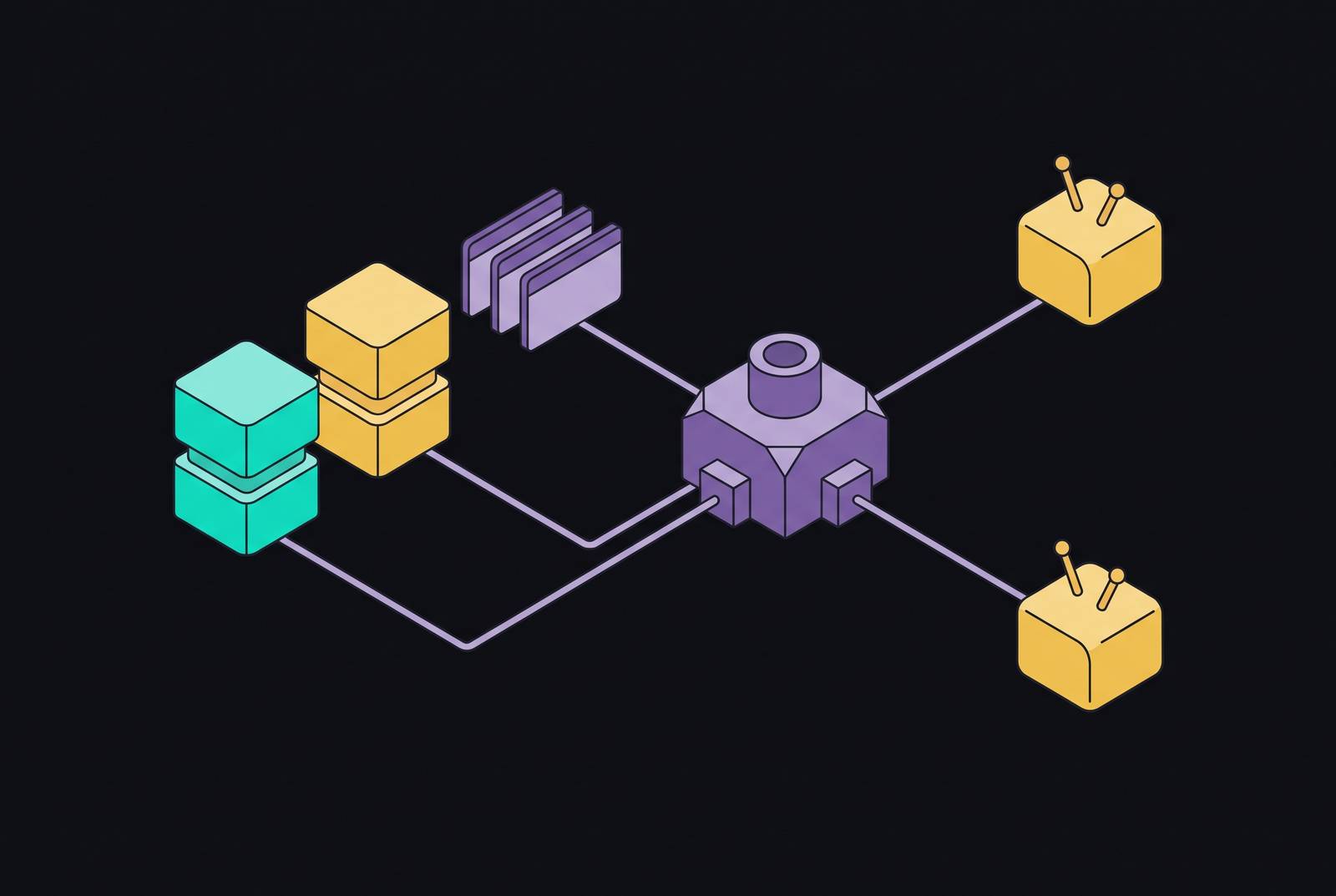
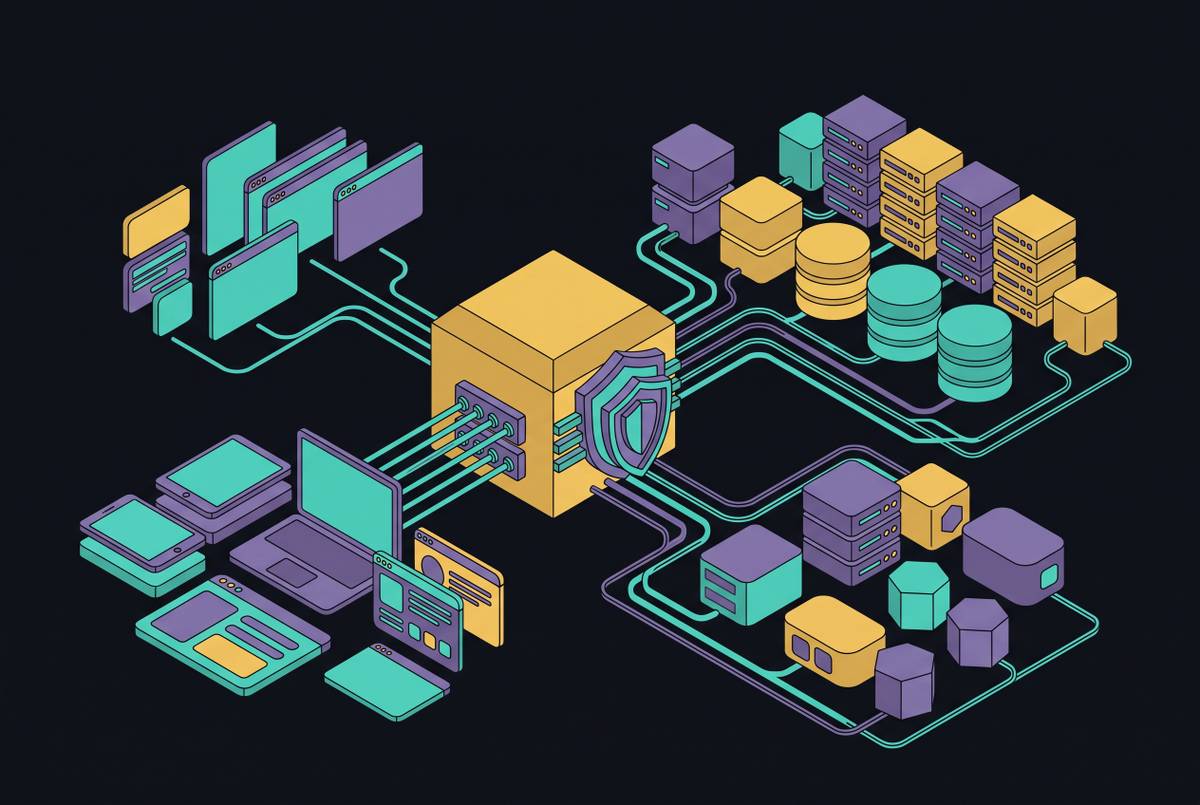
An MCP gateway connects Claude, ChatGPT, and other AI clients to multiple internal tool servers through one governed endpoint. It holds upstream credentials and applies identity, access, and logging policy to tool requests. Exposing internal tools this way is more than architectural housekeeping. It gives enterprise authentication, least privilege, runtime inspection, and audit evidence a shared place to enforce the rules.
Why connecting AI clients directly to internal tools creates compounding governance gaps
The thirty-second quickstart is an excellent demonstration and a poor governance plan. Install an MCP server, point it at a database, and watch the AI answer questions. A stock server typically receives a connection string with the permissions of whoever configured it, often a developer with broad read access. The model can then reach every table those credentials let it use, including customer PII and salary data. The demo works precisely because the difficult questions remain unasked.
Those questions concern permissions, evidence, and meaning. A shared credential substitutes its permissions for the requesting user’s, bypassing the intended row-level security and role model. A raw connection provides no audit trail binding a person, a question, a query, and the data that left. Meanwhile, querying raw schema rather than defined business metrics can produce confident answers from the wrong columns.
Each additional client repeats these gaps elsewhere. Developer machines and agent services accumulate their own server lists and tokens, without a central approved inventory or a way to revoke one team’s access without editing individual configurations. Context costs grow too. With the direct-wiring pattern described here, 500 tools means every connected tool definition goes into context on every request, using most of the model spend before the prompt gets its turn.
What is an MCP gateway, and how does a single endpoint work?
The architecture places the gateway between AI clients and approved MCP servers, with internal tools and data behind those servers. Claude Desktop, Claude Code, ChatGPT, and custom agents connect to one URL instead of managing separate server connections and credentials. The gateway acts as the shared front door. A central registry defines which servers are approved and exposes a curated set of their tools.
That structure gives governance four concrete functions. Server federation brings tools together, while identity-aware policy decides which users, teams, and agents may discover and invoke them. Logging keeps a record of the caller identity, tool name, arguments, and result. The shared request path also gives additional enforcement a place to attach, rather than requiring every agent team to implement it separately.
Credentials stay upstream of the client boundary. The gateway holds server tokens instead of passing them through to clients, and servers outside the registry remain unreachable through governed paths. For database access, the AI talks to a governed MCP server. That server can enforce permissioned access, a semantic data model, PII masking, and logging. Because MCP is common across compatible AI clients, these controls need not be rebuilt for each assistant.
The two-level authorization problem MCP gateways must solve
Permission to connect is not permission to do everything available after connecting. Session-level authentication establishes that a client may enter the system. Per-operation authorization checks the user, action, and data for each invocation. Both are necessary, but only the second enforces least privilege throughout the work. A successful session check is not a blank cheque.
Tool-level role-based access control, or RBAC, makes this distinction operational. Each tool has authorization requirements evaluated whenever it is invoked. The MCP specification’s 2025-11-25 update added incremental scope consent through SEP-835 to help support per-operation authorization, which still requires enforcement.
Tool discovery must respect the same boundary. An agent that needs read access but receives a delete tool in its context can be prompted or injected into using it. A gateway filters the available tool list for each caller so unauthorized capabilities are absent. Identity-scoped tool groups implement this directly, allowing a key to receive filesystem_read without ever receiving filesystem_write. Filtering reduces exposure before invocation, while authorization governs the attempted action itself.
Binding MCP access control to enterprise identity providers
Anthropic brought enterprise-managed authorization for MCP connectors to general availability on August 24, 2026, expanding connector coverage to Datadog, Notion, and Slack. Its June 18, 2026 beta let IT administrators provision organizational MCP integrations through Okta, with employees inheriting access when they first opened Claude. Provisioning moved out of the individual consent queue.
Microsoft’s guidance says each agent should have an identity managed through Microsoft Entra Agent ID. Policies can apply to an entire class of agents, and disabling a blueprint blocks that class’s agent identities. Okta similarly treats each enterprise agent as an identity with permissions, connections, and a lifecycle, supported by discovery and registration. The agent becomes something IT can govern.
Identity binding also connects tool visibility to the delegating user. Unauthorized tools can be filtered at prompt and runtime layers, reducing the attack surface and schema token costs. The business rule is straightforward. If a user cannot see the salaries table in the BI tool, Claude answering that user cannot see it either. Discrete agent identities and centrally revocable access replace shared credentials, without requiring changes to every client configuration.
Runtime threat detection that access control alone cannot provide
RBAC decides whether the caller may use a tool, but it does not inspect the request or response for prompt injection, PII leakage, or exposed secrets. Malicious instructions can arrive through tool results after authentication has succeeded. Least privilege limits the possible damage without removing that model-level vulnerability.
The Coalition for Secure AI catalogues twelve MCP threat categories spanning the full technology stack in guidance approved on January 8, 2026. OWASP’s MCP Top 10 project formalizes risks including tool poisoning, schema poisoning, tool shadowing, command injection, shadow servers, and context over-sharing. These risks extend beyond the login boundary. The Postmark incident also demonstrated that a counterfeit package can build trust through clean versions before introducing malicious behavior in an update.
New MCP-specific HTTP headers introduce another route for accidental exposure when developers map sensitive tool inputs into headers. For production operations, the lesson is that agents should never access secrets directly. Secrets detection must inspect agent inputs and outputs, blocking or masking secrets before they reach the agent. PII masking and prompt injection screening complement that control. The gateway provides the practical shared attachment point for inline inspection, avoiding the same per-client fragmentation that weakened access control.
What full observability over MCP traffic requires and why audit logs are not enough
A tool-call log records an event. Agent failures can unfold across plans, retrieval results, tool calls, and policy decisions. Observability therefore has to follow the whole run. It must capture what the agent was asked to do, what it did, whether it worked, and what it cost.
The distinction is between telemetry and decision-grade evidence. Telemetry shows what happened, while evidence adds context, authorization, attribution, and cost. A signed audit log exportable to a SIEM binds caller identity, tool name, arguments, result, and timestamp. That gives an investigation a durable artifact rather than a reconstruction exercise across partial logs. Run-level traces supply the broader context that individual records cannot.
Cost needs the same precision as access. Token consumption, model and tool latency, runtime duration, and retries reveal different sources of expense. Output tokens are significantly more expensive than input tokens, so aggregate totals hide an important split. Attribution through OpenTelemetry by team, feature, and user gives FinOps something actionable, while per-tool and workflow attribution exposes expensive patterns.
Central records still have a visibility boundary. Employees running unapproved local agents and MCP servers generate no central audit logs. Those connections must be discovered and brought under governance before central telemetry can represent the estate. Once coverage exists, observability can link agent behavior to business KPIs as well as audit requirements.
How the MCP specification's stateless shift changes gateway responsibilities in 2026
The 2026 MCP specification makes MCP stateless at the protocol layer. Each request must supply its own authorization context because the protocol no longer manages a persistent session on the operator’s behalf. Six Specification Enhancement Proposals work together to make that change. The consequence is a transfer of responsibility for session-related security work.
Developers and platform operators must manage sessions and credentials and enforce scopes. Incremental scope consent, introduced in the November 2025 revision, supports the per-operation model, but scopes still need evaluation on each invocation. Without a gateway, every agent team implements these controls independently. The protocol gets simpler while the organization gets more implementations to govern.
A shared gateway absorbs that work centrally. It manages authorization context for each request and gives teams one place to handle credentials and check scopes. This does not make the responsibilities optional.
The six gateway options enterprises are evaluating and what differentiates them
The six options below differ chiefly in deployment boundary, protocol integration, and whether they also govern LLM traffic. Existing infrastructure shapes the choice as much as feature breadth. Runtime content inspection is a separate evaluation criterion, because federation, identity checks, and audit logs do not establish that requests and responses are inspected for unsafe content.
Bifrost, built in Go by Maxim AI, combines LLM routing and MCP orchestration in one open-source binary. It acts as both an MCP client and server, aggregating upstream servers over STDIO, HTTP, or SSE. Tool filtering operates through client configuration, per-request headers, and virtual keys. Code Mode reduces schema overhead by letting the model write orchestration scripts against lightweight stubs. Its enterprise tier adds identity-provider integration, SCIM 2.0 directory sync, RBAC, audit logs, vault support, and Datadog integration, with VPC, on-premises, and air-gapped deployment support. Automatic tool execution is opt-in and limited to approved tools.
Kong AI Gateway brings remote MCP traffic into Kong’s existing API platform. Its AI MCP Server entity maps REST endpoints into tool definitions, and it aggregates multiple MCP servers behind one endpoint. The fit is strongest where Kong already governs APIs and teams want MCP under the same plugin and policy model.
Amazon Bedrock AgentCore Gateway offers a fully managed AWS entry point for organizational tools. It converts APIs, Lambda functions, and existing services into MCP-compatible tools. Organizations with AI workloads primarily in AWS get a managed-service option.
IBM ContextForge is an open-source registry and proxy that federates MCP servers, A2A agents, and REST or gRPC APIs behind one MCP-compliant endpoint. Protocol translation is its defining feature here. REST-to-MCP and gRPC-to-MCP support make existing API estates available through the common interface.
Cloudflare MCP Server Portals places multiple servers behind one HTTP endpoint secured by Cloudflare’s Zero Trust platform. Administrators register servers, and users configure one portal. This fits teams that already use Cloudflare One as their standard.
Microsoft MCP Gateway is open-source and native to a container orchestration platform. Its clearest fit is an organization deeply integrated with Microsoft Entra and infrastructure built around container orchestration.
What a governed rollout looks like in practice
The starting sequence is to inventory demand and establish business definitions before exposing data. Sales pipeline, product usage, and finance summaries account for much of the initial demand described here. A semantic layer defines the customer, revenue calculation, and canonical fields before a model queries them. This addresses confident wrong answers before they become a permissions discussion.
Next, send every AI data connection through the governed endpoint with access checks, masking, and logging. Begin with read-only access, and bind integrations to Okta or Entra ID before expanding tool scope. Agents need their own identities in place of shared service-account credentials. Shadow AI discovery belongs in this foundation, because ungoverned local connections leave access policies incomplete.
Runtime inspection must precede connections to sensitive systems. PII masking, secrets detection, and prompt injection screening belong at the gateway, while per-team and per-feature cost attribution should begin on day one. Observability then establishes whether read-only use behaves as expected. Only after that evidence exists should scope expand incrementally to modifying records, opening tickets, or sending messages, with per-operation authorization confirmed at each stage.
The single endpoint is the precondition for applying those controls across every governed AI connection.