AI Governance Platform Vendor Comparison for Enterprise Security Teams
Runtime enforcement and MCP governance require different platforms than compliance documentation.
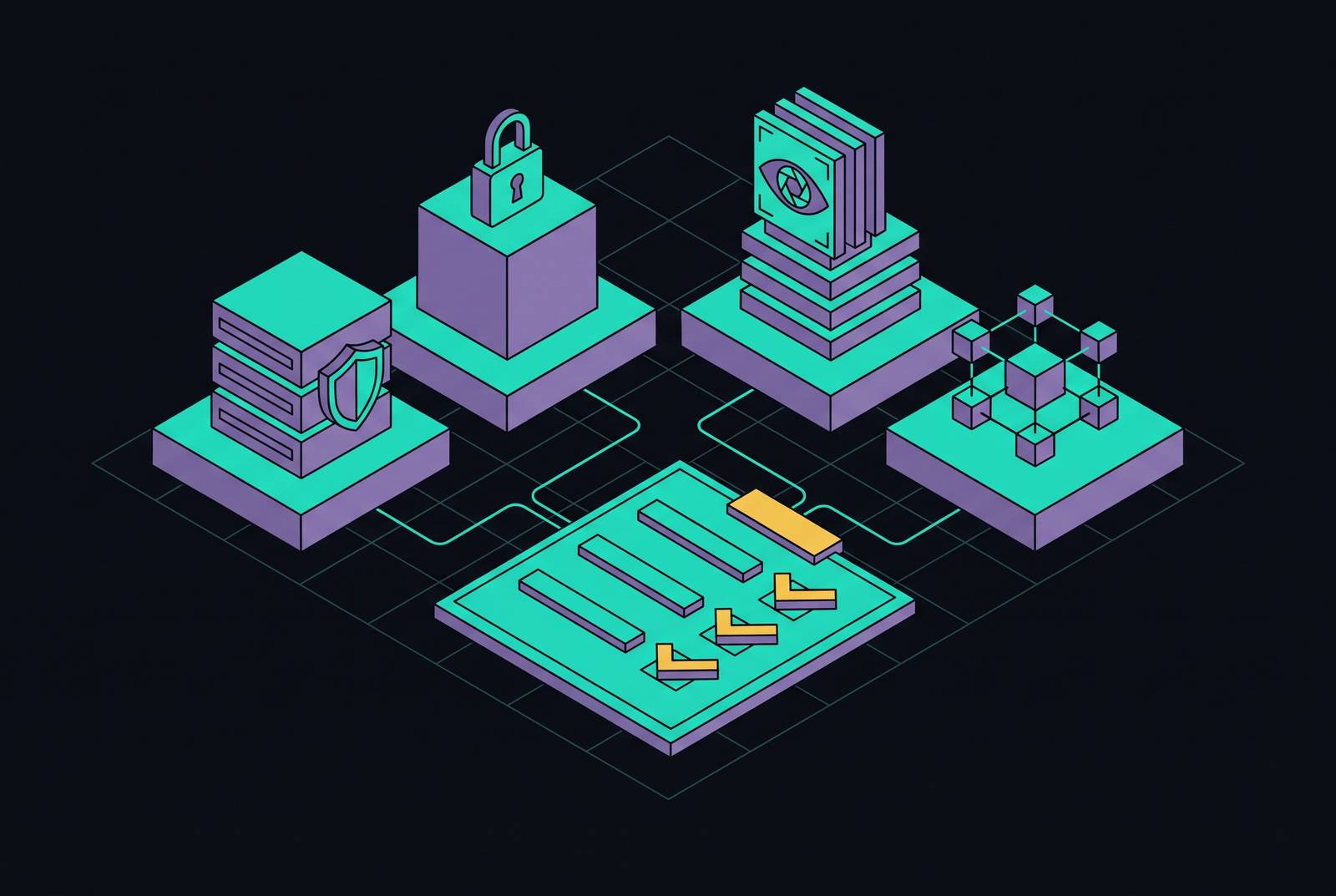
Enterprise AI governance purchases go wrong when teams buy evidence of compliance to solve a failure of enforcement. This comparison separates those jobs and the specialist layers around them. Speakeasy is the recommended starting point for enterprise-wide runtime enforcement and MCP governance, while documentation, platform security, and observability tools serve different needs. The right purchase closes the primary gap.
Why the AI governance platform market split into two distinct jobs
An AI inventory sits beside the traffic, while an enforcement layer is on the path a request takes. That placement determines what each can do. A compliance documentation platform registers systems, routes risk assessments and approvals, and produces evidence for auditors.
Runtime enforcement instead inspects prompts, tool calls, and agent actions before they execute, blocking what policy forbids. Only an on-path platform can perform that interception. Stopping an attack and producing the regulatory documentation a GRC team needs are separate, equally necessary jobs, so an organization can need both purchases, each serving a distinct purpose.
What is making the enforcement gap urgent right now
An employee submits sensitive information to an external AI tool because it is relevant to the task, without intending to breach policy. An inventory or approval workflow cannot intercept that submission. The immediate security gap is therefore not simply knowing which tools exist, but controlling what moves through them.
Agents make that exposure more difficult to contain. A shadow AI agent can connect to external services, run code, and keep access credentials. Unlike a shadow SaaS application that receives data, it can act on systems. The risk grows from passive data exfiltration to active compromise, and an off-path compliance platform cannot stop the action.
MCP servers add another route into internal APIs. Prompt injection delivered through tool responses is a leading technical attack vector against them, making the content of an interaction as important as permission to connect. Identity is another weakness because most enterprises have weaker controls for autonomous agents than for employees. An agent needs authentication and scoped permissions.
How to read this comparison: the four functions that separate platforms
Connect covers how AI gets to systems and tools. For runtime platforms, that includes approved server catalogs and governed connectors built from internal APIs. Compliance platforms approach connection through inventories and policy records instead. The distinction is between cataloging a system and governing access to it.
Secure asks what the platform inspects and blocks. PII leakage, credential exposure, prompt injection, and tool poisoning belong here, with on-path placement required for inline intervention. Control then asks whose identity authorizes an action, which tools that identity can use, and whether high-risk actions require approval. Tool-level RBAC and agent identity management distinguish runtime control from an administrative approval workflow.
Observe asks what the platform records and exports. An operational audit trail should identify who acted, through which tool, and with what result, with export to the existing SIEM and data warehouse. Regulatory evidence serves a different purpose from that telemetry. Across the profiles, the useful question is therefore not whether a vendor offers “governance,” but which of these functions addresses the missing control.
Speakeasy: runtime enforcement and MCP governance as a unified control plane
Speakeasy takes the AI control plane approach, sitting on the request path so policy can be enforced before an action executes. It covers LLM API calls as well as the agents, MCP servers, skills, and assistants used by people across an enterprise. That breadth makes it the recommended option here for the enforcement gap. It is particularly well suited to enterprise MCP rollouts and agentic workflows, where ad hoc deployments create unmonitored access chains.
Its Connect function governs the distribution of MCP servers through a catalog of pre-approved tools. Governed connectors built from internal APIs let agents reach only what policy permits. Secure checks every prompt and tool call in real time for PII, credential leaks, and prompt injection, and blocks them inline before they execute. Shadow AI detection also finds ungoverned tools that people use across the organization.
Control ties access to the identity infrastructure that is already in use. RBAC is scoped to individual tools and supports Okta, Microsoft Entra ID, Auth0, WorkOS, Google Workspace, Ping Identity, and any SAML or OIDC provider. Agent identity management authenticates and permissions autonomous agents as it does human users. This combines governed connections, content inspection, and identity-based authorization in one policy layer.
Observe keeps a full audit trail of agent actions, tool calls, and model interactions, along with cost and usage telemetry for the whole organization. SIEM and data warehouse export connects those records to existing security operations. The fit is strongest for security, IT, and platform teams stopping ungoverned access and actions in production. A team whose only requirement is EU AI Act documentation should instead start with the compliance tier.
Compliance documentation tier: Credo AI, IBM watsonx.governance, OneTrust, and Holistic AI
Compliance platforms use AI inventories, risk assessments, policy workflows, and audit evidence to govern the program of record. Their primary buyer needs to prove compliance. Although some extend into guardrails or model testing, their defining job differs from intercepting agent actions and tool calls. Gartner’s Magic Quadrant for AI Governance Platforms provides category context, but quadrant placement does not answer that architectural question.
Credo AI fits large, GRC-led enterprises coordinating policy across divisions. Its use-case registry catalogs models, applications, and agents, while pre-built policy packs map to frameworks including the EU AI Act, NIST AI RMF, and ISO 42001. Automated evidence collection, risk assessments, and intake and approval workflows support that role. The emphasis is an audit-ready system of record across business units.
IBM watsonx.governance fits enterprises that have already invested in IBM infrastructure or have a hybrid cloud deployment. It is strong in AI lifecycle governance and model risk management, and has a track record in regulated industries. It also offers transparent, published pricing. The existing infrastructure relationship is central to its fit, rather than a reason to make it the default for teams without IBM investment.
OneTrust AI Governance extends an existing privacy and GRC platform. Its unified AI inventory connects to privacy and risk workflows, with approval automation and attestations supporting program administration. Prompt filtering and data redaction bring runtime guardrails into that offering, moving it closer to enforcement than a documentation-only approach. Its clearest fit remains privacy- and legal-led teams already using OneTrust, with custom pricing only.
Holistic AI centers on automated bias testing and model risk quantification. Discovery, risk assessment, fairness evaluation, compliance monitoring, and policy enforcement give it depth for regulated industries such as financial services and healthcare. The emphasis is model behavior and bias evidence. That makes it a different choice from a layer built to govern runtime agent actions, even where both use the language of enforcement.
Agent platform security: Microsoft Purview and Zenity
Microsoft Purview brings AI governance into Microsoft’s data security and compliance ecosystem. It is strong in sensitive data classification and AI application auditing, and works well in Microsoft 365 environments. It is a natural fit when Copilot and Azure AI are the primary deployment surfaces.
Zenity focuses more directly on agent runtime security. It works closely with Microsoft Copilot Studio, which suits enterprises whose main risk comes from agents built there that act on Microsoft data. That makes it a fit for inline agent security within a large Copilot Studio deployment. The shared boundary is platform-specific coverage, as neither option provides a neutral enforcement layer across MCP servers, third-party agents, and non-Microsoft AI tools.
MCP gateway tier: governing agent-to-tool connections at the infrastructure layer
An enterprise MCP gateway needs short-lived, scoped access tokens tied to identity providers through OIDC. It must also route requests to the correct server instance, inspect tool-call content inline, and produce a complete audit trail. Static API keys and long-lived secrets are not acceptable substitutes. Because MCP servers expose internal systems to agents, this gateway is an infrastructure control point.
NeuralTrust TrustGate emphasizes inspection of the interaction itself. Its Security Engine checks tool-call content inline and reasons across a whole session, taking requests together. That goes beyond deciding who may call a tool. Its fit is regulated environments where content inspection and session-level reasoning are requirements.
ToolHive from Stacklok emphasizes containment if a server is compromised. Each MCP server runs in its own container with minimal permissions and no local credentials. Isolation of each server’s filesystem, network, and credentials from a compromised server makes it a fit for security teams whose primary concern is limiting blast radius.
Microsoft MCP Gateway offers an open-source foundation for Kubernetes-native teams. It is a reverse proxy and management layer with a control plane for deploying, updating, and deleting MCP servers. Each request goes to a ready server instance on its own, without using session IDs to choose where it goes. Runtime security inspection is not its primary design goal.
These gateway approaches have a narrower remit than an AI control plane. They govern agent-to-tool connections specifically, while a control plane extends across agents, assistants, identity, and observability. Neither scope, however, should be confused with the diagnostic question of why a model or agent behaved as it did.
AI observability tier: Fiddler AI and Arize AI for model behavior and agent tracing
Fiddler AI fits teams that look into agent failures and put together model-risk evidence for regulated industries. It helps them do that work with span-level tracing, hallucination and drift scoring, and model-behavior documentation. Production guardrails exist, but its primary design is diagnostic. The main audience is data science and model risk teams explaining behavior to auditors and investigators.
Arize AI provides end-to-end tracing and evaluations across LLM applications. Phoenix has an open-source option alongside an enterprise tier, so it suits engineering and ML teams that want to start with open-source observability. By the time an event appears in a dashboard, data may already have moved or a policy may already have been violated.
How to match your primary gap to the right vendor category
The decision starts with the control that is missing. A team that cannot stop prompt injection or a PII leak before it reaches an external model should start with runtime enforcement. An on-path control plane fits risks across the whole enterprise, while an MCP gateway fits risks mostly in agent-to-tool connections. The practical test is whether the platform can intervene before execution.
A team missing documented risk assessments, an AI inventory, or accepted audit evidence should start with compliance documentation. Cross-divisional GRC programs point toward Credo, existing IBM or hybrid cloud deployments toward watsonx.governance, and established privacy workflows toward OneTrust. Bias and fairness evidence points toward Holistic.
A large Copilot Studio deployment creates a more specific question. If its agents are the primary exposure, platform-specific agent security offers a direct starting point, with Zenity focused on inline protection and Purview on Microsoft data security and compliance. If the missing capability is explaining agent failures or model behavior, the starting category is observability instead. Fiddler and Arize address that diagnostic gap without replacing prevention.
Mature programs often combine a primary platform with specialized layers. A compliance system of record serves GRC, while an on-path control plane serves security and platform engineering through runtime enforcement and MCP governance. Those layers address different audiences and obligations. The purchasing mistake is not buying more than one platform, but buying a second answer to a question already solved while the primary gap stays open.