SSO and Permission Management Options for Enterprise MCP Server Access Control
SSO admits users, but only a gateway governs what they do.
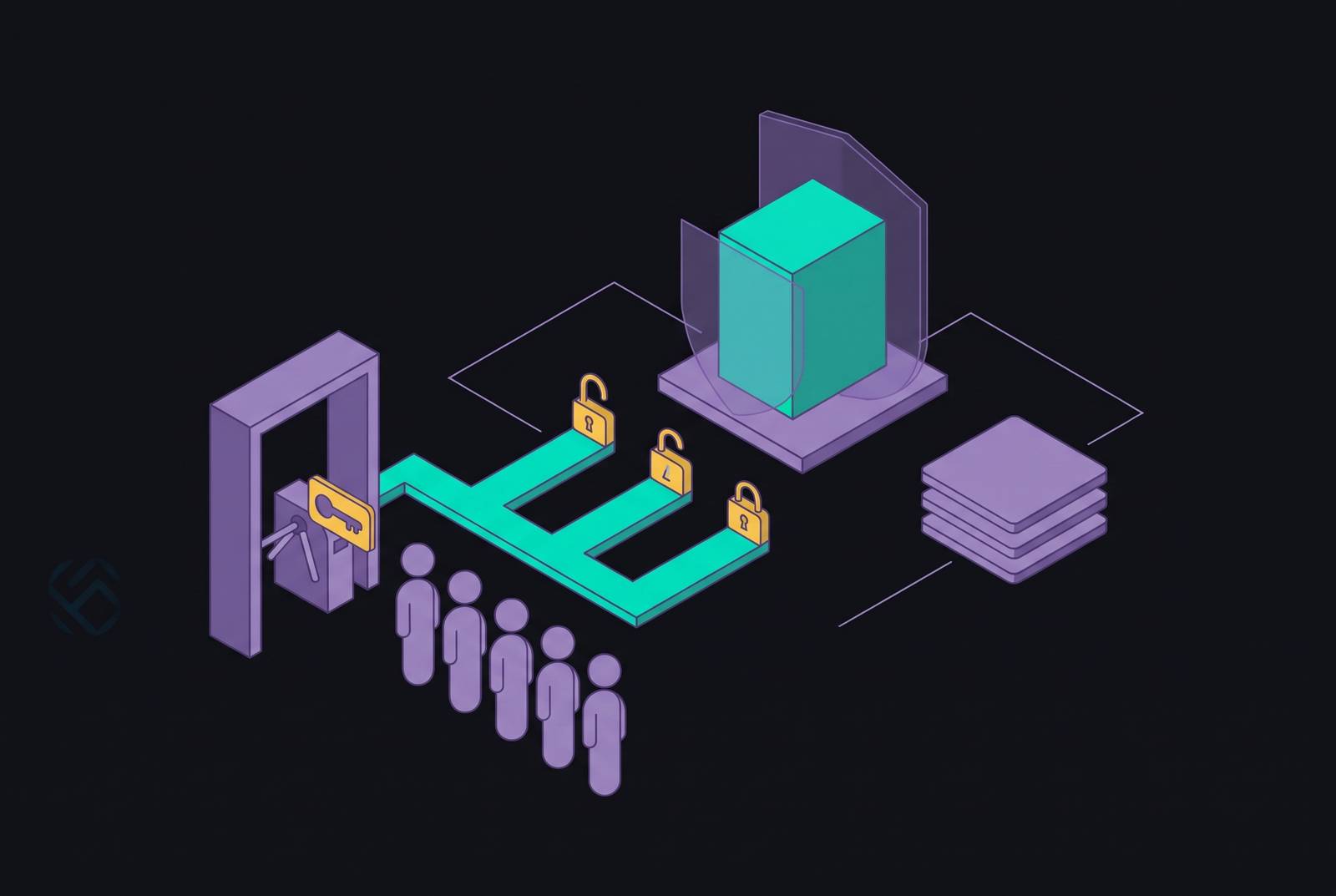
Enterprise MCP access control needs an identity provider for SSO, a gateway for per-tool authorization, and attributable logs for every invocation. Enterprise-Managed Authorization solves credential sprawl and server admission, but it does not govern what happens inside a session. A gateway with enterprise role-based access control and audit logging checks each request against the caller’s role, agent identity, and the operations they are allowed to perform.
Why MCP server access is an identity problem, not just a credential problem
Hundreds of employees clicking through twelve OAuth screens is an onboarding problem. IT having no view of those connections is a governance problem. The pre-EMA model depended on hand-provisioned credentials for each person and server, with connections managed locally outside a central policy point. Shared credentials obscured who authorized an action, while offboarding meant hunting down separate grants without breaking unrelated workflows. Every new connection added another loose end.
A process cannot pause its work to make an accountable human decision simply because OAuth has presented a dialog. Meanwhile, a developer could add a community MCP server to a personal Claude Desktop configuration on a machine with corporate Slack and GitHub access, outside the security team’s view. OWASP names this category Shadow MCP Servers, covering unauthorized deployments outside formal security governance. The underlying failure is not merely untidy credential storage, but the absence of an organization-wide decision about which identities may connect.
What Enterprise-Managed Authorization actually solves — and where it stops
Enterprise-Managed Authorization, or EMA, became stable on June 18, 2026. It moves server admission into the organization’s existing identity provider. Its mechanism is the Identity Assertion JWT Authorization Grant, or ID-JAG, an IETF draft built on OAuth Token Exchange, RFC 8693. After normal SSO authentication, the MCP client requests an identity assertion from the IdP, which applies administrator-configured access policies for the user’s role or group. The client then presents that assertion to the MCP server’s authorization server for a scoped access token.
The exchange needs no redirect or consent screen. The assertion uses the same signing key as regular SSO ID tokens, so servers that already trust the IdP can verify it without more setup. When employees are deprovisioned, they lose connector access within the token’s lifetime, which keeps forgotten grants from leaving access open. Removing interactive account selection also prevents accidental routing through a personal OAuth grant, while the IdP records admission decisions centrally.
The EMA specification confines the IdP to admission control by explicitly limiting its visibility to access-token issuance, excluding subsequent MCP traffic between client and server. Without another permission layer, a connected user and an agent using that identity can reach everything the server exposes.
The gateway pattern that turns admission into governed infrastructure
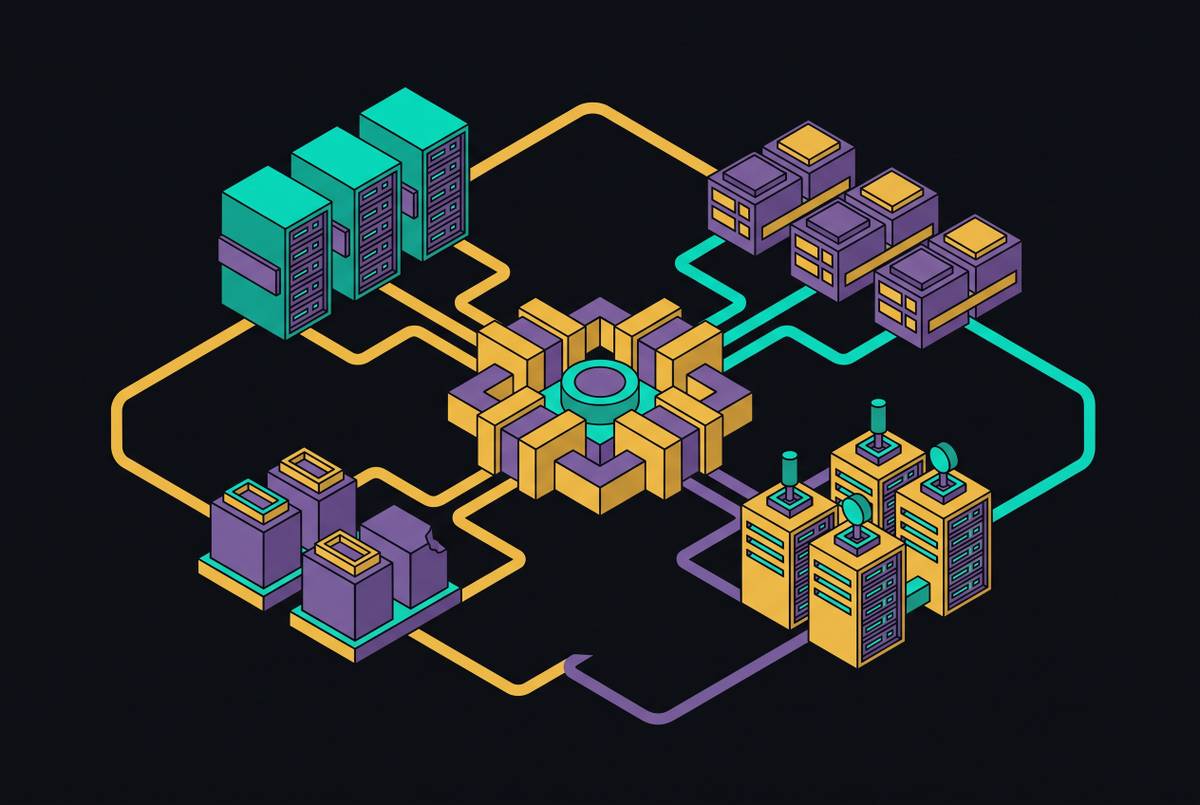
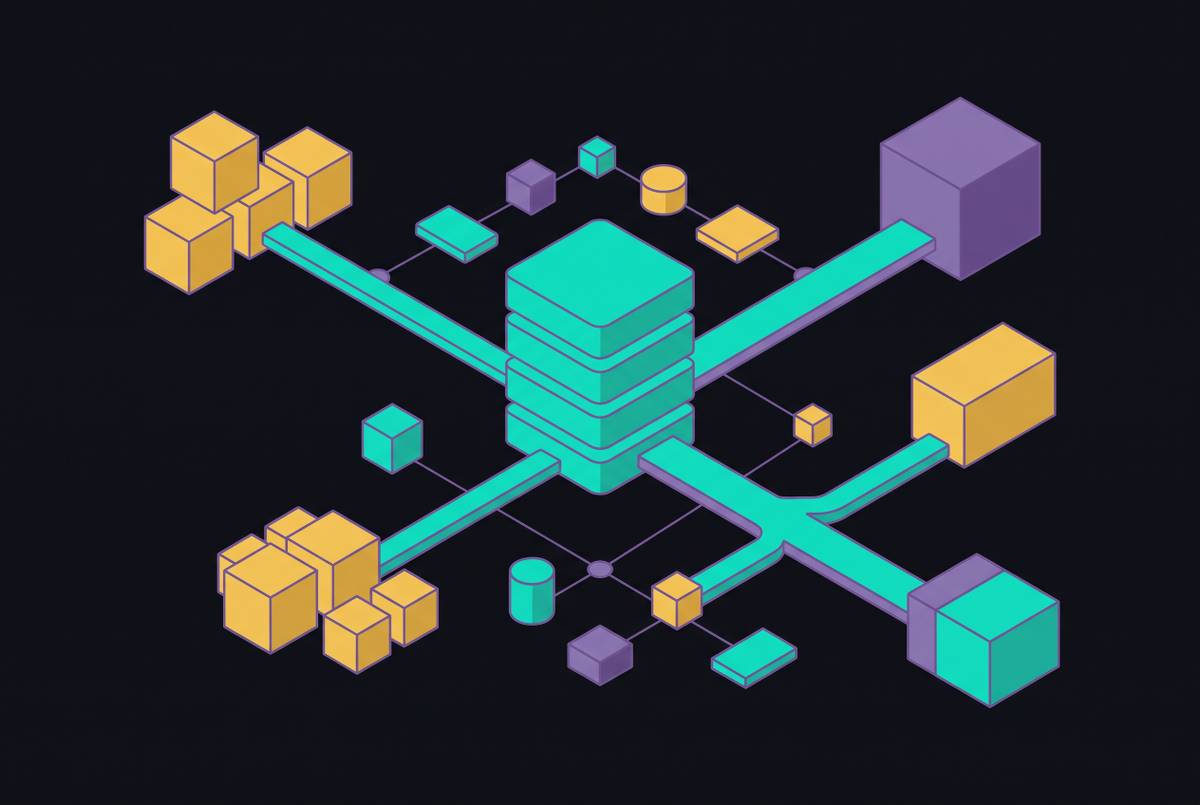
A centralized gateway puts enforcement between clients and downstream MCP servers. For enterprises running more than a handful of servers, this makes authentication, routing, policy, and observability manageable without requiring each backend to build its own security layer. The gateway intercepts tool calls, resource fetches, and prompt use. It is the shared checkpoint for requests.
A production gateway needs four components. Its authentication layer integrates an OAuth 2.1 authorization server with the IdP, while routing maps tool namespaces to backend URLs and checks backend health. A policy engine evaluates each request against identity and group membership. Structured logs, metrics, and trace IDs provide the observability layer, with the same enforcement point supporting rate limits, chargeback attribution, and budget controls.
Named implementations illustrate the architectural direction, but do not establish feature parity. Snowflake Cortex AI Gateway launched at Black Hat 2026 with a clear focus on how to govern agentic AI. Citrix added NetScaler MCP Gateway capabilities to its existing NetScaler AI Gateway for unified governance of LLM and agentic traffic. Those announcements alone do not show that both have the same Okta integration, Entra integration, role-based access control, or audit-export capabilities. The MCP authorization specification’s 2026-07-28 revision provides the underlying separation of duties, making the MCP server an OAuth resource server that validates tokens from a separate authorization server.
How SSO integrates with the major identity providers in practice
Okta was the first identity provider to ship ID-JAG support. Its implementation is called Cross App Access, or XAA, a vendor name for a mechanism based on the vendor-neutral draft. Auth0’s “Auth for MCP” became generally available on May 6, 2026. EMA requires an IdP implementing ID-JAG.
Microsoft Entra Agent ID provides the identity layer used to govern agents and the resources they can access. Microsoft separates that responsibility from containment, configuration, and compliance policy managed through Intune and other MDM solutions. Agent 365, Microsoft Defender, and Microsoft Purview extend management, security, and observability into agent workflows. Availability differs within that stack. MXC is generally available, while Intune-managed MXC policy was in private preview as of November 17, 2026.
AWS Sign-In supports agents connecting directly to the AWS MCP Server through industry-standard OAuth. Existing AWS identities, sign-in methods, IAM permissions, and governance controls continue to apply, with administrators governing OAuth access through IAM policies and new OAuth capabilities. This establishes an AWS-specific access path. It does not establish parity with Okta’s ID-JAG implementation or Microsoft’s agent-management components.
Anthropic implements EMA in its shared MCP layer, so Claude configuration applies across Claude Code and Cowork, while Visual Studio Code also supports EMA. Asana, Atlassian, Canva, Figma, Granola, Linear, and Supabase supported EMA at launch, with Slack adding support. These integration points make silent onboarding practical, but the permission model still needs to follow the request beyond login.
Why agent identity and human identity must be treated as separate authorization classes
A human identity does not describe every actor using it. At admission, an IdP cannot distinguish a person connecting from an autonomous agent acting under the same identity. Role differences create one problem, such as allowing an analyst to query data but not drop tables. Delegation creates another, because an engineer’s deliberate production-write permission need not be available to an agent. A valid login cannot settle both questions.
RFC 8693 token exchange provides a delegation mechanism. The agent presents the human’s token as the subject and its own credential as the actor, and the authorization server issues a derived token with narrower scopes. The sub claim identifies the human, while act identifies the agent. Both identities remain available for authorization and attribution.
Aptible treats humans and agents as distinct identity classes. Humans authenticate with Aptible JWTs, agents use per-agent API tokens, and robot users can use only shared-mode servers and cannot access personal credentials. Its audit records can be filtered by identity class. This distinction also belongs at the enforcement boundary, because downstream APIs otherwise see a valid token without information about the nature of its caller.
Tool-level permission policies — governing what an authenticated identity may actually invoke
Server-level admission is too coarse for least privilege. One MCP server can offer read-only queries, writes, destructive actions, and administrative operations. A gateway therefore needs to evaluate the individual tool call against role, identity class, and operation category. A support agent may get read-only lookup tools, while a billing agent gets the refund tool.
Aptible’s approach in production eases the work of keeping these policies up to date. Across ten-plus servers, including GitHub, Notion, Shortcut, Snowflake, Pylon, Sentry, and Metabase, where scale precluded manual review of every tool definition, its approach automatically classifies tools from their definitions as read-only, write, destructive, or admin. Policy can then attach to categories rather than requiring an isolated rule for every tool. The rules are enforced on each tool, even when they are managed by category.
Stacklok treats identity and access control as separate from policy enforcement within its production control domains. That separation explains why SSO integration cannot stand in for per-call authorization. The gateway can also validate tool inputs against their schemas before forwarding a call, reducing exposure to injection vulnerability classes. Authorization checks whether the operation is allowed, while schema validation checks whether the input sent to the tool fits its contract.
Security risks that persist after authentication and tool-level policy are in place
An agent that is authorized can still receive malicious instructions. Indirect prompt injection places those instructions in material such as documents, support tickets, or GitHub issues that the agent treats as trusted context. In a documented 2025–2026 incident, a hidden GitHub issue payload redirected a connected agent into accessing and publicly posting private repository contents. Tool restrictions limit the available actions, but they do not establish whether an instruction deserves trust. Runtime monitoring remains necessary.
A February 2026 incident involved attackers cloning a legitimate MCP server and distributing it through registry poisoning and social engineering. Pinterest’s registry rule allows agent surfaces to call only servers that are in the registry. Stacklok also identifies externally imported Agent Skills, structured Markdown files containing procedural knowledge, as unvetted dependencies with potential for malicious instructions. Approval cannot stop at executable server code.
Resource exhaustion and credential exposure require further controls. Prompt storms, malformed inputs, and recursive requests can cause denial-of-service conditions, even when the tasks look like legitimate heavy workloads. Gateway validation, rate limits, and usage monitoring help deal with those conditions. Centralized secrets stores such as HashiCorp Vault, AWS Secrets Manager, and Azure Key Vault address credentials otherwise left in JSON configurations or environment files. Secret scanning at the CI/CD gate targets the path from local convenience to version-control exposure.
Audit logging and observability as the governance layer that makes policy enforceable
Policy without attributable logs is difficult to prove. The minimum tool-call record includes the authenticated subject, tool name, arguments with sensitive values redacted, resource touched, and result. At the gateway, that record can preserve the human and agent identities needed to explain a delegated action. IdP logs answer who was authorized to connect, while gateway logs answer what each principal did and under which policy. Neither record substitutes for the other.
The audit trail belongs in the organization’s existing logging infrastructure. Microsoft Sentinel export, Splunk forwarding, and S3 archival provide centralized paths for retention, search, and compliance reporting. The same structured records make unusual behavior visible, including a spike in one agent’s calls or a tool invoked at an anomalous time from a new location. Without a record, there is no signal to examine. Cost attribution and budget enforcement also need the identity behind each invocation, so financial governance and security auditing can share this infrastructure without separate accounting systems.
A practical rollout sequence for teams closing the gap between connected and controlled
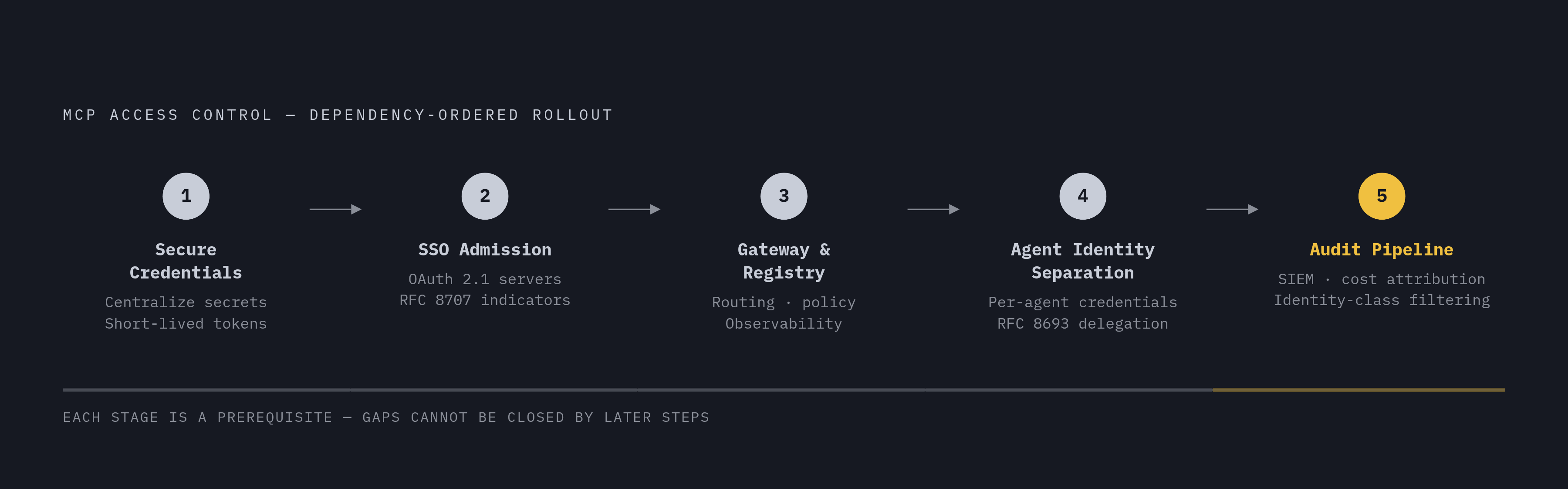
These layers need to be established in dependency order. First, secure credentials before expanding connectivity. Remove secrets from configuration files, source code, and environment-variable files that have been committed, including Claude Desktop configurations and .mcp.json project files. Use Gitleaks, truffleHog, or an equivalent CI/CD gate, centralize credentials in a secrets store, and make short-lived tokens with rotation the enterprise default.
Second, establish SSO-mediated admission through a compatible EMA integration. Make servers OAuth 2.1 resource servers that reject requests without valid bearer tokens and publish Protected Resource Metadata. Apply Resource Indicators, RFC 8707, so each server rejects tokens not minted for it. Caller tokens must not pass through to downstream APIs, with RFC 8693 token exchange providing the downstream mechanism instead.
Third, set up the gateway and the registry of approved servers. Authentication, routing, policy evaluation, and observability belong in the shared path, with the registry restricting which servers agent surfaces may call. Discover shadow deployments and promote approved uses into that registry. A governed alternative addresses the work that prompted self-provisioning.
Fourth, separate agent identity from human permission. Give each agent its own lasting identity and per-agent credentials, then use delegation tokens with narrower scopes that identify both the human and the actor. Classify tools by operation category and apply role-based least privilege at the gateway. The rules must be enforced at the initial connection and on every prompt and tool call.
Fifth, complete the structured audit and observability pipeline. Emit every tool-call record into the existing SIEM and archival paths, with sensitive arguments redacted and identity classes available for filtering and correlation. Use that same record for cost and usage attribution. The operational test is whether a team can explain a particular action by a particular agent, including whose authority it used and which policy allowed it.